
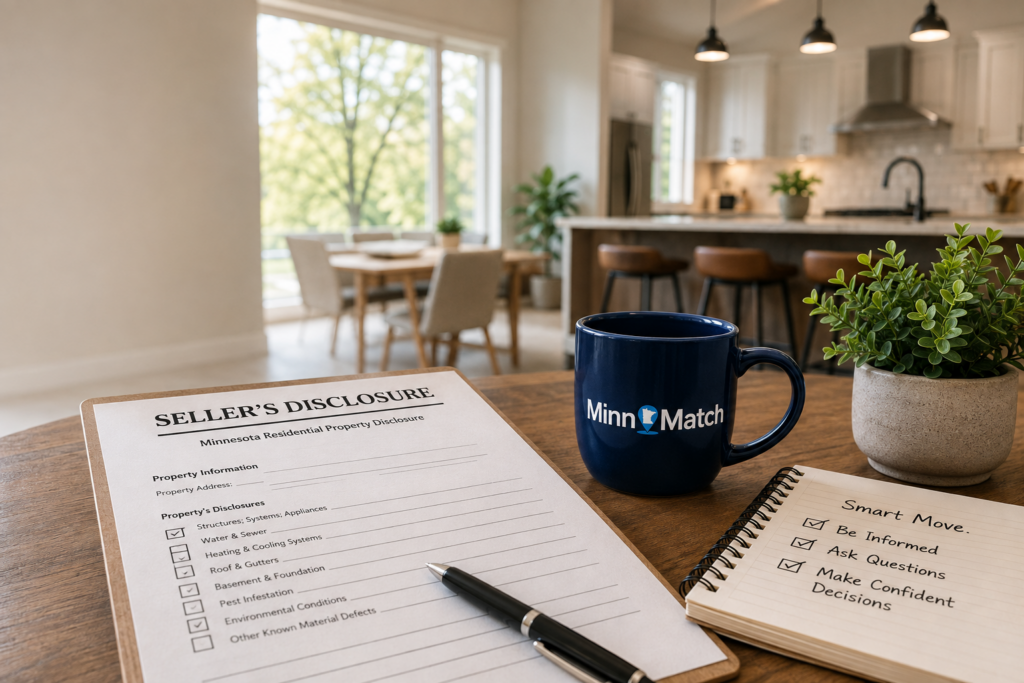
If you’ve bought or sold a home in the Twin Cities, you’ve probably signed or reviewed a stack of paper without reading every line. But there’s one document you shouldn’t skim: the seller’s disclosure. In Minnesota, this form is more than a formality — it’s a legal obligation with real consequences if it’s done wrong. Whether you’re prepping to list your home or reviewing one before making an offer, here’s what a seller’s disclosure in Minnesota actually requires, what it covers, and what happens when something gets left out.
What Minnesota Law Actually Requires
Minnesota’s seller disclosure requirement comes from state statute, not just real estate custom. Before a purchase agreement is signed, the seller has to give the buyer a written disclosure covering material facts they’re aware of that could reasonably affect an ordinary buyer’s use and enjoyment of the property, or any specific intended use the seller knows the buyer has in mind. You can read the statute itself on the Minnesota Office of the Revisor’s website. The key word is “material” — the law isn’t asking sellers to list every scuff mark, but it is asking them to be upfront about anything that could change a buyer’s decision to purchase, or what they’d be willing to pay.
What Counts as a Material Fact
This is where most sellers get nervous, and honestly, it’s simpler than it feels. A material fact is something you actually know about — not something you’re guessing at or should have known. Common examples in Twin Cities homes include past water intrusion or basement leaks, foundation cracks, roof age and condition, known mold, failed mechanical systems, drainage issues, or problems with the septic or well system. If you’re not sure about something, Minnesota law allows you to mark it “unknown” rather than guess — as long as that’s the honest answer. What you can’t do is answer “no” to a question you know the real answer to. The standard is good faith, based on what you actually knew at the time you signed.
Special Disclosures Beyond the Standard Form
A handful of Minnesota-specific disclosures often get layered on top of the standard seller’s disclosure. If your home has a well — active or sealed — state law requires a separate Well Disclosure Certificate. Homes built before 1978 also trigger a federal lead-based paint disclosure, which is common in the older housing stock around Edina, Minnetonka, and many South Minneapolis neighborhoods. And if you’re selling in Minneapolis or St. Paul specifically, you’ll also run into a Truth-in-Housing inspection — a city-mandated, point-of-sale evaluation that’s separate from the state disclosure but covers similar ground. Radon is worth a mention too: Minnesota has some of the highest radon levels in the country, and while testing isn’t mandatory, any known results have to be disclosed.
When Sellers Are Exempt
Not every transaction requires this paperwork. The most common exemption is new construction that’s never been lived in — buyers of new builds are protected instead by Minnesota’s new home warranty laws. A few other narrow exemptions exist for certain transfers, like some foreclosures or transfers between family members. If you’re unsure whether your sale qualifies for an exemption, that’s a good question to bring to your agent or a real estate attorney before you assume you’re off the hook.
What Happens If Something Gets Missed
This is the part that should motivate careful disclosure more than any statute citation. If a seller knowingly leaves a material fact off the disclosure, a buyer has up to two years after closing to bring a claim — and they’ll need to show the seller actually knew about the issue. That can mean damages, legal fees, or in serious cases, the sale getting unwound entirely. It’s a big reason experienced Twin Cities agents push sellers to disclose early and thoroughly rather than hope a problem doesn’t come up. For buyers, it’s also a reminder to actually read the disclosure line by line — and to still get an independent inspection, since a disclosure only covers what the seller knows, not everything that could be wrong with the house.
Whether you’re getting ready to disclose or getting ready to read one, having an agent who knows how Twin Cities disclosure norms actually play out — not just what the form says — makes a real difference. If you’re not sure where to start, MinnMatch can connect you with a local agent who’s handled this exact paperwork dozens of times and can walk you through it before it becomes a problem instead of after.