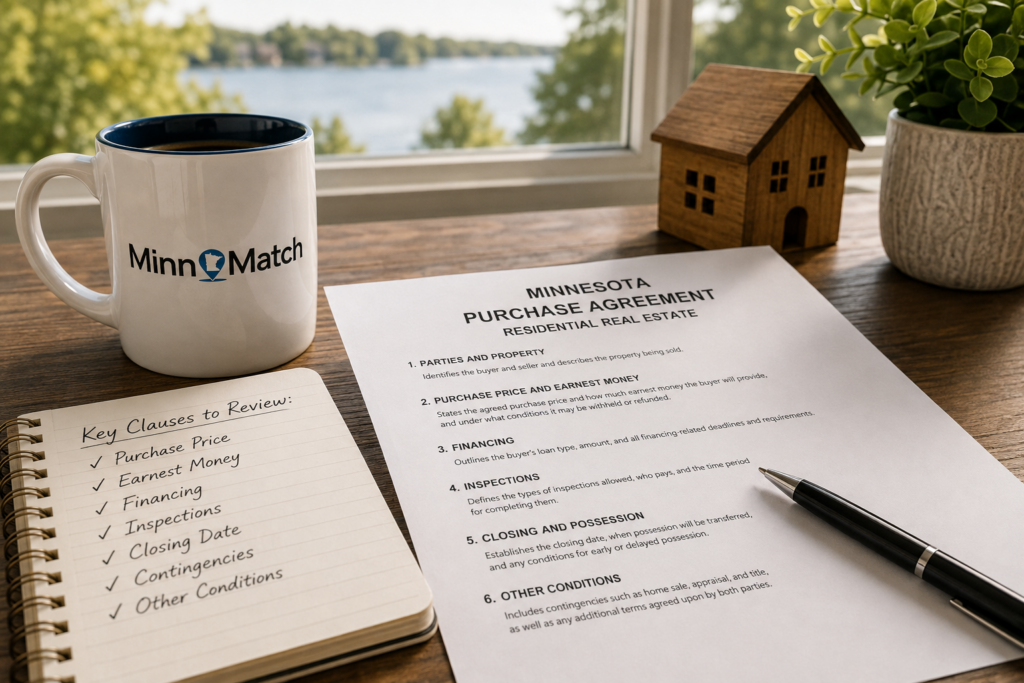
You did it — the seller said yes. That rush of relief is real, but here’s the part nobody tells you at the open house: what happens after your offer is accepted is where most of the actual work of buying a home gets done. In Minnesota, the stretch between “accepted” and “here are your keys” usually runs 30 to 45 days, and it’s packed with deadlines that can make or break the deal. This guide walks you through each step in order, with the Twin Cities-specific details that generic checklists skip.
A Quick Timeline: What Happens After Your Offer Is Accepted
Every purchase agreement sets its own dates, so treat this as a typical roadmap rather than a rulebook. Your agent and lender will give you the exact deadlines for your deal.
Typical Minnesota Timeline (30–45 Days)
Days 1–2: Deliver earnest money and finalize your mortgage application
Days 1–10: Home inspection, radon test, and repair negotiations
Weeks 2–4: Appraisal, loan underwriting, title work, and homeowners insurance
3+ days before closing: Review your Closing Disclosure
Closing week: Final walk-through, wire funds, sign, and get keys
After closing: File for homestead, change locks, set up utilities
Week One: Earnest Money, Inspections, and the Contingency Clock
Earnest money comes first. Most Minnesota purchase agreements require your earnest money deposit — commonly 1% to 2% of the price in the Twin Cities — within a couple of business days of final acceptance. It’s held in a trust account by the listing brokerage or title company and gets credited toward your down payment and closing costs at the end. Miss that deadline and you hand the seller an easy reason to walk.
Lock in your loan. If you were preapproved, your lender now needs the signed purchase agreement to open the full application. Expect a Loan Estimate within three business days, and talk with your lender about whether to lock your rate now or float it.
Schedule the inspection immediately. Inspection contingency windows in Minnesota often run 7 to 10 days, and good inspectors book up fast — especially in spring and early fall. Add a radon test while you’re at it; Minnesota has some of the highest radon levels in the country, and a 48-hour test can usually run alongside the inspection. If the home is in Minneapolis, Bloomington, Richfield, or another city with a point-of-sale requirement, ask your agent for the city inspection report, too. Once results are in, you’ll decide whether to accept the home as-is, ask for repairs or a credit, or cancel within your contingency period.
Weeks Two to Four: Appraisal, Underwriting, and Minnesota Title Work
The appraisal. Your lender orders an appraisal to confirm the home is worth what you’re paying. If it comes in low, you typically have three options: renegotiate the price, cover the gap with extra cash, or use your financing contingency to exit. In competitive pockets like Edina and South Minneapolis, it’s worth knowing ahead of time how much of a gap you could handle.
Underwriting — and why you should stay boring. This is when the lender verifies everything: income, assets, debts, and credit. The golden rule after your offer is accepted? Don’t change jobs, open new credit cards, finance a new truck, or buy a living room set on a store card. Even a small change to your debt-to-income ratio can delay or derail your approval. Answer your lender’s document requests the same day if you can.
Title work, Minnesota-style. The title company researches the property’s ownership history to make sure the seller can legally transfer it free of liens or claims. Minnesota is unusual here: properties are recorded either under the traditional abstract system or the Torrens system, and Hennepin and Ramsey counties have a large share of Torrens property. Your title company handles the difference, but it can affect timing and paperwork. You’ll also decide on an owner’s title insurance policy during this stage.
Homeowners insurance. Your lender will require proof of coverage before closing. With hail and wind claims pushing Minnesota premiums higher, shop for quotes early in this window — not the week before closing.
Closing Week in Minnesota: Walk-Through, Wires, and Signing
Review your Closing Disclosure. Federal rules require your lender to deliver your Closing Disclosure at least three business days before closing. Compare it line by line with your Loan Estimate. Expect Minnesota-specific items like the mortgage registration tax, which runs about 0.24% of your loan amount and is typically paid by the buyer.
Protect your wire. Wire fraud targeting homebuyers is real. Before sending your down payment, call your title company at a phone number you’ve verified independently — never one from an email — to confirm the wiring instructions.
Do the final walk-through. Usually within 24 hours of closing, you’ll confirm agreed-upon repairs were made, included items are still there, and nothing new has broken. For a fall or winter closing, run the furnace, check the water heater, and look at the ceilings for signs of leaks. It’s your last chance to raise an issue before you sign.
Sign and get your keys. Twin Cities closings usually happen at the title company’s office and take about an hour. Bring a government-issued photo ID. In most Minnesota transactions, possession transfers at closing, so you can often head straight to your new place.
After Closing: The Minnesota To-Do List Most Buyers Miss
The paperwork doesn’t quite end at the closing table. A few Minnesota-specific tasks can save you real money and headaches:
- File for homestead. If the home is your primary residence, apply for homestead classification with your county. It can lower your property taxes, and the deadline is December 15 for the credit to start next year. Hennepin County’s homestead page explains the process; other counties work similarly. Closing this fall? Put it on your calendar now.
- Change the locks and garage codes. You don’t know how many keys are floating around.
- Transfer utilities. Set up electric and gas service (Xcel Energy or CenterPoint in much of the metro), plus water, trash, and internet.
- Check your alarms. Minnesota law requires carbon monoxide alarms within 10 feet of sleeping rooms, so test every smoke and CO alarm on move-in day.
- Keep your closing packet. Store your settlement statement and deed somewhere safe — you’ll want them at tax time and when you sell someday.
First-time buyer using down payment assistance? Minnesota Housing loan programs may have their own requirements to keep on track, so check in with your lender. You can find more step-by-step help on our buyers page and in our resource library.
Frequently Asked Questions
How long does it take to close after your offer is accepted in Minnesota?
Most financed purchases in the Twin Cities close in about 30 to 45 days. Cash deals can close in as little as one to two weeks, depending on how quickly title work and any inspections wrap up.
Can a seller back out after accepting an offer in Minnesota?
Once a purchase agreement is fully signed, it’s a binding contract. A seller generally can only cancel if a contingency in the agreement allows it — for example, if the deal depends on the seller finding their next home. Talk to your agent or a real estate attorney about your specific agreement.
Do I get my earnest money back if the deal falls through?
If you cancel within a valid contingency — like inspection or financing — and follow the agreement’s notice requirements, your earnest money is typically refunded. If you walk away without a contractual reason, you may forfeit it.
The Right Agent Makes the Next 30 Days Easier
Getting to “accepted” is a milestone, but the weeks that follow are where a great agent earns their keep — tracking every deadline, coordinating inspectors and lenders, and catching problems before they cost you. If you’re starting your search and want someone who knows Minnesota’s process inside and out, MinnMatch can help. We personally match you with a vetted local agent who fits your neighborhood, price range, and style — at no cost to you. Find your Twin Cities agent today.