
The Real Cost of Overpricing Your Home in the Twin Cities in 2026 — And How to Avoid It

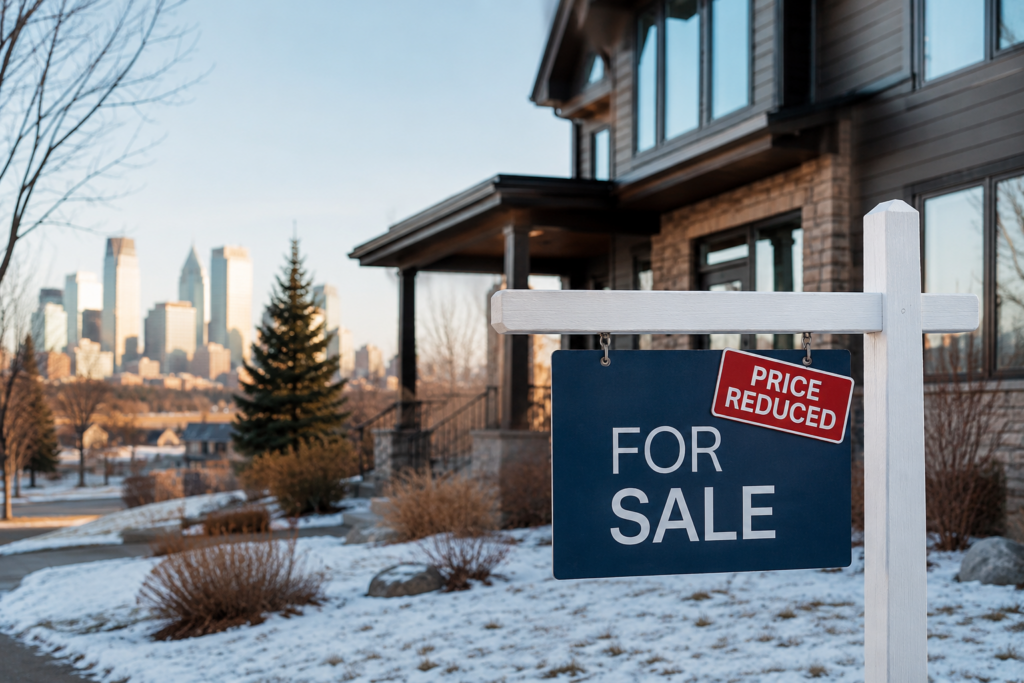
"For Sale" sign with "Price Reduced" tag in front of Twin Cities home, winter skyline behind

It’s tempting. You love your house, the kitchen remodel cost a fortune, and your neighbor down the block “got” a number that seemed sky-high. So why not list a little higher and see what happens? In the Twin Cities in 2026, that decision is one of the most expensive mistakes a seller can make — and it rarely plays out the way people hope. Overpricing your home doesn’t just risk a slower sale. It can quietly cost you thousands of dollars by the time you actually close.

Here’s what’s actually happening in the Minneapolis–St. Paul market right now, why overpricing backfires, and how to land on a number that gets your home sold for the most money in the least amount of time.

The Twin Cities Market Has Shifted — And Pricing Strategy Matters More Than Ever

A few years ago, sellers could get away with an aggressive list price because buyers had no other choice — inventory was scarce and offers came in within days. That’s not the market we’re in anymore. According to Minneapolis Area Realtors, homes across the metro are now sitting on the market for roughly 43 to 47 days on average, and the percentage of original list price that sellers actually receive has been gradually trending down, landing in the high 90s rather than the 100%-plus numbers seen during the frenzy years.

Months of supply has also crept up to around 2 to 2.5 months in much of the metro. That’s still technically a mild seller’s advantage — but it’s a far cry from the “list it high and watch the bidding war” conditions of 2021–2022. Buyers today have options, more time to compare, and far less patience for a home that feels overpriced for what it offers. Pricing your home correctly the first time in this market isn’t a nice-to-do — it’s the difference between a smooth sale and a stale listing.

What Overpricing a Home Actually Costs You

“Let’s just price it high and see what happens” feels low-risk. In practice, it sets off a chain reaction that almost always ends with sellers netting less than if they’d priced accurately from day one. Here’s the typical pattern our partner agents see play out across the Twin Cities:

You Miss the Critical First-Two-Weeks Window

The first one to two weeks on the market generate the most buyer traffic and showings any listing will ever see. Serious buyers and their agents are watching new listings closely, and that early surge is when multiple-offer situations happen. If your home is priced above what the market will bear, that window passes with light showings and no offers — and you don’t get it back. Every week that goes by after that, interest drops further.

Buyers (and Their Agents) Start to Wonder What’s Wrong

Buyers in Eden Prairie, Plymouth, Edina, or anywhere else in the metro are almost always working with an agent who tracks days on market. A listing that’s been sitting for 60, 75, or 90+ days starts to raise questions: Is there something wrong with the house? Is the seller unrealistic? Will they take a lowball offer out of desperation? None of that may be true, but perception drives behavior, and a stale listing invites lower offers, not higher ones.

You End Up Chasing the Market Down

This is the part that really stings. Most overpriced listings eventually get a price reduction. But by the time that happens, you’ve already lost momentum, and the new, lower price often has to compete with newer, fresher listings that are priced correctly from the start. Instead of landing close to your original number, sellers frequently end up cutting the price more than once and settling for a sale price below what an accurate initial listing would have brought in.

Appraisal Problems Can Tank the Deal Entirely

Even if you do get a buyer at an inflated price, the home still has to appraise for that amount if the buyer is financing the purchase. If the appraisal comes in lower — which is common when the list price wasn’t grounded in comparable sales — the deal can fall apart entirely, or you may be forced to renegotiate at a lower number anyway, after weeks of lost time.

Why Sellers Overprice in the First Place

It’s rarely about greed. It’s usually one of these very human reasons:

Emotional attachment. You’ve lived there for years, raised a family, renovated the basement yourself. None of that has anything to do with market value, but it’s hard not to let it influence the number you have in mind.

Anchoring to renovation costs. A $60,000 kitchen remodel doesn’t necessarily add $60,000 in resale value — sometimes it adds far less, depending on the neighborhood and what buyers are actually willing to pay for in that price range.

Comparing to the wrong “comp.” Your neighbor’s sale two years ago, a Zillow estimate, or a listing price (not sale price) you saw online can all create an unrealistic anchor. None of those reflect what’s actually selling, for how much, right now, in your specific neighborhood.

“Testing the market.” Some sellers list high thinking they can always come down later. As outlined above, this strategy almost always backfires — it just costs you the most valuable window of buyer attention first.

How to Price Your Home Correctly the First Time

The good news: avoiding all of the above is straightforward when you have the right information and the right agent guiding the process.

Start with a real comparative market analysis (CMA). A proper CMA looks at homes that actually sold — not just listed — in your specific neighborhood within the last three to six months, adjusted for square footage, condition, and upgrades. This is the single most reliable tool for landing on an accurate number.

Pay attention to days-on-market trends in your specific area. Metro-wide averages are a starting point, but a home in Wayzata or Minnetonka can behave very differently than one in South Minneapolis. A local agent who’s actively working your neighborhood will know the difference.

Separate what you spent from what buyers will pay. Renovations matter for livability and buyer appeal, but pricing should be grounded in what comparable homes are actually selling for — not your total investment in the property.

Price to attract activity in the first two weeks, not to leave room for negotiation. A home priced accurately from the start tends to generate strong early interest, sometimes even multiple offers, which puts you in a stronger negotiating position than a high price that needs to be chased downward later.

For more on how pricing fits into the bigger picture of getting your home ready to list, the Minnesota Housing Finance Agency also offers useful resources for homeowners navigating a sale.

The Right Agent Makes All the Difference

Pricing a home correctly isn’t guesswork, and it isn’t something an automated online estimate can do reliably either. It takes an agent who knows your specific neighborhood, understands current Twin Cities buyer behavior, and is willing to have an honest conversation with you about value — even when that conversation isn’t the one you were hoping for.

That’s exactly the kind of match MinnMatch is built to make. Instead of guessing which agent to call, tell us about your home and your goals, and we’ll connect you with a vetted, local Twin Cities agent who knows your neighborhood’s pricing realities inside and out — so you list at the right number the first time, not after months of expensive trial and error. Curious how the process works? Visit our how it works page to see how simple it is to get matched with the right agent for your sale.

What Does a Real Estate Agent Actually Do? A Minnesota Seller’s Complete Guide

A real estate agent meets with home sellers outside a Minnesota home to discuss the listing process

If you’re getting ready to sell your home in Minnesota, you’ve probably heard that you need a real estate agent — but you may be wondering exactly what a real estate agent does to earn their commission. It’s a fair question. Selling a home is likely the largest financial transaction of your life, and understanding what your listing agent actually does for you is key to making a smart decision. The short answer: a great listing agent does a lot more than put a sign in your yard. Here’s a complete, honest look at the role of a seller’s agent in the Twin Cities — and why the right one makes a real difference.

Pricing Your Home: The Most Important Job a Listing Agent Has

One of the first — and most consequential — things a listing agent does is help you arrive at the right asking price. This isn’t guesswork. Your agent will prepare a Comparative Market Analysis (CMA): a detailed look at recently sold homes in your neighborhood that are similar in size, age, condition, and features to yours. They’ll pull data from the MLS, account for current inventory levels, and factor in local demand conditions.

In the Twin Cities, pricing strategy is everything. The current Minnesota market has roughly 1.4 months of housing inventory — solidly in seller’s market territory — but that doesn’t mean you can price freely. Overpriced homes sit. They accumulate days on market, attract lowball offers, and often sell for less than correctly priced homes would have. An experienced agent knows the difference between a home that’s worth $485,000 and one that needs to be listed at $479,900 to generate the right buyer energy — and that knowledge is worth real money at closing.

Your agent will also provide a seller’s net sheet: an estimate of what you’ll actually walk away with after commissions, closing costs, and any agreed-upon concessions. No surprises at the closing table.

Pre-Listing Prep: What to Fix, Stage, and Skip

Before your home ever hits the market, a good listing agent walks through it with experienced eyes — and tells you the truth. That means identifying which improvements will move the needle with buyers and which ones won’t earn back their cost. In most Twin Cities markets, fresh paint, decluttered spaces, and updated light fixtures deliver far better ROI than a kitchen renovation you started three weeks before listing.

Your agent will advise on staging — whether that means rearranging your existing furniture, bringing in a professional stager, or simply removing personal items to help buyers picture themselves in the space. Staging isn’t decoration; it’s strategy. A well-staged home photographs better, shows better, and typically sells faster and for more money than a comparable home that wasn’t prepared.

They’ll also help you complete your Minnesota Seller’s Property Disclosure Statement — a required document in which you disclose known material defects. Getting this right protects you legally. Agents who know Minnesota disclosure law can guide you through each section and help you avoid costly mistakes down the road.

Marketing Your Home: More Than Just the MLS

This is where listing agents earn significant value — and where there’s a wide range in quality between agents. Listing on the Minneapolis Area Realtors MLS is table stakes. What distinguishes a strong listing agent is how they present and promote your home beyond that baseline.

A full-service listing agent typically coordinates or manages:

  • Professional photography — the single most important marketing asset your listing has. Quality photos drive clicks, showings, and offers. Don’t accept a listing agent who shoots with their phone.
  • MLS listing copy — well-written descriptions that highlight your home’s best features and speak to what Twin Cities buyers in your price range actually care about.
  • Syndication — your listing automatically feeds to Zillow, Redfin, Realtor.com, and hundreds of other sites once it’s on the MLS.
  • Social media and digital advertising — targeted Facebook and Instagram campaigns that reach qualified buyers in your area.
  • Agent-to-agent networking — veteran agents have relationships with buyer’s agents across the metro and sometimes bring buyers to a property before it officially hits the market.
  • Open houses and showings — coordinating and hosting open houses, fielding showing requests, and gathering feedback from buyers after tours.

The goal of all this activity is simple: get as many qualified buyers through the door as possible, as quickly as possible. More competition among buyers means stronger offers for you.

Offer Review and Negotiation: Where Good Agents Pay for Themselves

When offers come in, your agent doesn’t just hand them to you and say “take it or leave it.” They analyze each offer’s full picture: price, earnest money, financing contingencies, inspection contingency terms, proposed closing date, and any special requests or conditions. In a competitive market, you might receive multiple offers — and the highest number on paper isn’t always the best offer.

Your agent advises on which offer structures are strongest, when to counter and how, and whether to ask for a highest-and-best round from multiple buyers. They understand financing red flags (an offer with a weak pre-approval from an unknown lender deserves more scrutiny than a cash offer or a well-documented conventional loan), and they know how to negotiate terms — not just price — to protect your interests throughout.

Post-inspection negotiations are equally important. When a buyer’s inspector flags issues, your agent helps you decide what to repair, what to credit, and what to push back on — without letting the deal fall apart unnecessarily.

Managing the Transaction: From Accepted Offer to Closing Day

Getting an offer accepted is the midpoint of the transaction, not the finish line. There’s a lot of moving parts between a signed purchase agreement and a successful closing — and your listing agent is the project manager for all of it.

This includes tracking contingency deadlines, coordinating with the buyer’s lender and their agent, working with the title company, scheduling the final walkthrough, and making sure all disclosures and required documents are properly signed and delivered. In Minnesota, the transaction typically closes within 30–45 days of a signed purchase agreement, and a lot can happen in that window. An experienced agent keeps the process on track — and knows how to problem-solve when something unexpected comes up.

For more on what the overall home selling process looks like in the Twin Cities, our Minnesota home selling guide walks through pricing, timing, and staging strategies from start to finish.

What About FSBO? What Sellers Take On Without an Agent

Some Minnesota sellers choose to list “For Sale By Owner” (FSBO) to avoid paying a listing commission. It’s legal — and it works for some people in some situations. But it’s worth understanding what you’re taking on. Without an agent, you’re responsible for pricing research, MLS access (via a flat-fee service), professional photography, marketing, showing coordination, offer review, negotiations, all required disclosures, and transaction management through closing. You’d also be negotiating directly against buyers who are usually represented by experienced agents.

Research consistently suggests that FSBO homes sell for measurably less than agent-listed homes. For most Minnesota sellers, the commission paid to a listing agent is recovered — and then some — through better pricing, stronger marketing, and more skilled negotiation. The math often works out in favor of professional representation, especially in a competitive metro like the Twin Cities.

What to Look for in a Twin Cities Listing Agent

Not all agents are created equal. When evaluating listing agents for your Twin Cities home sale, the most important things to look for include:

  • Demonstrated local expertise — do they actually know your neighborhood, your price range, and your competition? An agent who lives and works in your market brings insight no algorithm can replicate.
  • Recent, relevant sales history — how many homes have they listed and sold in the past 12 months? In your price range? In your area?
  • A clear marketing plan — ask specifically what they’ll do to market your home. Professional photography, paid digital advertising, and agent networking should all be part of the answer.
  • Communication style that matches yours — you’ll be in regular contact with this person for 60–90 days. Make sure their communication style works for you.
  • Membership and credentials — look for agents affiliated with the Minneapolis Area Realtors and, if relevant, specialized certifications like Seller Representative Specialist (SRS).

The interview process matters. A strong listing agent will welcome your questions — about their pricing strategy, their marketing approach, their typical list-to-sale ratio, and what they’d do differently for your specific property.

Ready to Find the Right Listing Agent for Your Twin Cities Home?

MinnMatch connects Minnesota sellers with vetted, experienced local agents who know your market — no searching, no guessing. Tell us about your home and we’ll match you with the right agent for free.

Find Your Listing Agent →

Selling a home in the Twin Cities is a complex process — but it doesn’t have to be stressful. The right listing agent brings local expertise, a proven marketing strategy, and skilled negotiation to every transaction. If you want to understand more about how MinnMatch works or explore resources for sellers, we’re here to help. You can also learn more about selling your home in Minnesota on our seller resources page.

Selling Your Twin Cities Home in Spring 2026: Pricing, Timing & Staging Strategies That Work

Twin Cities home for sale in spring with blooming tulips and cherry blossoms outside, and a staged living room interior


Selling a home in Twin Cities this spring means entering a market that still favors sellers — but one that demands far more strategy than it did a few years ago. The frantic, anything-goes market of 2021–2022 is gone. In its place is a more deliberate environment where pricing discipline, smart timing, and strong presentation determine who walks away with top dollar — and who sits on the market watching their leverage erode. According to Minneapolis Area Realtors®, the metro is sitting at roughly 2.1 months of supply — still well within seller’s market territory.

Here’s what every Twin Cities seller needs to know heading into spring 2026.


Selling a Home in Twin Cities Spring 2026: What the Market Actually Looks Like

The good news: this is still technically a seller’s market. With roughly 2.1 months of supply — well below the 4–5 months that signals a balanced market — homes that are priced right and well-presented are selling at or above asking price. Properties with strong appeal are still going pending in as few as 9–12 days.

But the shift in buyer behavior is real. Pending sales in the Twin Cities are down roughly 3–3.5% year-over-year. Homes that aren’t priced or presented thoughtfully are sitting longer — in some price ranges, average days on market has stretched to 45–52 days. Buyers are more deliberate now. They’re comparison shopping, negotiating, and far less likely to waive contingencies on homes they feel are overpriced.

📊 By the Numbers: Twin Cities Spring 2026

  • Median home sale price: ~$380,000 (Twin Cities metro)
  • Sale-to-list price ratio: 100.08% — sellers are still getting asking price on average
  • ~34.6% of homes sell above asking price
  • Months of supply: ~2.1 (seller’s market territory)
  • Minneapolis median up ~6% year-over-year at $355K
  • Overall Twin Cities median sales price up 2.6% to $390,000 annually

Sources: Minneapolis Area Realtors®, Redfin, NorthstarMLS — March 2026

The sellers who are winning understand one thing: you can’t rely on the market to compensate for a weak listing. The market will meet a good home at a fair price with strong activity. It will ignore everything else.


Pricing Strategy for Twin Cities Home Sellers: The Most Important Decision You’ll Make

In the overheated markets of recent years, pricing high and waiting it out was a viable — even rewarded — strategy. In spring 2026, it’s a mistake that can cost you tens of thousands of dollars.

When a home is overpriced, it sits. When it sits, buyers start wondering what’s wrong with it. Price reductions signal weakness and invite lower offers. Homes in the Twin Cities with price reductions have ticked up, and properties that linger past 30 days often ultimately sell for less than they would have if priced correctly from the start.

Price to attract, not to negotiate

The most effective pricing strategy right now is to list at a price that makes buyers see strong value — not a price you expect to get talked down from. When buyers feel they’ve found a well-priced home, competition still emerges. Nearly 35% of Twin Cities homes are still selling above list price. That doesn’t happen on overpriced listings; it happens on smart ones that create urgency.

Understand your micro-market

The Twin Cities isn’t one market — it’s dozens. A home in Edina or Wayzata behaves very differently from a home in Apple Valley or South Minneapolis. Community-level comps from the past 60–90 days — not metro-wide averages — are what should anchor your list price. A skilled local agent will know the difference between a neighborhood that’s still moving fast and one where buyers have gained leverage.

Account for what buyers are actually weighing

Even though interest rates have eased from their 2023 peaks, monthly payment affordability is still the top concern for most buyers. They’re running the math carefully. A $20,000 overpriced listing can feel like a $150/month difference in someone’s mortgage payment. That gap matters now. For current rate context, the Minnesota Housing Finance Agency publishes up-to-date loan programs and rate resources for buyers across the state.

💡 Seller Tip

Ask your agent to walk you through active competition — not just sold comps. If there are three similar homes currently listed near yours, buyers will compare all four. Your price needs to win that comparison on value, not just square footage.


When to List: Timing Your Twin Cities Home Sale for Maximum Impact

Spring remains the single best time for selling a home in the Twin Cities — and within spring, timing still matters. Historically, February through July produces the highest buyer demand and fastest sales. But early spring has an important edge over late spring and summer: inventory hasn’t peaked yet.

When your home hits the market in late March or April, you’re competing with fewer listings than you would in May or June, when sellers who delayed finally list. Early spring buyers are also motivated — they’re ready to move, they’ve been watching all winter, and they know that waiting longer means more competition for them. That urgency benefits you as a seller.

📅 Twin Cities Seller’s Timing Guide

Feb – Mar

Prep & pre-market. Get repairs done, hire your agent, do staging consult.

Late Mar – Apr

Sweet spot. High buyer demand, lower inventory competition.

May – Jun

Still strong, but more competition from other sellers entering the market.

Jul – Aug

Market slows. Families are traveling. Days on market extend for many listings.

Day of week matters more than most sellers realize

List on a Thursday. Most buyers schedule home tours over the weekend. If your home goes live Thursday morning with fresh photos and a compelling description, it has a full weekend of showings before offers come in the following week. Listings that go live on Monday or Tuesday miss an entire weekend cycle.

Don’t list before you’re ready

The worst timing mistake isn’t listing too late — it’s listing too early before the home is truly show-ready. Buyers are scrutinizing condition more carefully than ever. A home that hits the MLS with incomplete touch-ups or mediocre photos gets passed over immediately, and that first week of low traffic is damage that’s hard to undo. Take the extra two weeks to do it right.


Staging Strategies That Help Twin Cities Home Sellers Win in 2026

Staging isn’t about making your home look like a magazine spread. It’s about helping buyers picture themselves living there — and removing every obstacle to that feeling. In a market where buyers are more discerning and have more choices than they did in 2022, staging is one of the highest-return investments a seller can make. According to Redfin’s staging research, staged homes typically sell faster and for more money than their unstaged counterparts.

Start with ruthless decluttering

The single most cost-effective staging move is removing stuff. Closets should be half-empty (buyers open every door). Countertops should be mostly clear. Personal photos and highly specific décor should come down. You’re not erasing your home’s personality — you’re creating space for a buyer to imagine theirs. Rent a storage unit if needed; it will pay for itself many times over.

Focus your staging budget on these rooms (in order)

1

Living Room

First impression after walking in. Furniture arrangement should create a clear conversation area and make the room feel as large as possible. Remove excess pieces. A fresh rug can transform the space.

2

Kitchen

Clear countertops entirely except for 1–2 intentional items. Deep clean everything. If cabinet hardware is dated, replace it — this costs $100–$300 and looks like a renovation. A bowl of lemons or a small plant adds life without clutter.

3

Primary Bedroom

Neutral bedding, minimal nightstand items, and no clothes visible anywhere. Consider renting a bed frame if yours is worn — this room carries significant emotional weight for buyers.

4

Bathrooms

Remove all personal items from sight. Fresh white towels, clean grout, and a small candle or plant make a big impression. Replace toilet seats if they’re stained or cracked — it costs $30 and removes a potential red flag.

5

Curb Appeal & Entry

In Minnesota, spring curb appeal can mean cleanup from a long winter: clear the driveway, plant a few flats of annuals, power-wash the front walk, and replace a worn welcome mat. The front door matters — consider a fresh coat of paint in a bold, welcoming color.

Don’t skip professional photography

Nearly every buyer starts their search online. Your photos are your first showing. A professional real estate photographer — not smartphone shots — is non-negotiable in 2026. Consider adding a video walkthrough or 3D tour; buyers who tour a home virtually first tend to be more serious when they show up in person.

Fresh paint is still the best ROI you’ll find

A gallon of paint costs $50. A freshly painted room in a neutral, current tone can add thousands to a buyer’s perceived value of your home. If your walls are showing wear, have bold colors throughout, or haven’t been painted in more than 7–8 years, a full interior repaint in warm whites or soft greiges is one of the smartest things you can do before listing.

The Right Agent Makes Selling a Home in the Twin Cities Far Easier

Pricing strategy, timing decisions, staging guidance, negotiation — a skilled local agent touches every piece of a successful spring sale. But not all agents have the same depth of knowledge, and in a market where neighborhood-level expertise matters more than broad metro data, who you work with is a real variable.

The best listing agents in the Twin Cities right now share a few things in common: they know their specific submarkets cold, they’re pricing homes strategically rather than just listing at whatever sellers want, and they’re actively managing buyer perception from the moment a home goes live. That’s the combination that produces strong offers — not just activity.

Ready to sell your Twin Cities home this spring?

MinnMatch connects sellers with handpicked, vetted local agents who know your specific community — not just the metro average. Our matching is free, human-powered, and designed to find you the right fit, not just any available agent.


Find Your Agent →

The Bottom Line for Spring 2026 Twin Cities Sellers

Selling a home in the Twin Cities this spring rewards sellers who are strategic — and exposes those who aren’t. Inventory is rising, buyers are more selective, and the homes that are winning are the ones that show up to market priced right, looking their best, and listed at the right moment in the season.

The fundamentals still favor you as a seller. Supply is lean, demand is real, and properly positioned homes are still commanding strong prices. But you have to earn it — and the sellers who understand that will be the ones closing with confidence this spring.

For more resources, explore our seller guides, browse local market insights, or learn how MinnMatch works. When you’re ready to be matched with a top local agent, get started here — it’s free.