The Real Cost of Overpricing Your Home in the Twin Cities in 2026 — And How to Avoid It

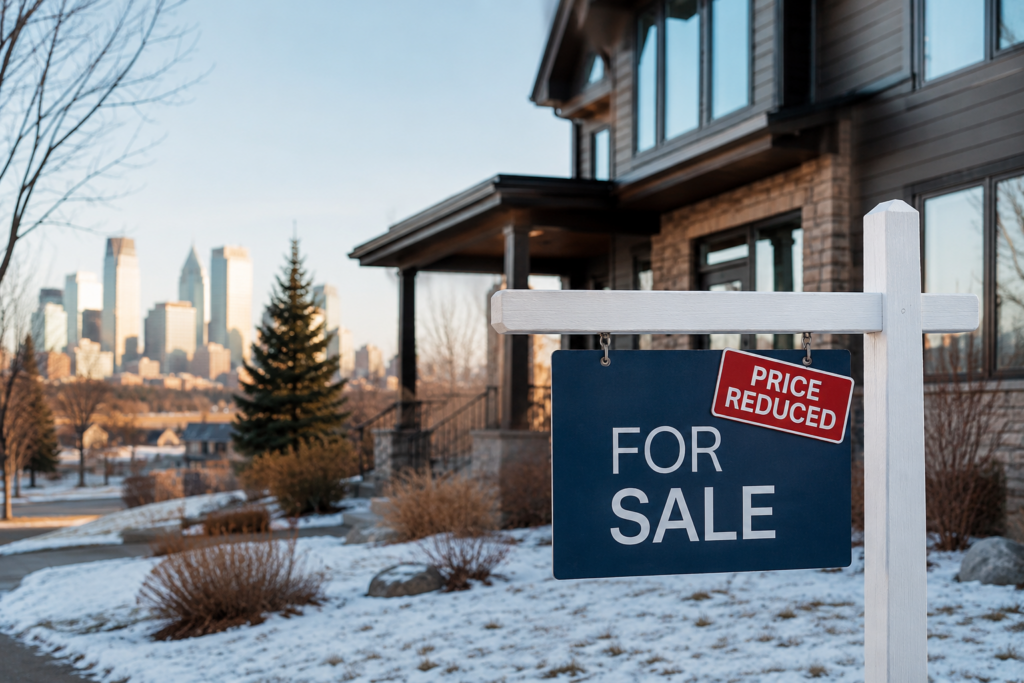
"For Sale" sign with "Price Reduced" tag in front of Twin Cities home, winter skyline behind

It’s tempting. You love your house, the kitchen remodel cost a fortune, and your neighbor down the block “got” a number that seemed sky-high. So why not list a little higher and see what happens? In the Twin Cities in 2026, that decision is one of the most expensive mistakes a seller can make — and it rarely plays out the way people hope. Overpricing your home doesn’t just risk a slower sale. It can quietly cost you thousands of dollars by the time you actually close.

Here’s what’s actually happening in the Minneapolis–St. Paul market right now, why overpricing backfires, and how to land on a number that gets your home sold for the most money in the least amount of time.

The Twin Cities Market Has Shifted — And Pricing Strategy Matters More Than Ever

A few years ago, sellers could get away with an aggressive list price because buyers had no other choice — inventory was scarce and offers came in within days. That’s not the market we’re in anymore. According to Minneapolis Area Realtors, homes across the metro are now sitting on the market for roughly 43 to 47 days on average, and the percentage of original list price that sellers actually receive has been gradually trending down, landing in the high 90s rather than the 100%-plus numbers seen during the frenzy years.

Months of supply has also crept up to around 2 to 2.5 months in much of the metro. That’s still technically a mild seller’s advantage — but it’s a far cry from the “list it high and watch the bidding war” conditions of 2021–2022. Buyers today have options, more time to compare, and far less patience for a home that feels overpriced for what it offers. Pricing your home correctly the first time in this market isn’t a nice-to-do — it’s the difference between a smooth sale and a stale listing.

What Overpricing a Home Actually Costs You

“Let’s just price it high and see what happens” feels low-risk. In practice, it sets off a chain reaction that almost always ends with sellers netting less than if they’d priced accurately from day one. Here’s the typical pattern our partner agents see play out across the Twin Cities:

You Miss the Critical First-Two-Weeks Window

The first one to two weeks on the market generate the most buyer traffic and showings any listing will ever see. Serious buyers and their agents are watching new listings closely, and that early surge is when multiple-offer situations happen. If your home is priced above what the market will bear, that window passes with light showings and no offers — and you don’t get it back. Every week that goes by after that, interest drops further.

Buyers (and Their Agents) Start to Wonder What’s Wrong

Buyers in Eden Prairie, Plymouth, Edina, or anywhere else in the metro are almost always working with an agent who tracks days on market. A listing that’s been sitting for 60, 75, or 90+ days starts to raise questions: Is there something wrong with the house? Is the seller unrealistic? Will they take a lowball offer out of desperation? None of that may be true, but perception drives behavior, and a stale listing invites lower offers, not higher ones.

You End Up Chasing the Market Down

This is the part that really stings. Most overpriced listings eventually get a price reduction. But by the time that happens, you’ve already lost momentum, and the new, lower price often has to compete with newer, fresher listings that are priced correctly from the start. Instead of landing close to your original number, sellers frequently end up cutting the price more than once and settling for a sale price below what an accurate initial listing would have brought in.

Appraisal Problems Can Tank the Deal Entirely

Even if you do get a buyer at an inflated price, the home still has to appraise for that amount if the buyer is financing the purchase. If the appraisal comes in lower — which is common when the list price wasn’t grounded in comparable sales — the deal can fall apart entirely, or you may be forced to renegotiate at a lower number anyway, after weeks of lost time.

Why Sellers Overprice in the First Place

It’s rarely about greed. It’s usually one of these very human reasons:

Emotional attachment. You’ve lived there for years, raised a family, renovated the basement yourself. None of that has anything to do with market value, but it’s hard not to let it influence the number you have in mind.

Anchoring to renovation costs. A $60,000 kitchen remodel doesn’t necessarily add $60,000 in resale value — sometimes it adds far less, depending on the neighborhood and what buyers are actually willing to pay for in that price range.

Comparing to the wrong “comp.” Your neighbor’s sale two years ago, a Zillow estimate, or a listing price (not sale price) you saw online can all create an unrealistic anchor. None of those reflect what’s actually selling, for how much, right now, in your specific neighborhood.

“Testing the market.” Some sellers list high thinking they can always come down later. As outlined above, this strategy almost always backfires — it just costs you the most valuable window of buyer attention first.

How to Price Your Home Correctly the First Time

The good news: avoiding all of the above is straightforward when you have the right information and the right agent guiding the process.

Start with a real comparative market analysis (CMA). A proper CMA looks at homes that actually sold — not just listed — in your specific neighborhood within the last three to six months, adjusted for square footage, condition, and upgrades. This is the single most reliable tool for landing on an accurate number.

Pay attention to days-on-market trends in your specific area. Metro-wide averages are a starting point, but a home in Wayzata or Minnetonka can behave very differently than one in South Minneapolis. A local agent who’s actively working your neighborhood will know the difference.

Separate what you spent from what buyers will pay. Renovations matter for livability and buyer appeal, but pricing should be grounded in what comparable homes are actually selling for — not your total investment in the property.

Price to attract activity in the first two weeks, not to leave room for negotiation. A home priced accurately from the start tends to generate strong early interest, sometimes even multiple offers, which puts you in a stronger negotiating position than a high price that needs to be chased downward later.

For more on how pricing fits into the bigger picture of getting your home ready to list, the Minnesota Housing Finance Agency also offers useful resources for homeowners navigating a sale.

The Right Agent Makes All the Difference

Pricing a home correctly isn’t guesswork, and it isn’t something an automated online estimate can do reliably either. It takes an agent who knows your specific neighborhood, understands current Twin Cities buyer behavior, and is willing to have an honest conversation with you about value — even when that conversation isn’t the one you were hoping for.

That’s exactly the kind of match MinnMatch is built to make. Instead of guessing which agent to call, tell us about your home and your goals, and we’ll connect you with a vetted, local Twin Cities agent who knows your neighborhood’s pricing realities inside and out — so you list at the right number the first time, not after months of expensive trial and error. Curious how the process works? Visit our how it works page to see how simple it is to get matched with the right agent for your sale.

Plymouth vs. Minnetonka: Which Suburb Delivers More for Your Money in 2026?

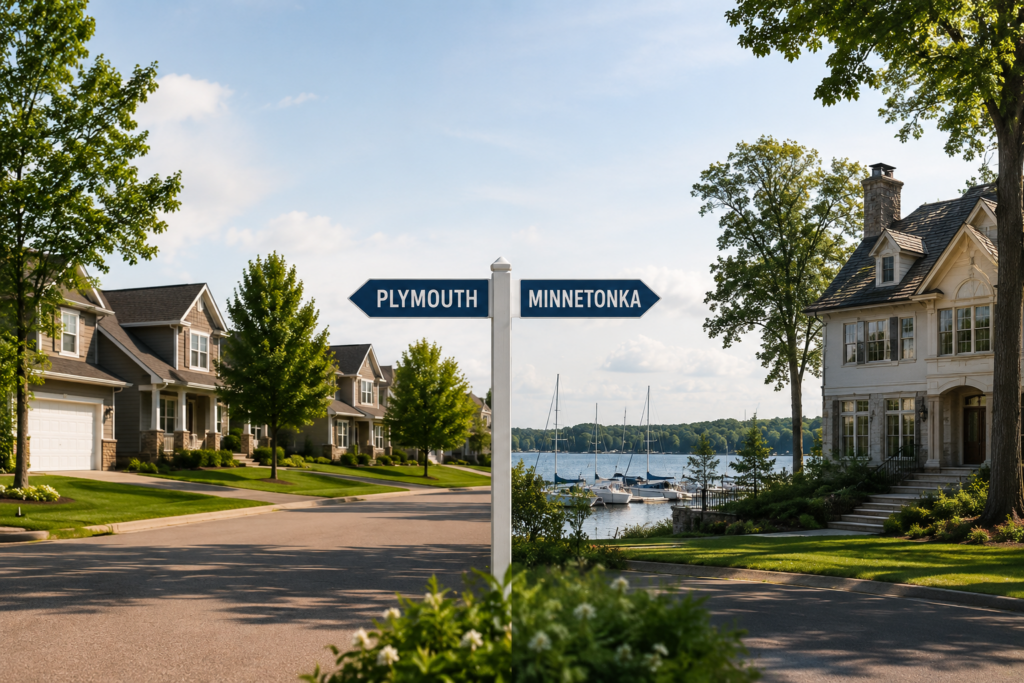
Street sign pointing toward Plymouth suburban homes and Minnetonka lakefront living in the Twin Cities

If you’re searching for a home in the western Twin Cities suburbs, Plymouth and Minnetonka are probably both on your list — and for good reason. Both sit within a short drive of downtown Minneapolis, both offer excellent schools, and both are packed with parks, lakes, and the kind of quiet neighborhood feel that draws families out of the city. But they’re not the same place, and in 2026, the differences between them matter. Price points, lifestyle, lot sizes, commute dynamics, and school district lines all play a role in the Plymouth vs. Minnetonka comparison. Here’s what you need to know before you decide.

Home Prices: What Does Your Budget Actually Buy in Each Suburb?

This is where the Plymouth vs. Minnetonka conversation gets real. According to data from Minneapolis Area Realtors®, Minnetonka’s median sales price in April 2026 was approximately $507,500 — up about 1.3% year-over-year. Plymouth, by comparison, has a median closer to $485,000–$500,000 in recent months, depending on the data source and time period. That gap may sound modest, but in practice, it plays out in meaningful ways across different price bands.

In Plymouth, buyers in the $400,000–$500,000 range can typically access a solid four-bedroom single-family home in an established neighborhood, often with a larger lot. Minnetonka at the same price point trends toward townhomes, smaller ramblers, or older homes that need updating — especially in neighborhoods closest to the lake. Buyers willing to go north of $600,000 in either city will find more overlap, but Minnetonka still commands a premium in its most coveted pockets.

Market pace differs as well. Minnetonka is running hot — Redfin data shows many homes going pending in around 17 days, and roughly a third of homes selling above asking price in recent months. Plymouth is somewhat more measured, with homes averaging closer to 30–55 days on market depending on price point and neighborhood, and sale-to-list ratios just under 100%. That means Plymouth buyers may have slightly more room to negotiate, while Minnetonka buyers should be ready to move quickly and compete.

Schools: Two of Minnesota’s Best Districts — but Different Ones

If schools are driving your suburb search, this section matters enormously — because Plymouth and Minnetonka are served by different districts, and both rank at the very top of Minnesota’s rankings.

Most of Plymouth falls within the Wayzata Public School District (ISD 284), which Niche named the #1 school district in Minnesota for 2026 — the third consecutive year it has earned that ranking. Wayzata High School, which is actually located in Plymouth, consistently ranks among the state’s top public high schools. The district earned A+ ratings across nearly every Niche category and places in the top 1% of all public school districts statewide based on test scores.

Minnetonka is served by the Minnetonka Public School District (ISD 276), which Niche ranked #2 in Minnesota for 2026. Minnetonka Senior High School ranks #3 among all public high schools in the state. The district serves more than 10,900 students and is the most sought-after for open enrollment in Minnesota — a meaningful signal of its reputation. With programs including International Baccalaureate, AP courses, K-12 language immersion, and over 100 clubs and activities, it’s an academically rich environment.

Bottom line: you’re splitting hairs here. Both districts are genuinely elite. Families may find the tie-breaker comes down to specific program offerings, proximity, or which high school campus feels right for their kids.

One important note: a portion of Plymouth falls within the Robbinsdale School District (ISD 281) rather than Wayzata. Always verify school boundaries by address before making any decisions based on school district.

Location and Commute: Closer to the Lake vs. Closer to the City

Plymouth and Minnetonka sit about 9 miles apart — and both are positioned for a reasonable commute to downtown Minneapolis. Plymouth, located approximately 12 miles northwest of downtown, connects quickly via I-394 and Highway 55, with a typical non-rush commute of around 20 minutes. Minnetonka sits about 12–15 miles west of downtown, also served by I-394, with similar commute times to much of the city — though western Minnetonka neighborhoods closer to Lake Minnetonka will add a few more minutes.

Plymouth also benefits from its own transit system — Plymouth Metrolink — which runs direct bus routes to downtown Minneapolis and the University of Minnesota on weekdays. It’s a useful option for households that prefer to leave one car behind on their commute days.

Where Minnetonka pulls ahead is proximity to Lake Minnetonka itself. For buyers who want easy access to the lake — whether that’s a boat slip, shoreline walks, or dining on the water at Excelsior or Wayzata — southern Minnetonka neighborhoods put you closest to all of it. Plymouth has its own exceptional park system and Medicine Lake to enjoy, but if the lake lifestyle is central to your vision, Minnetonka’s geography serves that better.

Lifestyle and Character: Two Suburbs, Two Distinct Feels

Plymouth is one of the Twin Cities’ most populous suburbs — home to more than 80,000 residents — and that scale comes with real advantages. The city has invested heavily in its park and trail system, offers Medicine Lake for swimming and non-motorized boating, and hosts a well-rounded retail and restaurant scene. It tends to attract families who want a well-organized, community-oriented suburb with newer housing stock, strong civic infrastructure, and a feeling of continued growth.

Minnetonka has a different rhythm. It’s a more established suburb, with a diverse mix of housing — from modest mid-century homes to sprawling custom builds — spread across a geography shaped by creeks, wetlands, and the rolling terrain of the Lake Minnetonka watershed. Neighborhoods like Ridgedale, Glen Lake, and Minnetonka Mills each have their own character. Minnetonka also sits adjacent to Ridgedale Center and Ridgedale-area dining, making it feel connected and convenient despite its more tucked-in residential feel.

Both suburbs score well for safety, green space, and quality of life. The deciding factor usually comes down to personal preference: Plymouth buyers often value scale, newer construction, and a more expansive park system. Minnetonka buyers tend to be drawn by neighborhood character, lake proximity, and the feel of a suburb that’s already grown into itself.

Which Suburb Delivers More for Your Money in 2026?

Strictly on a price-per-square-foot and value basis, Plymouth offers a slight edge — particularly for buyers in the $400,000–$550,000 range who prioritize square footage, newer builds, and the #1-ranked school district in Minnesota. You’ll generally find more home for your dollar, a somewhat less competitive market, and newer neighborhoods that offer consistent quality across a wide range of price points.

Minnetonka earns its premium for buyers who want lake-area lifestyle, neighborhood character, and proximity to the communities along Lake Minnetonka. The Minnetonka school district is the second-best in Minnesota and among the strongest in the country. And if you’re drawn to a suburb that feels more layered and established, Minnetonka has a lot to offer.

For most families making a purely financial decision, Plymouth is likely the stronger value play in 2026. For buyers where lifestyle and lake access weigh heavily, Minnetonka may be worth the higher entry price. In either case, knowing which neighborhoods within each city match your budget and priorities makes all the difference — and that’s exactly where working with a local agent pays off.

Not Sure Which Suburb Is Right for You?

MinnMatch connects Twin Cities buyers with local agents who know Plymouth and Minnetonka inside and out — the right neighborhoods, the right price points, and the right fit for your family. It’s free, it’s personal, and it’s built for Minnesota.

Find Your Agent — It’s Free

Twin Cities Suburbs Ranked: The Best Places to Buy a Home in 2026

Twin Cities suburbs ranked best places to buy a home in 2026, with Minneapolis skyline in background

Shopping for a home in the Twin Cities in 2026? You’re not alone — and you’re not without options. Despite higher mortgage rates and lingering affordability pressures across the country, the Minneapolis–St. Paul metro still has suburbs that offer real value, strong schools, and communities worth putting down roots in. Whether you’re a first-time buyer chasing square footage, a growing family eyeing top-rated districts, or a move-up buyer ready to upgrade, there’s a suburb on this list for you. We’ve pulled together the best places to buy a home in the Twin Cities suburbs right now, based on home prices, market trends, livability, and what buyers are actually prioritizing in 2026. If you want help finding an agent who knows these neighborhoods inside and out, MinnMatch can match you with a vetted local expert — for free.

How We Ranked These Twin Cities Suburbs

This isn’t a purely algorithmic list. We looked at a combination of real market data — median home prices, days on market, price trends from sources like Redfin’s Minnesota market reports and the Minneapolis Area Association of Realtors’ 2025 Annual Housing Market Report — along with livability factors like school quality, community character, commute access, and what buyers are actually asking for right now. The result is a practical guide to the best places to buy a home in the Twin Cities suburbs in 2026, across a range of price points.

One important note on context: the statewide median home sale price in Minnesota was around $354,500 as of March 2026, according to Redfin. Everything below is measured relative to that baseline — and to what your money actually buys you on the ground.

1. Maple Grove — Best Overall Value in the Northwest Metro

Maple Grove consistently earns high marks for livability, and 2026 is no different. With a median home price hovering around $390,000–$405,000, it sits comfortably above the state median while offering a level of amenity and polish that’s hard to beat at that price point. Think big-box convenience, fantastic parks like Elm Creek Park Reserve, highly rated Osseo-area schools, and neighborhoods that feel genuinely cared for.

The market here moves relatively fast — homes are typically going under contract within 31 to 35 days — which tells you demand is still healthy even if prices have softened slightly from their peak. For families who want a suburb that has it all without venturing into the $500K+ range, Maple Grove remains one of the best places to buy a home in the Twin Cities.

Best for: Families, first-time move-up buyers, anyone who wants suburban amenities without the luxury price tag.

2. Eden Prairie — Polished Living on the Southwest Side

Eden Prairie is one of those suburbs that earns its reputation year after year. With a median sale price around $438,000–$462,000 depending on the month, it’s priced noticeably above the county median of $376,000 — but buyers consistently find the value proposition compelling. Over 41% of Eden Prairie sellers received at or above their original asking price in 2025, according to NorthstarMLS data, one of the stronger close-price ratios in the metro.

Beyond the numbers: Eden Prairie offers Bryant Lake Regional Park, the Eden Prairie Center, a highly regarded school district, and convenient access to Highway 212 and I-494. It’s a suburb that functions well as a long-term place to live — not just a financial bet. Homes here are classified as “very competitive” by Redfin, typically selling in about 25 to 30 days, so buyers should come prepared to move quickly.

Best for: Buyers who want a well-rounded southwest suburb with strong resale value and quality schools. Explore the Eden Prairie community page for more local info.

3. Lakeville — Dakota County’s Growth Story

Lakeville has been one of the Twin Cities’ fastest-growing suburbs for years, and for good reason. With a median home price around $450,000–$467,000 as of early 2026, it’s priced competitively for what you get: newer construction, spacious lots, a well-regarded school district (ISD 194), and a small-town downtown that still has real character. The city is consistently ranked among the best places to raise a family in Minnesota.

Lakeville tends to attract buyers who prioritize space and newer builds over urban proximity. The commute to downtown Minneapolis is longer than some west-metro options — plan on 40–45 minutes without traffic — but many buyers consider that a worthwhile tradeoff for the square footage and lot sizes you get. Sales volume in early 2026 has been notably strong, with hundreds of transactions per month, suggesting robust buyer interest remains.

Best for: Families who want newer homes, bigger yards, and Dakota County’s excellent schools without leaving the metro.

4. Woodbury — The East Metro’s Consistent Performer

Woodbury doesn’t get as much attention as its west-metro counterparts, but buyers who discover it tend to stay loyal. The average home value sits around $457,000, up slightly year over year — a sign of steady, if not flashy, appreciation. What Woodbury delivers is reliability: well-planned neighborhoods, South Washington County Schools (consistently strong performers), low crime, and access to both St. Paul and downtown Minneapolis via I-94.

For buyers who work in St. Paul or the east metro — or who want to be closer to the Wisconsin border — Woodbury is often the first suburb they look at, and frequently the one they choose. Niche’s 2026 rankings highlighted it as one of the Twin Cities’ standout communities for housing stability, a factor that matters when you’re making a long-term investment.

Best for: East metro commuters, families, and buyers who value stability and long-term appreciation over flash.

5. Plymouth — The Premium West Metro Option

Plymouth commands some of the higher price points on this list — median values in the $520,000–$535,000 range — but it earns them. It’s one of the best places to buy a home in the Twin Cities if your priorities include lake access, top-tier Wayzata School District schools, and a suburban experience that genuinely borders on luxurious. Medicine Lake, Parkers Lake, and French Regional Park are all right there. And with Hwy 55, I-494, and Hwy 169 all converging nearby, Plymouth is one of the better-connected suburbs in the metro.

Buyers who stretch their budget for Plymouth tend to be rewarded — both in the quality of life and in resale performance. The Wayzata School District is one of the most coveted in the state, and homes in Plymouth routinely receive strong offers. If the price is within reach, it’s a community worth serious consideration. Check out MinnMatch’s Plymouth community page for neighborhood details.

Best for: Move-up buyers and families willing to invest more for the Wayzata School District and west-metro lake access.

6. Edina — Prestige, Proximity, and a Price to Match

Edina is in a different category than the rest of this list — and that’s by design. With a median home price around $750,000, it’s firmly luxury territory, but it’s included here because it consistently attracts buyers who are weighing the southwest suburbs and want to understand the full spectrum. What Edina offers is unmatched in the Twin Cities: proximity to Minneapolis, the 50th & France shopping district, Edina Public Schools (one of the most respected districts in Minnesota), and a density of amenities that suburban buyers rarely get at any price.

If your budget allows it, Edina functions almost like an urban neighborhood with suburban square footage. If Edina is on your radar, visit MinnMatch’s Edina community page and talk to an agent who specializes in the area — competition is real and strategy matters.

Best for: Luxury buyers who want the feel of a walkable, upscale community with full suburban amenities.

What to Keep in Mind as You Search in 2026

The Twin Cities suburbs market in 2026 is more nuanced than it was during the pandemic frenzy — and that’s actually a good thing for buyers who are patient and prepared. Inventory is slowly improving in many communities. Days on market have stretched in some suburbs, giving buyers a bit more breathing room. But well-priced homes in desirable neighborhoods are still moving quickly, often within a few weeks of listing.

One factor worth watching: property tax rates can vary meaningfully across these suburbs, even between cities with similar home prices. According to Minnesota Department of Revenue data, municipal tax rates differ notably across Hennepin County communities, and school district levies add another layer. Make sure you’re asking your agent for parcel-level tax estimates — not just city averages — before making a final decision. The Minnesota Housing Finance Agency also offers programs that may help with down payment assistance for qualifying buyers.

The other thing to keep in mind: ranking lists and market data tell part of the story, but every buyer’s situation is different. A suburb that’s objectively “ranked #1” might not be the right fit for your commute, your school priorities, or your lifestyle. That’s where a knowledgeable local agent makes all the difference.

Find the Right Twin Cities Suburb — With the Right Agent

At MinnMatch, we connect Twin Cities homebuyers with handpicked, vetted local agents who actually know the neighborhoods — not just the zip codes. Whether you’re eyeing Maple Grove’s value, Plymouth’s schools, or Lakeville’s space, we’ll match you with someone who can help you navigate the market with confidence. It’s free, it’s human-powered, and it works. See how MinnMatch works or get matched with an agent today.