
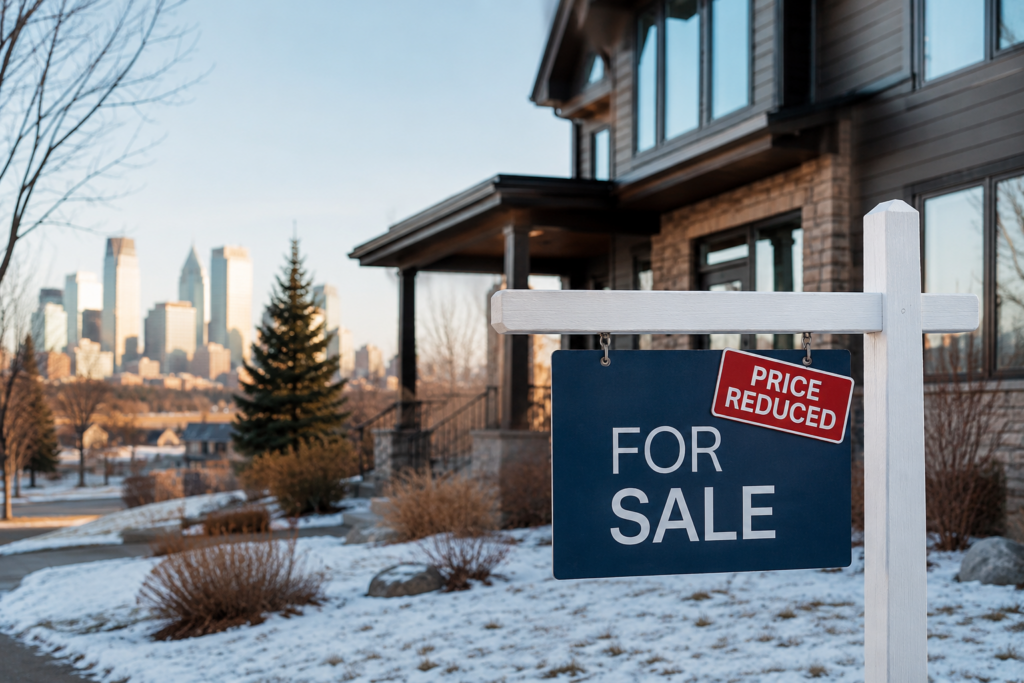
It’s tempting. You love your house, the kitchen remodel cost a fortune, and your neighbor down the block “got” a number that seemed sky-high. So why not list a little higher and see what happens? In the Twin Cities in 2026, that decision is one of the most expensive mistakes a seller can make — and it rarely plays out the way people hope. Overpricing your home doesn’t just risk a slower sale. It can quietly cost you thousands of dollars by the time you actually close.
Here’s what’s actually happening in the Minneapolis–St. Paul market right now, why overpricing backfires, and how to land on a number that gets your home sold for the most money in the least amount of time.
The Twin Cities Market Has Shifted — And Pricing Strategy Matters More Than Ever
A few years ago, sellers could get away with an aggressive list price because buyers had no other choice — inventory was scarce and offers came in within days. That’s not the market we’re in anymore. According to Minneapolis Area Realtors, homes across the metro are now sitting on the market for roughly 43 to 47 days on average, and the percentage of original list price that sellers actually receive has been gradually trending down, landing in the high 90s rather than the 100%-plus numbers seen during the frenzy years.
Months of supply has also crept up to around 2 to 2.5 months in much of the metro. That’s still technically a mild seller’s advantage — but it’s a far cry from the “list it high and watch the bidding war” conditions of 2021–2022. Buyers today have options, more time to compare, and far less patience for a home that feels overpriced for what it offers. Pricing your home correctly the first time in this market isn’t a nice-to-do — it’s the difference between a smooth sale and a stale listing.
What Overpricing a Home Actually Costs You
“Let’s just price it high and see what happens” feels low-risk. In practice, it sets off a chain reaction that almost always ends with sellers netting less than if they’d priced accurately from day one. Here’s the typical pattern our partner agents see play out across the Twin Cities:
You Miss the Critical First-Two-Weeks Window
The first one to two weeks on the market generate the most buyer traffic and showings any listing will ever see. Serious buyers and their agents are watching new listings closely, and that early surge is when multiple-offer situations happen. If your home is priced above what the market will bear, that window passes with light showings and no offers — and you don’t get it back. Every week that goes by after that, interest drops further.
Buyers (and Their Agents) Start to Wonder What’s Wrong
Buyers in Eden Prairie, Plymouth, Edina, or anywhere else in the metro are almost always working with an agent who tracks days on market. A listing that’s been sitting for 60, 75, or 90+ days starts to raise questions: Is there something wrong with the house? Is the seller unrealistic? Will they take a lowball offer out of desperation? None of that may be true, but perception drives behavior, and a stale listing invites lower offers, not higher ones.
You End Up Chasing the Market Down
This is the part that really stings. Most overpriced listings eventually get a price reduction. But by the time that happens, you’ve already lost momentum, and the new, lower price often has to compete with newer, fresher listings that are priced correctly from the start. Instead of landing close to your original number, sellers frequently end up cutting the price more than once and settling for a sale price below what an accurate initial listing would have brought in.
Appraisal Problems Can Tank the Deal Entirely
Even if you do get a buyer at an inflated price, the home still has to appraise for that amount if the buyer is financing the purchase. If the appraisal comes in lower — which is common when the list price wasn’t grounded in comparable sales — the deal can fall apart entirely, or you may be forced to renegotiate at a lower number anyway, after weeks of lost time.
Why Sellers Overprice in the First Place
It’s rarely about greed. It’s usually one of these very human reasons:
Emotional attachment. You’ve lived there for years, raised a family, renovated the basement yourself. None of that has anything to do with market value, but it’s hard not to let it influence the number you have in mind.
Anchoring to renovation costs. A $60,000 kitchen remodel doesn’t necessarily add $60,000 in resale value — sometimes it adds far less, depending on the neighborhood and what buyers are actually willing to pay for in that price range.
Comparing to the wrong “comp.” Your neighbor’s sale two years ago, a Zillow estimate, or a listing price (not sale price) you saw online can all create an unrealistic anchor. None of those reflect what’s actually selling, for how much, right now, in your specific neighborhood.
“Testing the market.” Some sellers list high thinking they can always come down later. As outlined above, this strategy almost always backfires — it just costs you the most valuable window of buyer attention first.
How to Price Your Home Correctly the First Time
The good news: avoiding all of the above is straightforward when you have the right information and the right agent guiding the process.
Start with a real comparative market analysis (CMA). A proper CMA looks at homes that actually sold — not just listed — in your specific neighborhood within the last three to six months, adjusted for square footage, condition, and upgrades. This is the single most reliable tool for landing on an accurate number.
Pay attention to days-on-market trends in your specific area. Metro-wide averages are a starting point, but a home in Wayzata or Minnetonka can behave very differently than one in South Minneapolis. A local agent who’s actively working your neighborhood will know the difference.
Separate what you spent from what buyers will pay. Renovations matter for livability and buyer appeal, but pricing should be grounded in what comparable homes are actually selling for — not your total investment in the property.
Price to attract activity in the first two weeks, not to leave room for negotiation. A home priced accurately from the start tends to generate strong early interest, sometimes even multiple offers, which puts you in a stronger negotiating position than a high price that needs to be chased downward later.
For more on how pricing fits into the bigger picture of getting your home ready to list, the Minnesota Housing Finance Agency also offers useful resources for homeowners navigating a sale.
The Right Agent Makes All the Difference
Pricing a home correctly isn’t guesswork, and it isn’t something an automated online estimate can do reliably either. It takes an agent who knows your specific neighborhood, understands current Twin Cities buyer behavior, and is willing to have an honest conversation with you about value — even when that conversation isn’t the one you were hoping for.
That’s exactly the kind of match MinnMatch is built to make. Instead of guessing which agent to call, tell us about your home and your goals, and we’ll connect you with a vetted, local Twin Cities agent who knows your neighborhood’s pricing realities inside and out — so you list at the right number the first time, not after months of expensive trial and error. Curious how the process works? Visit our how it works page to see how simple it is to get matched with the right agent for your sale.