South Minneapolis vs. Northeast Minneapolis: Which Urban Neighborhood Should You Buy In?

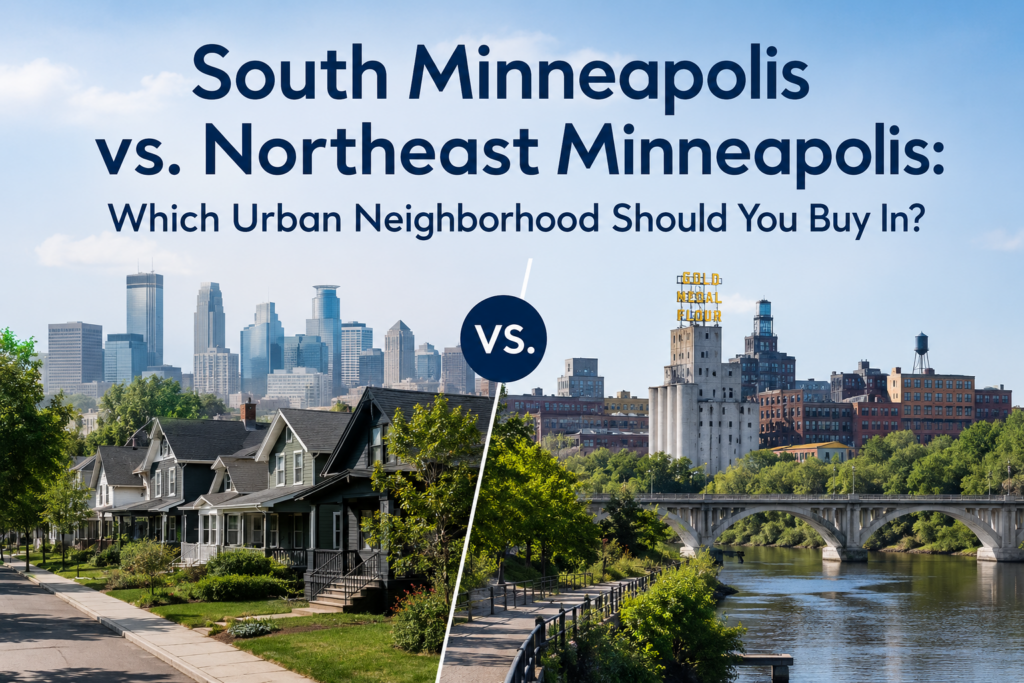
South Minneapolis vs. Northeast Minneapolis split image comparing residential bungalow street to Nordeast riverfront and Stone Arch Bridge

If you’ve decided you want to live inside Minneapolis proper — not out in the suburbs, but in the heart of the city where you can walk to coffee, bike the parkways, and actually know your neighbors — you’ve probably already narrowed your search to two areas: South Minneapolis and Northeast Minneapolis. Both are beloved, both are walkable, and both have passionate residents who will tell you theirs is the better half of the city. The truth is more nuanced than that, and which one is right for you depends less on hype and more on your daily life, your budget, and the kind of energy you want outside your front door.

The Short Version: Two Very Different Personalities

South Minneapolis is the city’s green, lake-laced backbone. It stretches from the Chain of Lakes east through Powderhorn, Nokomis, and Longfellow, and it’s defined by tree-canopied streets, classic bungalows and Cape Cods, and easy access to Lake Nokomis, Minnehaha Falls, and the Mississippi River gorge. Northeast Minneapolis, or “Nordeast” as locals call it, sits across the river from downtown and carries a completely different identity: a former Eastern European immigrant enclave turned arts and brewery district, with a grittier, more industrial edge and some of the most distinctive housing stock in the city.

Neither is “better.” They’re built for different lifestyles, and a lot of buyers who think they want one end up happier in the other once they actually compare them side by side.

What You’ll Pay: Pricing Compared

Pricing across both areas varies a lot by sub-neighborhood, so a single citywide figure doesn’t tell the real story. In South Minneapolis, the lake-adjacent pockets command a premium: Nokomis homes have recently sold in the high $360,000s to $390,000 range, while Longfellow — closer to the river and the light rail — has traded in the low $330,000s to mid $370,000s depending on the month. Powderhorn, the most affordable of South Minneapolis’s core neighborhoods, has recently listed in the $300,000–$320,000 range, making it one of the better entry points into city living south of downtown.

Northeast Minneapolis runs a similar overall range but with a bit more affordability at the median. Recent data puts the typical Northeast home sale around $340,000–$350,000, with homes moving in roughly a month on the market — a touch slower than the most competitive South Minneapolis pockets, but still well within a normal, healthy pace for the Twin Cities. Northeast also has more variation in housing stock condition, since the area mixes century-old worker cottages with recently renovated or new-construction infill, so the price range you’ll actually shop in can swing widely block to block.

Bottom line: if pure affordability is your top priority, Northeast and Powderhorn are both strong entry points into city living. If you want to be a five-minute walk from a lake, South Minneapolis’s Nokomis and Longfellow neighborhoods will cost you more — but you’re paying for the lake.

Daily Life: Lakes and Parkways vs. Arts and Breweries

South Minneapolis is built around its parks system. You’re never far from a lake loop, a bike path, or the Minnehaha Parkway, and the area’s commercial corridors — Lake Street, 38th Street, the Nokomis business district — tend to mix family-friendly restaurants, coffee shops, and small grocers. It’s a neighborhood that rewards a slower pace: morning runs around Lake Nokomis, weekend farmers markets, kids on bikes.

Northeast has a different rhythm entirely. The Northeast Minneapolis Arts District — centered around Central and Hennepin Avenues — has been recognized nationally as one of the best arts districts in the country, and the neighborhood has the highest concentration of breweries anywhere in the city. Add in Eastern European-rooted institutions that have anchored the area for generations, alongside newer Latin American and immigrant-owned businesses along Central Avenue, and you get a neighborhood that feels more layered and more urban-edge than South Minneapolis. If you want a Saturday that involves gallery hopping, a taproom flight, and dinner somewhere you’ve never tried before, Northeast delivers that in a way South Minneapolis generally doesn’t.

Both neighborhoods are highly walkable and well served by Minneapolis Parks, but the texture of that walkability is different: South Minneapolis walking means lakes and tree canopy; Northeast walking means murals, converted warehouses, and a working river.

Housing Stock: What You’re Actually Buying

South Minneapolis is dominated by classic 1900s–1950s housing: bungalows, Cape Cods, and a healthy stock of 1.5- and 2-story single-family homes, often with detached garages and modest yards. It’s consistent and predictable — most buyers know roughly what they’re getting before they walk in.

Northeast is more eclectic. You’ll find small worker cottages from the early 1900s sitting next to renovated duplexes, converted lofts in former industrial buildings, and pockets of new construction infill, especially closer to the river and in areas like Bottineau and Holland. This variety can be a feature or a frustration depending on what you want — buyers looking for character and willing to take on some renovation often gravitate to Northeast, while buyers who want a turnkey, move-in-ready home with fewer surprises often lean South Minneapolis.

Commute and Connectivity

South Minneapolis has the edge for transit, particularly along the Blue Line through Longfellow, which gives quick access to downtown and the airport. Northeast doesn’t have light rail running through its core, but it’s geographically tight to downtown — many Northeast neighborhoods are a five- to ten-minute drive from the city’s office core, often faster than a South Minneapolis commute during peak traffic. If you work downtown and want to minimize windshield time, Northeast’s proximity is genuinely underrated.

So Which One Should You Buy In?

If you want lakes, parkways, consistent housing stock, and a calmer day-to-day pace — and you’re willing to pay a bit more for the neighborhoods closest to the water — South Minneapolis is probably your fit. If you want character, art, breweries, a shorter commute downtown, and a bit more room to find value through renovation, Northeast Minneapolis deserves a serious look. Plenty of buyers end up cross-shopping both, and that’s exactly the kind of decision a local agent who knows the block-by-block differences can help you make with confidence rather than guesswork.

Not Sure Which Minneapolis Neighborhood Fits You?

South Minneapolis and Northeast Minneapolis each have their own micro-markets, and the right one for you depends on details a national site can’t tell you. MinnMatch connects you with a vetted, handpicked Twin Cities agent who knows both areas block by block — for free, with no obligation.

Find your match at MinnMatch →
  |  
See how MinnMatch works →

South Minneapolis Summer 2026: Urban Living, Walkable Neighborhoods & Real Estate Prices

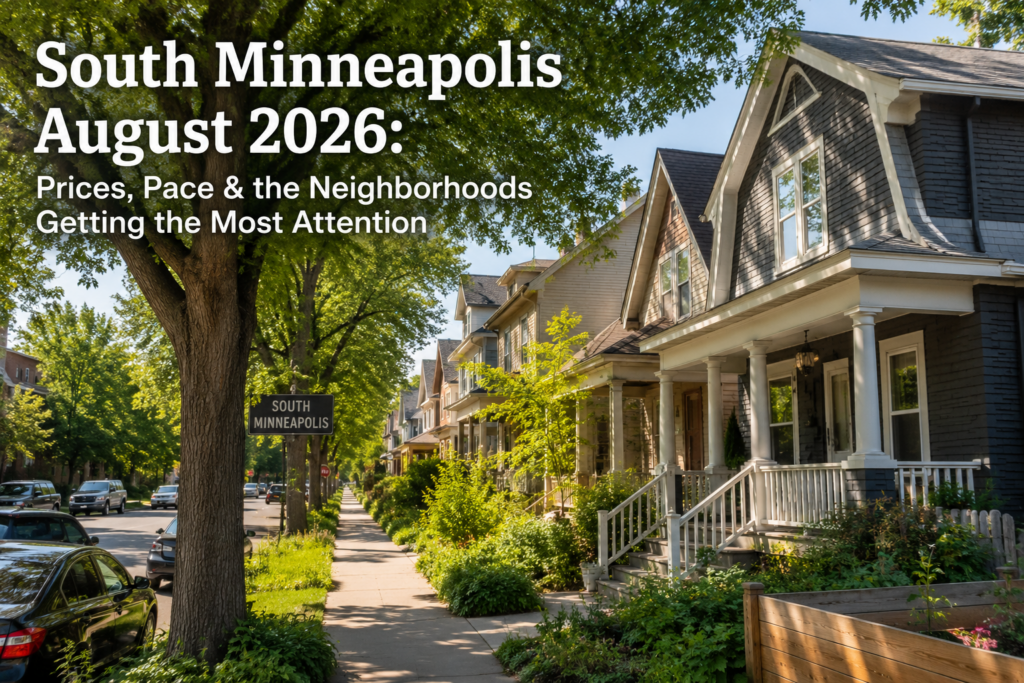
Alt text: South Minneapolis row houses along a tree-lined walking path with the downtown Minneapolis skyline and a lake in the background, summer 2026

If you’re tracking South Minneapolis real estate summer 2026, you’re watching one of the most walkable, lake-rich corners of the Twin Cities hit its peak season. The Chain of Lakes is full of paddleboards, patios along Lake Street and 50th & France are packed by 6 p.m., and the lakefront paths are doing double duty as commuter routes and evening hangouts. It’s also, predictably, when this part of the city heats up on the market. If you’ve been circling neighborhoods like Nokomis, Longfellow, Tangletown, or Linden Hills, here’s a grounded look at what’s actually happening with prices, pace, and walkability right now.

South Minneapolis Real Estate Summer 2026: Prices by Neighborhood

“South Minneapolis” isn’t one market — it’s a patchwork of distinct pockets, and the price spread between them is significant. Based on recent neighborhood-level sales data from Redfin’s Minneapolis market reports, here’s roughly where things stand this summer:

  • Longfellow: Median sale prices have generally landed in the high $330Ks to mid $340Ks, making it one of the more accessible entry points along the river.
  • Nokomis: Recent sales have clustered in the mid-to-high $360Ks to upper $380Ks, reflecting steady demand for the lake-adjacent 1920s housing stock.
  • Tangletown: This pocket has consistently traded at a premium, with recent medians pushing into the high $700Ks to near $800K for many listings.
  • Linden Hills: The priciest of the bunch, with medians generally in the $690K–$700K range and some listings well above that for homes closest to the lake.
  • Southwest Minneapolis (broader area): Pulling these pockets together, the wider southwest submarket has shown a median in the $550Ks, up modestly year over year.

For context, the citywide Minneapolis median has been running somewhere in the $345K–$375K range this year, so South Minneapolis as a whole skews above the city average — though Longfellow and parts of Nokomis remain genuinely attainable compared to the lake-rim neighborhoods further west. You can dig into county-wide trends yourself through Minneapolis Area Realtors’ market data, which tracks pricing and inventory across the metro month to month.

Why Walkability Is Driving So Much of the Demand

Ask anyone shopping South Minneapolis real estate this summer what’s on their list, and “walkable” comes up almost every time. This part of the city was largely built before everyone assumed you’d drive everywhere, and it shows: corner coffee shops, neighborhood grocery stores, and a streetcar-era commercial grid that still works on foot or bike.

A few corridors stand out for summer livability:

  • Lake Harriet & Linden Hills: The bandshell, the walking path around the lake, and the 43rd & Upton shopping strip make this one of the most pedestrian-friendly stretches in the city.
  • 50th & France (Tangletown/Fulton edge): A genuine small-downtown feel with boutiques, restaurants, and patio seating that fills up on summer evenings.
  • Lake Nokomis: Beaches, a swimming area, and a recreational path that connects easily to the rest of the Chain of Lakes system.
  • Longfellow’s West River Parkway: Mississippi River access and proximity to Minnehaha Park give this neighborhood a different, more wooded kind of walkability.

If walkability is a top priority for you, it’s worth touring neighborhoods on foot rather than just driving through — the difference between a “walkable” listing description and an actual walkable block can be more nuanced than it looks online.

Market Pace This Summer: How Fast Are Homes Moving?

Pace varies meaningfully by neighborhood. Nokomis has generally been among the fastest-moving and most competitive pockets in the city, with homes often going under contract in under two weeks during active stretches. Longfellow and the broader southwest submarket have tended to move a bit more slowly — often three to four-plus weeks — giving buyers slightly more room to think before writing an offer.

Across Hennepin County more broadly, 2026 has brought a more balanced market than the previous few years — inventory has grown, and homes are sitting a bit longer on average than they did during the tightest pandemic-era stretches. That said, well-priced homes in desirable South Minneapolis pockets, especially anything near a lake or park, are still attracting multiple offers in many cases. The Minnesota Housing Finance Agency is also a useful resource if you’re exploring down payment assistance or first-time buyer programs that could apply to a South Minneapolis purchase.

Buying in South Minneapolis This Summer

Summer buyers are dealing with two forces at once: more overall inventory than recent years, but persistent competition for the most walkable, lake-adjacent blocks. A few practical takeaways:

  • If your budget points you toward Longfellow or parts of Nokomis, you’re likely to have more breathing room than in Linden Hills or Tangletown.
  • Get pre-approved before touring — in the hotter pockets, the timeline from listing to offer deadline can still move quickly.
  • Walk the neighborhood at different times of day. Summer evenings tell you a lot about traffic noise, patio activity, and how busy the lake paths really get.

Selling in South Minneapolis This Summer

If you own in South Minneapolis, summer is generally the strongest window of the year to list. Buyers can actually picture themselves on your block — patio furniture out, lake paths busy, trees fully leafed in. A few things matter more here than in a typical suburban listing:

  • Lead with location specifics. Distance to the lake path, the walk score to the nearest coffee shop, bike route access — these details sell South Minneapolis homes more than generic staging photos.
  • Price realistically for your micro-pocket. The difference between a Longfellow comp and a Linden Hills comp three neighborhoods away is enormous; pricing off the wrong comp set is a common and costly mistake.
  • Time showings around the lifestyle. Weekend morning showings near the lakes, when the neighborhood is at its liveliest but not overrun, tend to leave the best impression.

A local agent who actually knows the difference between a Nokomis buyer and a Tangletown buyer can make a real difference in how a listing is priced and marketed — this isn’t a market where a one-size-fits-all approach gets the best result.

Buying or selling in South Minneapolis this summer?

MinnMatch connects you with vetted local agents who know these neighborhoods block by block — from Longfellow’s river bluffs to Linden Hills’ lake paths. No algorithms, no guesswork, just the right local match.

Find Your South Minneapolis Agent

Curious how MinnMatch’s matching process actually works? Take a look at how it works — it takes just a few minutes to get paired with an agent who already knows your target neighborhood.

South Minneapolis Real Estate Spring 2026: Neighborhoods, Prices & Where Buyers Are Competing

South Minneapolis real estate spring 2026 — lakeside homes, cherry blossoms, and the Minneapolis skyline

The South Minneapolis real estate market in spring 2026 is showing its characteristic energy — buyers circling open houses in Longfellow, sellers doing quick refreshes before listing in Nokomis, and “sold over ask” signs reappearing in the city’s most sought-after pockets. But this spring also looks meaningfully different from the frenzy of 2021 and 2022. If you’re buying or selling in South Minneapolis right now, understanding where competition is concentrated — and where it isn’t — can be the difference between a smart move and a costly one.

“This spring, South Minneapolis rewards the prepared buyer and the strategic seller. Knowing which neighborhoods are moving fast — and which offer room to negotiate — is the most important edge you can have.”

South Minneapolis Real Estate in Spring 2026: The Overall Picture

Minneapolis home prices in March 2026 were up 6% compared to a year ago, with a citywide median sale price of $355,000. Homes are selling in about 30 days on average — slightly faster than the 32-day pace seen a year earlier. That’s meaningful: the market isn’t stalling, but buyers are no longer stampeding either.

The data points to a stabilizing market — slightly more homes for sale, softer overall buyer demand, and prices holding steady rather than rapidly escalating. This creates a more balanced environment compared to the competitive and fast-moving years of 2021–2022. For buyers, that means more time to think. For sellers, it means pricing correctly matters more than ever. You can track current citywide trends at the Minneapolis Area Realtors market data hub.

South Minneapolis sits at the heart of this dynamic. The area south of I-94 — from the upscale Calhoun-Isles neighborhoods to the more accessible Powderhorn and Nokomis communities — spans a wide range of price points, neighborhood characters, and buyer competition levels. Here’s how the key neighborhoods stack up this spring.

Neighborhood-by-Neighborhood Breakdown

Nokomis & Minnehaha: Family-Friendly and Still Moving Fast

Nokomis continues to be one of South Minneapolis’s most desirable — and competitive — areas for families. The combination of lake access, Minnehaha Regional Park, and solid neighborhood schools draws consistent buyer interest year over year. Market data shows neighborhood medians in the low-to-mid $300,000s, with a strong supply of tidy single-family options appealing to buyers who want parks, paths, and a genuine neighborhood feel.

Well-maintained bungalows near the lake and Minnehaha Falls corridor are generating multiple offers quickly. If you’re targeting this area, expect to compete — and come in prepared with pre-approval in hand. First-time buyers who find a move-in-ready home in Nokomis under $350,000 should move decisively.

Longfellow: The Greenway Effect on Spring 2026 Home Prices

The Longfellow community — encompassing Seward, Cooper, Howe, and Hiawatha — offers a range of housing options from classic bungalows to modern updates, with home prices typically running from the mid-$200,000s to over $600,000. That wide range reflects the neighborhood’s diversity: some blocks command premiums for riverfront proximity or extensive updates, while others remain accessible to value-focused buyers.

Residents enjoy 5.7 miles of walking and bike paths on the Midtown Greenway, which runs through Longfellow and Seward — a significant lifestyle draw that supports strong demand from young professionals and active households. Homes within easy walking distance of the Greenway tend to list and close faster than those farther from the trail network.

For sellers in Longfellow, spring 2026 is a good moment to list — especially if your home has been recently updated. Buyers in this area are lifestyle-motivated and will pay for turnkey.

Powderhorn: Best Value in South Minneapolis Real Estate Right Now

Powderhorn Park is considered one of the value-focused options in Minneapolis, with reported medians ranging from the low $200,000s to the high $300,000s depending on sub-area and property condition. That makes it one of the few remaining areas of South Minneapolis where buyers — especially first-timers — can get into a detached single-family home without stretching their budget to the limit.

Investor activity has picked up in pockets of Powderhorn, reflecting growing confidence in the area’s long-term trajectory. For owner-occupants, this is a neighborhood worth watching carefully: prices are still accessible today, but the gap between Powderhorn and adjacent Nokomis and Longfellow has been narrowing. Buyers open to some cosmetic work can find the strongest value per square foot in South Minneapolis here.

Seward: Walkable, Transit-Connected, and Consistently In Demand

Seward sits just east of the Greenway, close to the University of Minnesota corridor and the Mississippi River gorge. It has a mix of older homes with strong transit options, including proximity to the light rail Green Line. Median prices in Seward typically land in the mid-to-upper $300,000s, with low vacancy and steady demand year-round.

Seward draws a broad mix of buyers: young professionals who want walkability, families who value proximity to the river gorge trails, and buyers who prioritize transit access. It’s one of the more reliably liquid neighborhoods in South Minneapolis — meaning homes sell consistently regardless of broader market conditions. Don’t expect many deals here; the market is efficient and buyers know what they’re getting.

Standish & Corcoran: The Spring 2026 Sleeper Neighborhoods

Standish and Corcoran are two adjacent South Minneapolis neighborhoods drawing significant buyer attention right now. They sit between the more premium Nokomis area to the south and busier corridors to the north, offering a price point — typically mid-$200,000s to mid-$300,000s — that has become increasingly attractive as values in surrounding neighborhoods have risen.

For buyers who’ve been priced out of Nokomis or Longfellow’s most desirable blocks, Standish and Corcoran are worth serious consideration this spring. The housing stock — predominantly craftsman bungalows and two-stories from the early-to-mid 20th century — is the same character buyers love in pricier South Minneapolis neighborhoods, often at a meaningful discount. That equation is unlikely to hold indefinitely.

Spring 2026 Price Snapshot: South Minneapolis Neighborhoods

Neighborhood Typical Price Range Buyer Competition Best For
Nokomis / Minnehaha Low–mid $300,000s High — moves fast Families, lake-lifestyle buyers
Longfellow Mid $200,000s–$600,000+ Moderate–high Greenway lifestyle, active households
Seward Mid–upper $300,000s Consistent, efficient Young professionals, transit users
Powderhorn Low $200,000s–high $300,000s Moderate Value-focused buyers, first-timers
Standish & Corcoran Mid $200,000s–mid $300,000s Growing Value seekers, long-term upside

Where Buyers Are Competing in South Minneapolis This Spring

Not every listing in South Minneapolis is drawing a crowd. But certain types of properties — in certain locations — are seeing multiple offers and quick closings. Here’s what’s generating competition in the spring 2026 market:

1

Move-in ready homes under $375,000

Turnkey homes in this price range consistently attract the most buyers across South Minneapolis neighborhoods. With mortgage rates still elevated, buyers are hesitant to take on major renovation costs on top of purchase price. Clean, updated, well-maintained homes sell quickly — often above list price.

2

Homes within walking distance of parks and trails

Proximity to Lake Nokomis, Minnehaha Falls, Minnehaha Creek, and the Midtown Greenway commands a premium. With limited inventory across Minneapolis this spring, well-located homes with lifestyle amenities are being absorbed quickly by the buyer pool.

3

Classic bungalows and craftsman homes with original character

South Minneapolis’s early-20th-century housing stock — original woodwork, built-ins, arched doorways — remains deeply appealing. Homes that preserve that character while offering updated kitchens or baths are among the most competed-for properties in the area.

4

Well-priced entry-level homes

The entry-level tier of South Minneapolis remains competitive despite the broader market cooling. Homes that are priced right in desirable areas are still drawing multiple looks — and sellers who price accurately are closing faster and with fewer concessions. For context on statewide affordability programs that may benefit first-time buyers, visit Minnesota Housing.

What Sellers Need to Know This Spring

Spring 2026 is still a good time to sell in South Minneapolis — but the days of listing at an inflated price and waiting for offers to roll in are behind us. The market rewards sellers who price accurately from day one, present their homes well, and work with an agent who genuinely knows the neighborhood.

Key considerations for sellers this spring:

  • Pricing is everything. Strategy matters more than ever in this environment. Homes that come in overpriced are sitting longer and often requiring price reductions — which signals weakness to buyers. Price to the comparable sales, not your wishlist.
  • First impressions drive offers. Buyers in South Minneapolis are lifestyle buyers. Curb appeal, fresh landscaping, and a clean interior are not optional in spring — they’re table stakes. Simple updates pay outsized dividends.
  • Neighborhood expertise matters. A price that’s right for Nokomis may be wrong for two miles north. You need an agent who can make that distinction confidently and back it up with data.
  • Timing the market is less important than timing your listing. Spring is South Minneapolis’s strongest buyer season. If you’re ready, don’t wait.

What Buyers Need to Know This Spring

The pressure to make an offer within hours has dissipated, replaced by a market that rewards thorough due diligence. That’s genuinely good news for buyers who’ve been frustrated by the past few years. But it doesn’t mean you can afford to be passive — especially in South Minneapolis, where well-priced, well-located homes are still moving quickly.

Practical advice for buyers this spring:

  • Get pre-approved before you start touring. In competitive pockets, sellers are still receiving multiple offers. Not having pre-approval ready means you can’t move when the right home hits.
  • Define your non-negotiables by neighborhood, not just features. Decide whether you’re a Nokomis buyer, a Longfellow buyer, or open to emerging areas like Standish. Your agent can focus and advocate much more effectively with that clarity.
  • Don’t dismiss fixer-uppers in premium locations. With competition for turnkey homes stiff, a home that needs cosmetic work in a top-tier block can be a smart play — especially if you’re patient and handy.
  • Understand what’s driving the market in your target neighborhood. The dynamics in Powderhorn are not the same as in Nokomis. A locally knowledgeable agent isn’t just helpful — it’s the single biggest advantage you can have. You can also explore current listings and recent sales data for South Minneapolis on Redfin.

Ready to Buy or Sell in South Minneapolis?

MinnMatch connects buyers and sellers with handpicked, vetted local real estate agents who specialize in South Minneapolis neighborhoods. Our matching process is free, human-powered, and built around your specific situation — not an algorithm. Whether you’re navigating Nokomis competition or figuring out if Powderhorn is right for you, we’ll connect you with an agent who genuinely knows the area.

Find Your South Minneapolis Agent →

The Bottom Line

South Minneapolis real estate in spring 2026 is not the frenzied seller’s market of a few years ago — and that’s actually a healthy thing. Prices are up modestly, inventory is slightly improved, and both buyers and sellers have more room to make deliberate decisions. But “more balanced” doesn’t mean “easy.” The best homes in the best spots still move fast, and the buyers and sellers who succeed are the ones who show up prepared, priced right, and matched with an agent who knows these blocks as well as they know the data.

If you’re planning a move in South Minneapolis this spring, don’t go it alone. See how MinnMatch works — and let us connect you with a local agent who can give you the edge you need.