
Lake Minnetonka Community Guide: A Simple Breakdown

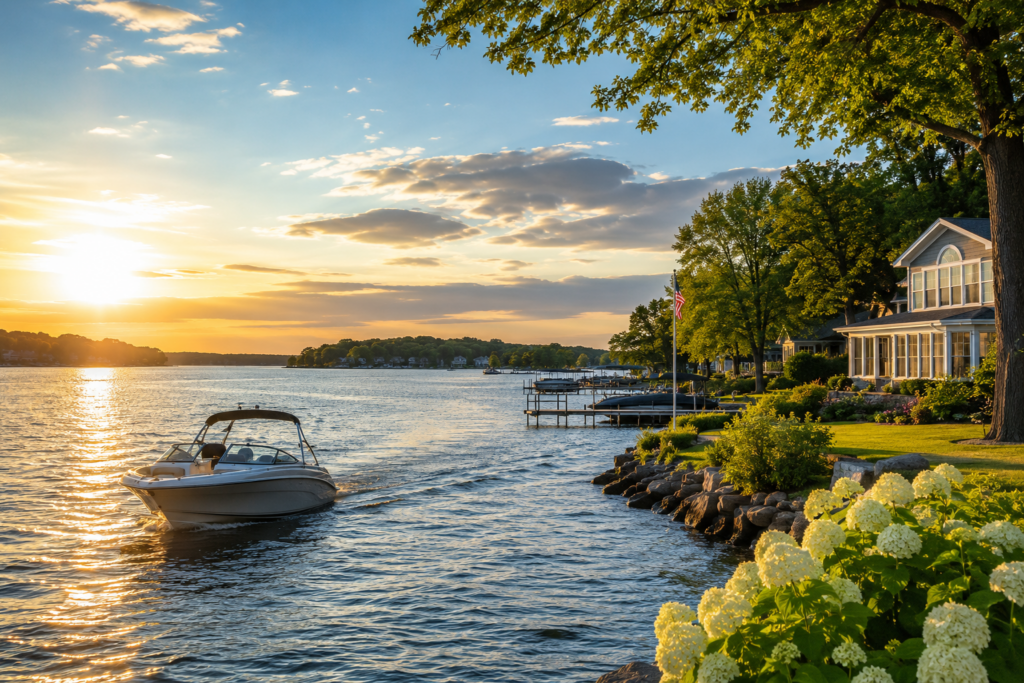
Lakefront home on Lake Minnetonka at sunset with a motorboat on the water, a private dock, hydrangeas in the foreground, and mature trees framing the property

Lake Minnetonka isn’t just one place—it’s a collection of distinct communities, each with its own personality, price points, and lifestyle.

If you’re starting your home search, it can feel a little overwhelming. The good news? You don’t need to know everything right away—you just need a simple feel for how the areas differ.

This guide gives you a clean, practical breakdown of all the main Lake Minnetonka communities so you can start narrowing in on what fits you best.

Wayzata

One of the most well-known lake towns, Wayzata offers a walkable downtown right on the water.

What it’s known for:

  • Upscale homes and strong long-term value
  • Restaurants, shops, and lakefront activity
  • A polished, high-demand feel

Best fit: Buyers who want walkability, energy, and a premium location.

Excelsior

Excelsior brings charm, history, and a laid-back lake vibe.

What it’s known for:

  • Small-town feel with local shops and restaurants
  • Community events and lakefront park space
  • Character-filled homes

Best fit: Buyers who value charm, community, and a slower pace.

Minnetonka

Minnetonka offers flexibility, convenience, and a wide range of home options.

What it’s known for:

  • Variety of neighborhoods and price points
  • Easy access to highways and amenities
  • Strong schools and established communities

Best fit: Buyers looking for value, options, and practicality near the lake.

Orono

Orono is known for space, privacy, and high-end lakefront living.

What it’s known for:

  • Large lots and quiet settings
  • Luxury homes and premium shoreline
  • A more secluded, residential feel

Best fit: Buyers prioritizing privacy, views, and long-term lake living.

Tonka Bay

Tonka Bay is small, quiet, and tucked into some of the lake’s most desirable shoreline.

What it’s known for:

  • Peaceful residential feel
  • Access to marinas and lake activity
  • Close proximity to Wayzata

Best fit: Buyers who want a quieter setting without being far from amenities.

Deephaven

Deephaven offers a mix of lake access, community feel, and convenience.

What it’s known for:

  • Strong sense of community
  • Parks, trails, and lake access
  • Blend of older homes and newer builds

Best fit: Buyers looking for a balanced lifestyle near the lake.

Woodland

Woodland is a smaller, upscale community with a quiet, residential feel.

What it’s known for:

  • High-end homes
  • Low density and privacy
  • Close proximity to Wayzata

Best fit: Buyers wanting a premium location with a quieter setting.

Greenwood

Greenwood is one of the smallest communities on the lake, but highly desirable.

What it’s known for:

  • Tight-knit neighborhood feel
  • Mix of lakefront and non-lakefront homes
  • Convenient access to surrounding areas

Best fit: Buyers looking for a small, established community.

Shorewood

Shorewood offers a mix of lake access, neighborhoods, and value.

What it’s known for:

  • More accessible price points (compared to some areas)
  • Family-friendly neighborhoods
  • Proximity to Excelsior

Best fit: Buyers who want to be near the lake with a bit more flexibility on price.

Spring Park

Spring Park is a small lakeside community with a casual, relaxed feel.

What it’s known for:

  • Close connection to the lake
  • Smaller homes and lots
  • A low-key, local vibe

Best fit: Buyers who want a simple, lake-oriented lifestyle.

Mound & Minnetrista

These western communities offer more space and often better value.

What they’re known for:

  • Larger lots and quieter surroundings
  • More affordable entry points into the Lake Minnetonka area
  • Growing interest from buyers seeking space

Best fit: Buyers who want room to spread out and a more relaxed pace.

Victoria

While slightly removed from the main shoreline, Victoria still connects closely to the Lake Minnetonka lifestyle.

What it’s known for:

  • Newer construction and planned communities
  • Parks, trails, and family-friendly feel
  • Access to both Lake Minnetonka and nearby lakes

Best fit: Buyers looking for newer homes and a suburban feel near the lake.

Final Thoughts

Each Lake Minnetonka community offers something a little different. Some are built around walkability and energy. Others focus on privacy, space, or value.

The key is figuring out what matters most to you:

  • Walkability or privacy
  • Lakefront or near-lake
  • Newer homes or established neighborhoods

Once you have clarity on that, the right community usually becomes much easier to spot.

If you’re starting your search, taking the time to explore a few of these areas in person can make all the difference—and help you feel confident about where you ultimately land.

Lake Minnetonka, Real Estate

Explore homes, communities, and lake living around Minnetonka.
Read More

5 Things Buyers Love About Living Near Lake Minnetonka

Illustrated scene of Lake Minnetonka on a sunny summer day with a motorboat, paddleboarder, and sailboat on the water, Adirondack chairs on a dock, and lakefront homes along the wooded shoreline.

There’s a reason so many buyers are drawn to the Lake Minnetonka area. It’s not just about finding a home—it’s about finding a lifestyle that feels different from the typical suburban experience.

From summer days on the water to charming downtowns and long-term value, living near Lake Minnetonka offers a unique mix that’s hard to replicate anywhere else in the Twin Cities.

Here are five things buyers consistently love about living in this area.

1. The Lake Lifestyle

For many buyers, this is the main draw.

Living near Lake Minnetonka means having easy access to:

  • Boating and water activities in the summer
  • Lakeside dining and marinas
  • Sunset views and waterfront parks
  • A general “up north” feel—without leaving the metro

Even if you’re not directly on the lake, just being nearby changes how you spend your time. Weeknights feel more relaxed. Weekends feel like a getaway.

2. Walkable Lake Towns

Areas like Wayzata and Excelsior give buyers something you don’t find in most suburbs—true walkability with character.

Buyers love:

  • Being able to walk to coffee shops, restaurants, and local stores
  • Community events, farmers markets, and lakefront gatherings
  • A small-town feel with upscale amenities

It creates a lifestyle where you don’t always need to hop in the car to enjoy your surroundings.

3. Strong Long-Term Home Values

Lake Minnetonka has long been one of the most desirable areas in the Twin Cities—and that tends to show up in home values.

Buyers are often attracted to:

  • Consistent demand, especially for well-located homes
  • Limited lakefront inventory, which helps support pricing
  • A reputation as a premium location within the metro

While every market has ups and downs, this area has historically held its value well compared to many surrounding communities.

4. Variety of Communities and Home Styles

One of the biggest surprises for many buyers is how much variety exists around the lake.

You’ll find:

  • Walkable downtown living in Wayzata or Excelsior
  • Quiet residential neighborhoods in Minnetonka
  • Private, luxury lakefront homes in Orono or Tonka Bay
  • A mix of older homes, remodeled properties, and newer construction

This gives buyers flexibility to find something that fits both their lifestyle and budget—without having to leave the Lake Minnetonka area.

5. Year-Round Appeal

While summer gets most of the attention, the Lake Minnetonka area isn’t just a seasonal destination.

Buyers appreciate:

  • Fall colors and quieter lake views
  • Winter activities like skating, ice fishing, and snow-covered scenery
  • A slower, more peaceful pace during the colder months
  • A strong sense of community throughout the year

It’s a place that offers something different in every season, which is a big part of its long-term appeal.

Final Thoughts

Living near Lake Minnetonka offers more than just a place to live—it offers a lifestyle that blends nature, community, and convenience in a way that’s hard to match.

For many buyers, once they spend time in the area, it quickly moves to the top of their list.

If you’re considering making a move here, understanding what makes each community unique can help you find the right fit—and ultimately enjoy everything the Lake Minnetonka area has to offer.

Lake Minnetonka, Real Estate

Explore homes, communities, and lake living around Minnetonka.
Read More

Mortgage & Financing Basics in Minnesota | Twin Cities Guide

Person logging into an online banking app on a smartphone, representing mortgage and financing research for Twin Cities home buyers


Understanding mortgage basics in Minnesota is one of the most important steps you can take before buying a home in the Twin Cities. Whether you’re a first-time buyer in Eden Prairie or upgrading to a lake home near Wayzata, knowing your loan options, down payment requirements, and what lenders look for will save you time, money, and stress — and put you in a much stronger position when the right home hits the market.

Types of Mortgage Loans Available in Minnesota

Minnesota buyers have access to a wide range of loan products. Choosing the right one depends on your credit profile, how much you’ve saved, and whether you’re buying in an urban or suburban market.

Conventional Loans

Not government-backed. Typically require a 620+ credit score and 3–20% down. Best for buyers with solid credit and stable income. Widely available from Twin Cities lenders and credit unions.

FHA Loans

Backed by the Federal Housing Administration. Allow down payments as low as 3.5% with a 580+ credit score. A popular choice for first-time buyers in South Minneapolis, Plymouth, and other competitive suburbs.

VA Loans

Available to eligible veterans, active-duty service members, and surviving spouses. No down payment required, no PMI, and competitive rates. Minnesota has a large military community — this is an excellent option if you qualify.

USDA Loans

Designed for rural and some suburban areas. No down payment required if the property is in an eligible zone. Some communities on the outskirts of the metro — including parts of Prior Lake — may qualify.

Jumbo Loans

For homes priced above the conforming loan limit (~$806,500 in 2025). Common in high-value markets like Lake Minnetonka, Edina, and Wayzata. Require stronger credit and larger reserves.

Fixed vs. Adjustable Rate

Fixed-rate mortgages lock in your rate for the life of the loan (15 or 30 years). ARMs offer a lower initial rate that adjusts after a set period. Most Minnesota buyers in long-term homes prefer fixed-rate for predictability.

Minnesota Down Payment Assistance Programs

Coming up with a down payment is the #1 barrier most buyers face. The good news: Minnesota has some of the country’s most robust down payment assistance (DPA) programs, particularly for first-time and moderate-income buyers.

Key Programs to Know

  • MN Housing Start Up — Offers below-market interest rates plus optional DPA for first-time buyers statewide. Income and purchase price limits apply.
  • MN Housing Step Up — For repeat buyers or those with higher incomes who still need help. Flexible income limits and loan types.
  • Monthly Payment Loan (MPL) — A second mortgage from Minnesota Housing to cover the down payment and closing costs, repaid monthly alongside your first mortgage.
  • Deferred Payment Loan (DPL) — Zero interest, no monthly payments required. Due only when you sell, refinance, or pay off the home. Income-restricted.
  • Local City/County Programs — Many Twin Cities municipalities (including Minneapolis, Saint Paul, and Hennepin County) offer their own layered DPA grants.

Eligibility rules, income limits, and program availability change regularly. Always verify details directly through Minnesota Housing Finance Agency (mnhousing.gov) or ask your lender.

Getting Pre-Approved: What Minnesota Lenders Look For

Pre-approval is non-negotiable in the Twin Cities market. In competitive neighborhoods like Edina or Minnetonka, sellers routinely reject offers that don’t come with one. Here’s what lenders evaluate:

  1. Credit Score — Most conventional lenders want 620+; FHA allows 580+. Higher scores unlock better rates. Pull your free report at AnnualCreditReport.com and dispute any errors before you apply.
  2. Debt-to-Income Ratio (DTI) — Your total monthly debt payments divided by gross monthly income. Most lenders cap this at 43–50%. Pay down revolving debt before applying if possible.
  3. Employment & Income History — Two years of steady employment in the same field is the gold standard. Self-employed buyers will need two years of tax returns and a profit-and-loss statement.
  4. Assets & Reserves — Lenders want to see enough savings for your down payment, closing costs (typically 2–3% of the purchase price in Minnesota), and a few months of mortgage payments in reserve.
  5. Property Type — Condos, multi-family homes, and rural properties can come with additional underwriting requirements. Your lender should flag these early.

💡 Pro Tip: Get pre-approved — not just pre-qualified. Pre-qualification is a quick estimate; pre-approval involves verified documentation and carries far more weight with sellers. In multiple-offer situations, it can be the difference between winning and losing.

Understanding Mortgage Rates in Minnesota

Mortgage rates in Minnesota generally track national averages set by broader economic conditions and Federal Reserve policy — but your personal rate depends on your credit score, loan type, down payment size, loan term, and the lender you choose.

A few things to keep in mind when comparing rates:

  • APR vs. Interest Rate — The APR includes fees and gives a truer picture of the total cost. Always compare APRs, not just headline rates.
  • Discount Points — You can pay upfront points to buy down your rate. This makes sense if you plan to stay in the home long-term.
  • Rate Locks — Once you find a home, locking your rate protects you from increases during underwriting. Most locks run 30–60 days.
  • Shop Multiple Lenders — Rates vary meaningfully between banks, credit unions, and mortgage brokers. Getting 3–5 quotes can save you thousands over the life of the loan. Use resources like Redfin Mortgage or local Minnesota credit unions to compare.

Closing Costs in Minnesota: What to Budget For

Closing costs are separate from your down payment and are easy to underestimate. In Minnesota, buyers typically pay 2–3% of the purchase price at closing. On a $450,000 home, that’s $9,000–$13,500.

Cost Item Typical Range Notes
Loan Origination Fee 0.5–1% of loan Negotiable with some lenders
Appraisal $500–$800 Required by lender to confirm value
Title Insurance $1,000–$2,500 Protects lender (and optionally you) from title defects
Home Inspection $400–$600 Strongly recommended; paid before closing
Prepaid Interest Varies Interest accrued from closing date to first payment
Property Tax Escrow 2–3 months Collected upfront to fund escrow account
Recording Fees (MN) $100–$300 Paid to county to record the deed and mortgage

Some sellers in slower markets may agree to cover part of your closing costs — a great negotiating point your agent can help you work into an offer. Learn more about what to expect as a buyer on our Buyers page.

First-Time Homebuyer Resources in Minnesota

If this is your first home purchase, you’re in good company — and there’s substantial support available to you in the Twin Cities.

  • Homebuyer Education Course — Required for many DPA programs. Minnesota Housing-approved courses can be taken online or in person. They cover budgeting, the purchase process, and long-term homeownership. Visit mnhousing.gov to find approved providers.
  • Minneapolis Area REALTORS® — Publishes monthly market data and resources for local buyers. Helpful for understanding current inventory and pricing trends. See mplsrealtor.com.
  • HUD-Approved Housing Counselors — Free or low-cost counseling from nonprofit agencies certified by the Department of Housing and Urban Development. They can review your credit, help you build a savings plan, and walk you through loan options.
  • MinnMatch Agent Matching — Once your financing picture is clearer, pairing with the right buyer’s agent makes a real difference. Our free matching service connects you with vetted, local agents who know your target neighborhoods inside and out.

Mortgage Basics Minnesota: Common Questions Answered

How much do I need to put down in Minnesota?

It depends on the loan type. Conventional loans can go as low as 3%, FHA at 3.5%, and VA/USDA at 0%. A larger down payment (20%+) eliminates private mortgage insurance (PMI) and reduces your monthly payment, but it’s not required. Many successful Twin Cities buyers close with 5–10% down.

What’s the difference between pre-qualification and pre-approval?

Pre-qualification is an informal estimate based on self-reported numbers. Pre-approval involves submitting documentation — pay stubs, tax returns, bank statements — and a hard credit pull. Pre-approval letters carry real weight with sellers. In a competitive market, don’t skip this step.

Can I use a gift for my down payment?

Yes, most loan programs allow gifted funds from family members. You’ll need a gift letter stating the money doesn’t need to be repaid. FHA and conventional loans both permit this; your lender will guide you through documentation requirements.

Is it better to use a local Minnesota lender or a national bank?

Both can work well. Local credit unions and mortgage brokers often offer competitive rates and more personalized service — and they understand Minnesota-specific programs like MN Housing products. National banks may have streamlined apps and consistent processes. The best choice is the lender who gives you the right rate, clear communication, and can close on time.

What credit score do I need to buy a home in Minnesota?

Most conventional loans require a 620 minimum. FHA loans go as low as 580 (with 3.5% down) or even 500 (with 10% down). VA and USDA loans don’t have a set minimum, but most lenders apply an internal floor around 620–640. The higher your score, the better your rate — every 20-point improvement can meaningfully reduce your monthly payment.

Ready to Start Your Home Search in the Twin Cities?

Getting your financing in order is step one. Step two is finding an agent who knows your market. MinnMatch connects Minnesota buyers with handpicked, vetted local agents — completely free.

Find Your Agent

This article is intended for general informational purposes. Loan programs, income limits, and rates change frequently. Always consult with a licensed mortgage professional for advice specific to your situation.