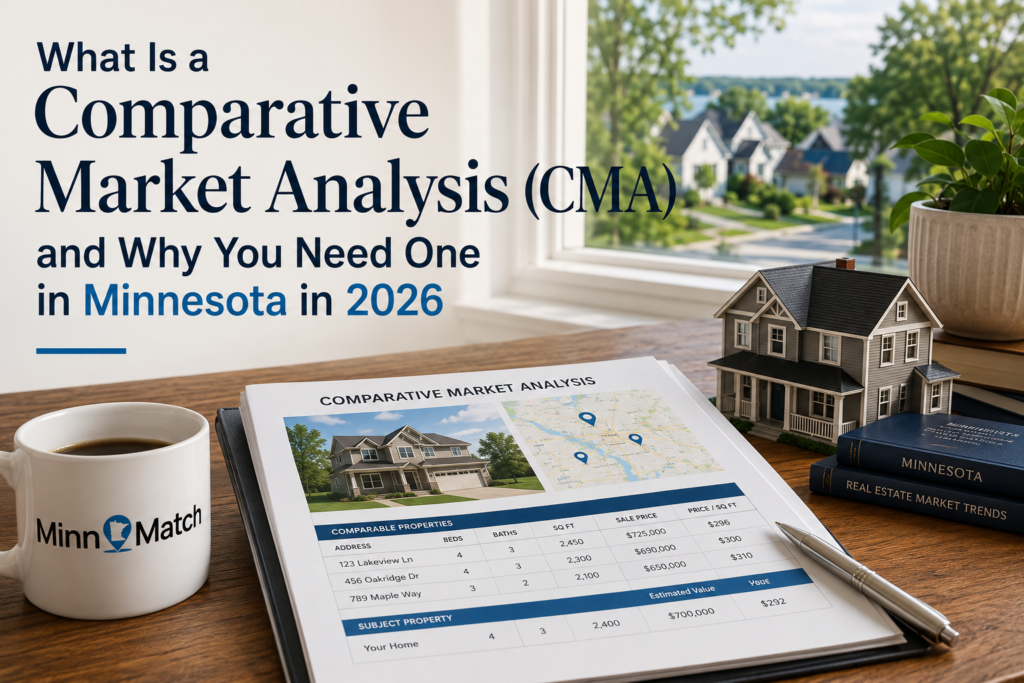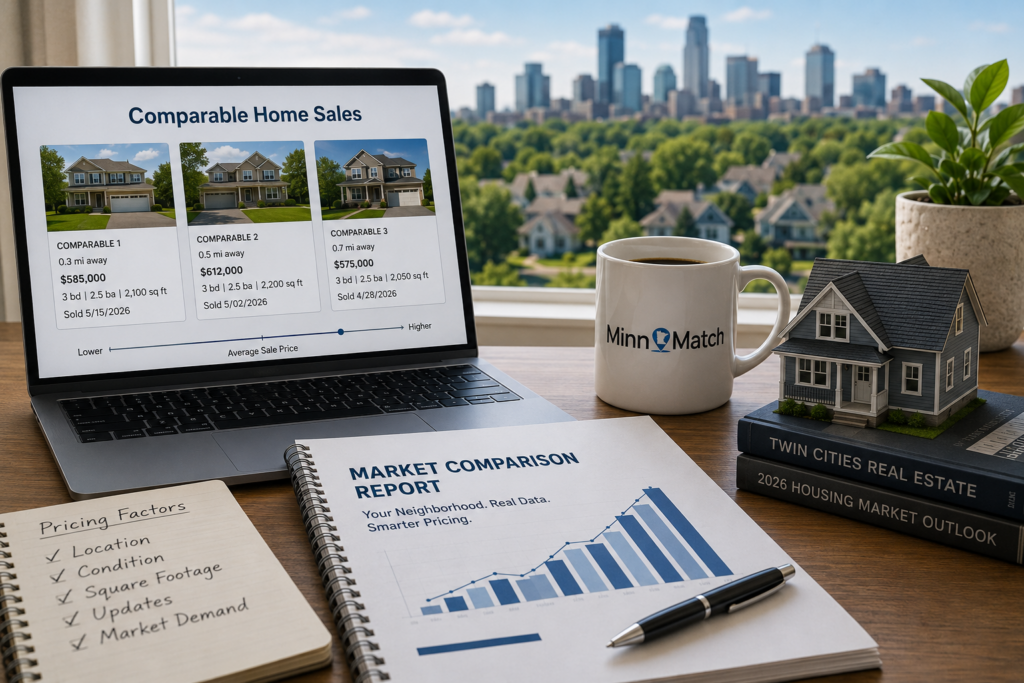
If you’ve pulled up recent sales near your house and thought “okay, but what does this actually mean for MY price,” you’re asking the right question. Comps aren’t a magic number—they’re a starting point that still needs a trained eye to interpret. And in the Twin Cities right now, that eye matters more than usual. Inventory across Minnesota just hit a seven-year high, with metro listings up more than 5% from a year ago, while Minneapolis Area Realtors data shows homes are still moving in around six weeks and selling close to full asking price. That combination—more choices for buyers, but a market that still rewards accurate pricing—is exactly why so many Twin Cities sellers get this step wrong. Here’s how to price your Twin Cities home using the comps in front of you, not just the number a website spits out.
Why Raw Comps Rarely Match Your Home Exactly
A comp is only useful once you’ve adjusted it for what’s actually different. Two three-bedroom ramblers a block apart in Richfield can sell $40,000 apart because one has a finished basement and the other doesn’t, or one closed in April during peak buyer competition and the other closed in a slower month. When you price your Twin Cities home, the goal isn’t to average the comps—it’s to figure out which ones are honestly similar and which ones need adjusting up or down for square footage, lot size, garage stalls, updates, and condition.
A good local agent does this adjustment work as part of a full comparative market analysis, weighing not just sale price but days on market, concessions, and how many offers each comp actually received. That last part rarely shows up on a public listing site, but it changes everything about what a comp is really telling you.
What the Current Twin Cities Numbers Actually Say
As of the most recent Minnesota Realtors report, the Twin Cities metro median sale price sits around $410,000, up roughly 2% from last year, with homes averaging in the low-to-mid 40s for days on market and sellers typically receiving close to 99.6% of their final list price. That last figure is the one worth sitting with: it means well-priced homes are still selling close to ask, but the margin for error has narrowed compared to the tightest years of the pandemic-era market. Overprice a home today and it doesn’t just sit—it often ends up selling for less than if it had been priced accurately from day one, because buyers start to wonder what’s wrong with it after a few weeks of silence.
Inventory is also a bigger factor in your pricing than it was a year or two ago. With more listings for buyers to compare against, your home is competing directly with the comp down the street that’s still active—not just the ones that already closed. Redfin’s local market data shows homes across the metro still selling in around three weeks on average, but that pace varies a lot by suburb, price point, and condition, which is exactly why a one-size-fits-all number from an online estimator can miss so badly.
The Overpricing Trap Twin Cities Sellers Keep Falling Into
It’s tempting to price high and “see what happens”—especially if you’ve heard stories about bidding wars from a few years back. But in a market with rising inventory, that strategy usually backfires. The first two weeks after listing get the most buyer traffic and the most showings your home will ever see. Price too high during that window, and you burn through your best shot at multiple offers. By the time you drop the price, the buyers who were originally excited have often moved on to something else, and the new price can look like a red flag rather than a fresh opportunity.
This is especially true in suburbs like Eden Prairie, Minnetonka, and Plymouth, where buyers are actively cross-shopping similar homes across neighboring suburbs. If your price doesn’t line up with what the comps in those areas support, buyers will simply move to the next listing on their tour.
Adjusting for Your Home’s Real Condition
Comps also assume a level of updating and condition that your home may or may not match. An original 1998 kitchen isn’t the same as one updated in 2023, even if the square footage and bedroom count are identical. When you price your Twin Cities home, be honest about where it falls on that spectrum—not to talk yourself down, but to set a number buyers will actually believe once they walk through the door. A price that matches what buyers see in person tends to hold up through inspection and appraisal; a price that only makes sense from the street often doesn’t.
This is also where local financing conditions matter more than people expect. With the 30-year fixed mortgage rate hovering in the mid-6% range this summer according to Freddie Mac’s weekly survey, monthly payment sensitivity is real for a lot of Twin Cities buyers. A home priced even $10,000–$15,000 above what the comps support can push a buyer’s payment past their comfort zone entirely, shrinking your pool of interested offers before a single showing happens.
The Smartest Way to Price Your Twin Cities Home
Automated home value estimates are a fine starting point, but they’re pulling from public records and broad averages—they don’t know that your street floods a little in spring, that your neighbor’s finished basement isn’t permitted, or that a comp two doors down included a $15,000 seller credit that never showed up in the headline sale price. An agent who works your specific pocket of the Twin Cities day in and day out will catch those details, because they’re the ones who negotiated some of those deals themselves.
That’s really what it takes to price your Twin Cities home well: reading the comps the way someone who knows your neighborhood would, not the way a spreadsheet does. If you want a second opinion before you land on a listing price, MinnMatch can connect you with a local agent who knows your specific street, your specific suburb, and exactly how your comps stack up—free, with no obligation. It’s a quick way to find out whether the number you’re considering will actually hold up once real buyers start walking through the door.