Edina Teardowns and New Builds: What Buyers Should Know

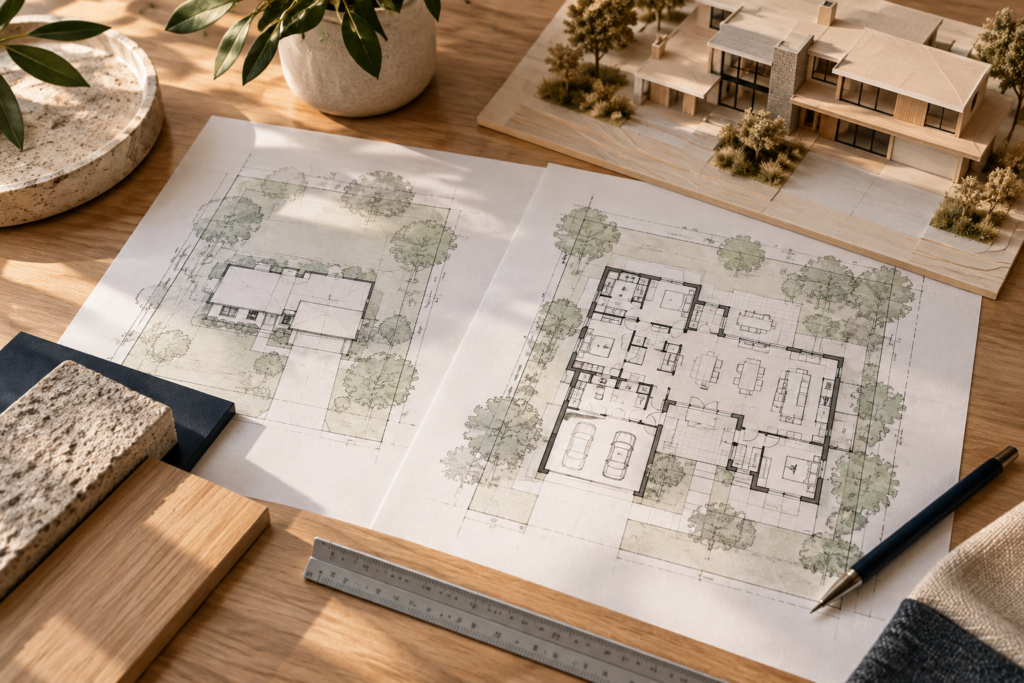
Site plans comparing an existing rambler and a larger new home design on the same tree-lined Edina lot, with an architectural model and material samples

Drive through Morningside, White Oaks, or the streets around Countryside Park and you’ll see it on nearly every block: a 1950s rambler sitting next to a brand-new two-story with a modern farmhouse roofline. Edina has been one of the busiest teardown markets in the Twin Cities for more than a decade, and for good reason. Buyers want the schools, the location, and the established trees, but not always the 70-year-old floor plan. If you’re weighing an Edina teardown or shopping for a newly built home, here’s what to know about lot values, rebuild costs, and the city rules that shape every project.

Why Edina Teardowns Are So Common

Edina’s housing stock is a mix of prewar homes, postwar ramblers and split-levels, and newer construction. Much of the city was built out between the late 1940s and the 1970s, and many of those homes sit on generous lots in neighborhoods that are now some of the most in-demand in the metro. When the land is worth more than the house on it, redevelopment follows.

That’s the basic math behind an Edina teardown: a buyer pays for the location, removes the existing house, and builds something that fits how families live today, with open kitchens, bigger primary suites, mudrooms, and finished lower levels. You’ll see this most in the older, close-in neighborhoods east of Highway 100 and near 50th & France, though it happens across the city. For a broader look at how the city’s neighborhoods compare, see our Edina community guide.

What Lots and Rebuilds Actually Cost

There’s no single price for a teardown lot in Edina. Location, lot width, slope, trees, and which side of a busy street you’re on all move the number. Generally, homes bought for redevelopment in the most popular neighborhoods trade for well above the city’s typical starter-home price, because buyers are competing with builders who know exactly what a finished home on that block will sell for. You can track the overall pace of the market on Redfin’s Edina housing market page, but lot-level pricing really calls for a close look at recent sales on the same streets.

On top of the land, budget for the whole picture:

  • Demolition and site work: asbestos survey or abatement, utility disconnects, hauling, and excavation.
  • Design and engineering: architect fees, a new survey, stormwater planning, and possibly shoring or retaining wall engineering on tight or sloped lots.
  • Construction: custom builds in Edina typically land in the high-end range on a per-square-foot basis, and finishes drive that number more than anything else.
  • Permits, escrows, and carrying costs: city and watershed permits, tree protection escrow, plus property taxes and interest while the house is built.

Add it up and the all-in cost of a new home on an Edina teardown lot often lands in the same territory as buying a recently built home outright. That’s why it pays to price both paths before you commit to one.

Edina Teardown Rules: What the City Requires

Edina has more structure around residential redevelopment than most Twin Cities suburbs, and it has a dedicated Residential Redevelopment Coordinator to manage it. The rules came out of years of neighbor complaints about construction traffic, mud, and oversized homes, so expect the process to be thorough. According to the city’s residential demolition checklist, a teardown includes:

  • Neighbor notification: letters to every property within 300 feet at least 15 days before demolition, and a neighborhood meeting at least 5 days before work starts.
  • A Construction Management Plan signed by the builder, plus erosion control, dust control, and an existing-conditions survey.
  • Tree Protection Escrow under city code, which matters a lot in a city known for its mature canopy.
  • A watershed permit from either Nine Mile Creek or Minnehaha Creek, depending on where the lot sits.
  • A 30-day rule: if a new home doesn’t start within 30 days of demolition, the site must be filled, graded, and seeded, or the city uses the escrow to do it.

The new house then goes through its own review, outlined in the city’s new single-family home checklist, including a stormwater report and impervious surface calculations. Zoning limits on height, setbacks, and lot coverage also control how big you can build, and they vary with lot size and width. Confirm those numbers with Edina’s planning department before you fall in love with a floor plan. One more Edina-specific wrinkle: homes in the Country Club District are part of a heritage landmark district, so demolition and new construction there require a Certificate of Appropriateness and face a much higher bar.

Buying a New Build vs. Building Your Own

Most buyers interested in new construction in Edina end up on one of three paths:

  • Buy a finished spec home. A builder buys the lot, builds, and lists it. You get a new house with a known price and no construction risk, but less say in the design.
  • Buy a lot-and-plan package. Some builders control lots and offer to build one of their plans, with room for customization. It’s a middle ground on control and timeline.
  • Do your own Edina teardown. You buy the existing home, pick an architect and builder, and manage the full process. Maximum control, but also the longest timeline, often a year or more from purchase to move-in, and the most decisions.

If you go the do-it-yourself route, line up financing early. Construction loans work differently from a standard mortgage, with draws released as the build progresses, and you’ll want a plan for where you’ll live in the meantime. Our buyer resources are a good place to start sorting out the basics.

What to Check Before You Buy a Teardown

A house you plan to knock down still deserves due diligence. The questions just shift from the furnace and the roof to the dirt underneath. Before you write an offer, look into:

  • Buildable footprint: what setbacks, height limits, and impervious surface rules actually allow on that specific lot.
  • Soils and drainage: low spots, high water tables, and proximity to creeks or ponds can add real cost.
  • Trees: which mature trees you can remove and how tree protection will shape the site plan.
  • Utilities and old wells: sewer and water connections, and whether an old well needs to be sealed.
  • The block itself: what nearby new builds have sold for, which tells you whether your finished home will hold its value.

Many teardown buyers write offers with a longer inspection or feasibility period so they can bring in a builder or architect to walk the lot before they’re locked in. In a competitive neighborhood, an agent who knows how Edina redevelopment works can help you balance that protection against making a strong offer.

Edina Teardown FAQ

Do I need city approval to tear down a house in Edina?

Yes. You need a demolition permit, which requires neighbor notification within 300 feet, a neighborhood meeting, a construction management plan, utility disconnects, asbestos verification, and tree protection escrow, among other items. The new home needs a separate building permit.

How long does a teardown and rebuild take in Edina?

Plan on a year or more from purchase to move-in when you account for design, permitting, demolition, and construction. City plan review alone takes at least two weeks, and Minnesota winters can stretch exterior work.

Is it cheaper to build new or buy a newer home in Edina?

It depends on the lot and your finish level. Once you add land, demolition, design, construction, and carrying costs, building often costs about the same as buying a recently built home, so compare both before deciding.

Find an Agent Who Knows Edina Redevelopment

Buying a teardown or a new build in Edina is a different kind of purchase. You need someone who can read a lot, knows which blocks are turning over, and has relationships with local builders. MinnMatch hand-matches buyers with vetted Twin Cities agents who know Edina street by street, and it’s free for buyers. See how MinnMatch works, or get matched with an Edina agent today.

South Minneapolis vs. Edina in 2026: Urban Energy vs. Suburban Comfort

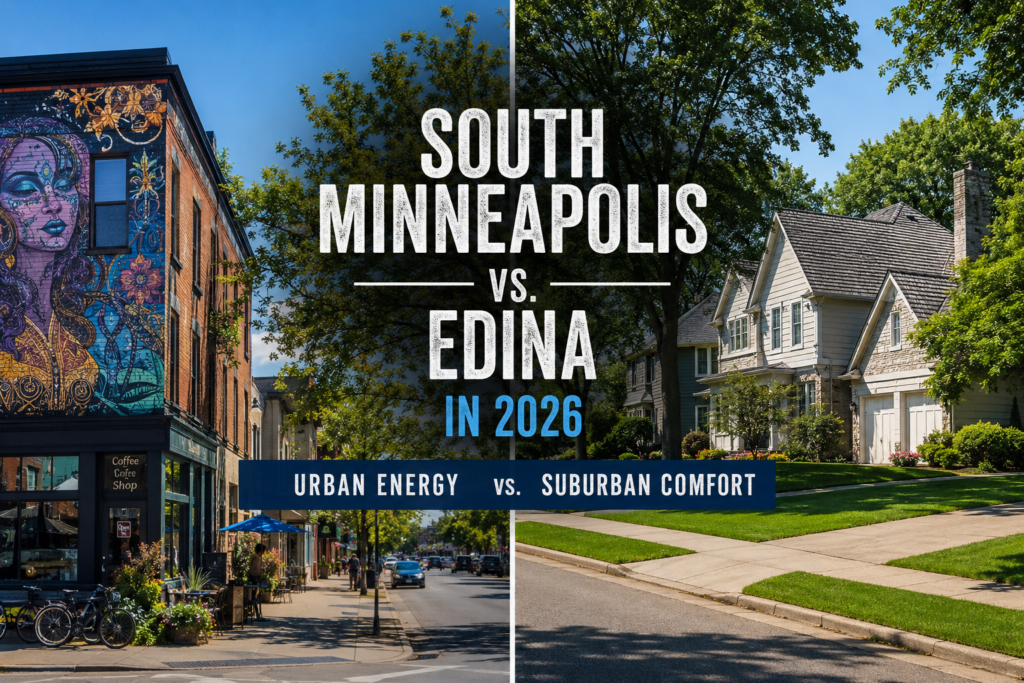
Split image comparing South Minneapolis urban street with mural and coffee shop to Edina suburban street with tree-lined homes, text reads South Minneapolis vs. Edina in 2026, Urban Energy vs. Suburban Comfort

Ten minutes can separate two completely different ways of living in the Twin Cities. Head south from downtown Minneapolis and you land in the city’s lake-chain neighborhoods — Nokomis, Longfellow, Linden Hills — where coffee shops, bike trails, and front-porch culture define daily life. Keep driving west and the city gives way to Edina, where tree-lined cul-de-sacs, top-rated schools, and the polish of 50th & France take over. The South Minneapolis vs Edina question comes up constantly with buyers who love the Twin Cities but can’t decide whether they want to live in the middle of it or a comfortable distance away. Here’s how the two compare in 2026.

South Minneapolis: Urban Energy, Walkability & Culture

South Minneapolis is really a collection of distinct neighborhoods strung along the Chain of Lakes and the Mississippi River, and that variety is part of the draw. Longfellow and Nokomis offer 1920s bungalows a short bike ride from Lake Nokomis and Minnehaha Falls. Linden Hills and Tangletown lean more polished, with walkable retail strips and easy access to Lake Harriet. Powderhorn and Kingfield bring a grittier, more eclectic energy — think independent coffee shops, ethnic restaurants, and a younger buyer pool.

What ties it together is walkability. Many South Minneapolis blocks score in the 70s and 80s on Walk Score, and the neighborhood sits inside the city’s chain of lakes and parkway system, which means green space and water access without leaving the urban grid. Buyers who want restaurants, nightlife, and transit within walking distance — without giving up a yard entirely — tend to land here. It’s a big part of why the South Minneapolis vs Edina debate comes up so often: the two areas sit less than fifteen minutes apart but feel like entirely different cities.

Edina: Suburban Comfort, Space & Top-Rated Schools

Edina trades urban density for space and consistency. Lots tend to be larger, streets are quieter, and the housing stock skews newer or more recently renovated than much of South Minneapolis. The Edina school district is one of the strongest draws for families, which shows up directly in demand and pricing in neighborhoods that feed into it.

Edina isn’t one-note, either. Morningside and the areas near 50th & France offer a more walkable, small-town feel with boutique shopping and restaurants a short walk from home. Country Club and Indian Hills lean more formal and established, with mature trees and larger, architecturally distinct homes. Buyers who want suburban predictability — good schools, quiet streets, easy parking — without driving all the way out to the western suburbs often settle on Edina as the closer-in alternative.

South Minneapolis vs Edina: Price Comparison

South Minneapolis covers a wide price spread depending on the neighborhood. Longfellow and Nokomis have been trading in roughly the $280,000–$400,000 range for typical single-family homes, while Linden Hills and Southwest Minneapolis run considerably higher, often $500,000–$600,000+ for updated homes near the lakes. Citywide, Minneapolis has been trading around a $370,000 median, according to Redfin’s Minneapolis market data.

Edina sits meaningfully higher across the board. Depending on the source and month, Edina’s median sale price has been landing in the $600,000–$750,000 range, with entry-level condos near Southdale starting lower and estate properties well above $1 million. That premium reflects both the school district and the consistency of the housing stock — buyers are paying for predictability as much as square footage. For neighborhood-level detail, the Minneapolis Area REALTORS market reports are a good source for current numbers by ZIP code.

Which Is Right for You?

If daily life without a car, proximity to lakes and restaurants, and a more eclectic neighborhood feel matter most, South Minneapolis usually wins — and it does it at a lower entry price than Edina in most pockets. If top-tier schools, more space, and quieter streets are the priority, and budget allows for the premium, Edina is hard to beat. Plenty of buyers cross-shop both before deciding, especially those coming from out of state who aren’t yet sure how much “city” they actually want.

Either way, the right call in the South Minneapolis vs Edina decision usually comes down to lifestyle fit more than price alone — which is exactly where a local agent who knows both markets earns their keep. According to U.S. Census data, Edina’s population skews slightly older and more family-oriented than the city core, which tracks with what buyers tend to find on the ground. If you’re weighing South Minneapolis against Edina and want an agent who can walk you through both honestly, MinnMatch can match you with someone who knows the trade-offs on both sides of this decision, not just the one they happen to sell in.

Inside Edina MN in 2026: Country Club, Morningside & the Neighborhoods Everyone Wants In

Tree-lined street of historic homes in Edina, MN with text "Inside Edina MN in 2026: Country Club, Morningside"

Ask five different people what their favorite among Edina’s neighborhoods is, and you’ll probably get five different answers — and they’ll all make a good case. Edina isn’t one big suburb with a single personality. It’s more like a cluster of small towns that happen to share a ZIP code, each with its own architecture, price point, and pace of life. Some streets feel like a stroll through 1928. Others feel like a quiet cul-de-sac built last decade. If you’re house hunting in Edina right now, knowing the difference between, say, Country Club and Parkwood Knolls isn’t trivia — it’s the difference between finding the right home and just finding a home in the right city.

Country Club: Edina’s Most Storied Address

If you’ve spent any time house hunting in the Edina neighborhoods near 50th & France, you’ve probably driven through Country Club without realizing it — until you noticed the sidewalks only run on one side of the street, the trees form a canopy overhead, and every home looks like it was built with the same careful hand. That’s not an accident. Country Club was platted in 1924 by developer Samuel Thorpe as one of the first planned communities in Minnesota, and it earned a spot on the National Register of Historic Places in 1980 for good reason.

Today, the 14-block district is still governed by a historic designation that protects street-facing facades, which means the Tudor and Colonial Revival homes you see today look remarkably close to how they looked decades ago. Buyers love that consistency, and they’re paying for it: the median sale price in Country Club has been hovering around $1.5 million, with homes typically moving in roughly a month. Walkability is a huge draw too — residents can stroll to the Edina Country Club itself (golf, tennis, a pool, and a clubhouse) or over to the boutiques and restaurants at 50th & France without ever getting in a car.

It’s a neighborhood that rewards buyers who value history and don’t mind a little structure — literally, since exterior changes go through a city approval process. For the right family, that trade-off is the whole point.

Morningside: Small-Town Charm, Big-City Access

Just south and west of Country Club, Morningside has its own following — and a noticeably different feel. This is one of the more affordable Edina neighborhoods, with a median sale price closer to $800,000, and it shows in the housing stock: charming 1930s and ’40s bungalows alongside newer custom builds, set on lots that average around a quarter acre. The vibe here is more village than estate. Locals describe it as the spot where Edina’s suburban comfort meets Minneapolis’s urban energy, sandwiched between the shops along Excelsior Boulevard, the boutiques at 50th & France, and the coffee shops near Lake Harriet.

Families gravitate here for the schools — Concord Elementary, South View Middle, and Edina High School all carry strong ratings — and for the walkability. It’s the kind of place where kids bike to the park and parents actually run into neighbors at the coffee shop, not just wave from the driveway. Homes here move fast, often in just over three weeks, which tells you something about demand in this corner of the Edina real estate market.

The Rest of the Map: Parkwood Knolls, Indian Hills, Highlands & More

Country Club and Morningside tend to get the headlines, but they’re far from the whole story. Edina is home to more than a dozen distinct pockets, and each one solves a slightly different problem for buyers:

  • Parkwood Knolls — newer construction, larger lots, and a more spacious, landscaped feel for buyers who want room to spread out without leaving Edina.
  • Arden Park — tucked along Minnehaha Creek, ideal for buyers who want parks and trails practically in the backyard.
  • Indian Hills — quiet, established, and known for some of the most exclusive homes in the city.
  • Highlands — a popular family pick with strong school access and a more classic suburban layout.
  • White Oaks — walkable to the Edina Country Club and 50th & France, with a mix of established and new builds on larger lots.

The throughline across nearly all of these Edina neighborhoods is school access — Edina Public Schools consistently earn top marks, and that reputation shapes demand block by block, sometimes even street by street.

How to Actually Choose Between Edina Neighborhoods

Here’s the thing nobody tells you when you start researching Edina neighborhoods online: the listing photos all start to look the same after a while, and the descriptions blur together. What actually separates Country Club from Morningside from Parkwood Knolls isn’t just price — it’s daily life. Do you want to walk to dinner, or do you want a three-car garage and a half-acre of yard? Are you drawn to historic character, or would you rather not deal with a certificate-of-appropriateness process before swapping out your front door?

According to market data from Redfin, pricing and pace can swing meaningfully even between neighborhoods that sit half a mile apart, which is exactly why a one-size-fits-all approach to house hunting in Edina rarely works.

This is exactly the kind of decision where a local agent earns their keep — someone who knows not just the listing prices, but which streets in Country Club rarely turn over, or which pocket of Morningside is about to see a wave of new listings. MinnMatch can match you with an Edina-area agent who already knows these neighborhoods block by block, so you’re not starting from scratch. Curious how the matching process works? Here’s how it works — and it’s free for buyers and sellers.

Edina vs. Wayzata in 2026: Which Upscale Twin Cities Suburb Is Worth the Price Tag?

Edina vs. Wayzata in 2026 — comparing luxury homes, lake lifestyle, schools, and cost of living in two upscale Twin Cities suburbs

Two names come up again and again when buyers are shopping the top tier of the Twin Cities market: Edina and Wayzata. Both are prestigious. Both have outstanding schools. Both will cost you. But they’re not the same place, and the right choice depends heavily on how you want to live. If you’re weighing these two upscale Twin Cities suburbs against each other in 2026, here’s what you actually need to know — prices, trade-offs, and all.

The Price Tag: What Homes Actually Cost in Edina vs. Wayzata

Let’s start with the number that matters most. Edina’s median home price is currently around $580,000–$630,000, depending on the month and source — with the most active segment sitting between $400,000 and $600,000. You’ll find entry-level condos near Southdale in the $180,000s and estate properties in Indian Hills pushing well past $3 million. That’s a wide range, which is part of Edina’s appeal: it has more runway for buyers at different budgets.

Wayzata runs considerably higher. Redfin data puts Wayzata’s median sale price at roughly $828,000, and price-per-square-foot figures reflect that premium — Minneapolis Area Realtors data shows Wayzata at approximately $310 per square foot compared to Edina’s $268. When you factor in the lakefront homes and large-lot estates near Lake Minnetonka, the ceiling in Wayzata is essentially unlimited.

Bottom line: if you’re comparing apples to apples in terms of square footage and condition, Wayzata will almost always cost more. The question is whether that premium is worth it to you — and that depends on what you’re buying into beyond the house itself.

Schools: Both Are Elite, but With Different Flavors

School quality is a primary driver for families choosing between these two suburbs, and you genuinely can’t go wrong with either. According to Niche’s 2026 Best School Districts in Minnesota rankings, Wayzata Public Schools ranks #1 in the Twin Cities metro, earning an A+. Edina Public School District follows closely at #3 statewide, also with an A+. Both districts have a strong college-prep culture, dedicated teaching staff, and robust extracurricular programs.

There are some nuanced differences. The Edina district has built a strong reputation around talent development programs, language immersion, and travel-based learning opportunities starting in early childhood. Wayzata schools boast a 96% graduation rate — well above state averages — and a wide range of AP and honors offerings. Wayzata High School itself is physically located in Plymouth, which surprises some buyers; the district boundary doesn’t perfectly match the city limits.

For most families, both districts will deliver an exceptional public school experience. If the small edge in district ranking matters to you, Wayzata has it — but Edina is not far behind by any meaningful measure.

Lifestyle and Location: The Real Differentiator

This is where Edina and Wayzata really diverge. Edina sits right on the border of Minneapolis — about 15 minutes to downtown — and feels like the best of suburban and urban living layered together. You get walkable retail at 50th & France, Centennial Lakes Park, a strong dining and coffee scene, and the kind of neighborhood character that comes from decades of established community. It’s practical, polished, and year-round livable.

Wayzata is a completely different vibe. It’s a small lakefront city on the north shore of Lake Minnetonka, with a compact, walkable downtown built around boutique shops, lakeside dining, and a marina. In summer, it’s magical — boat slips, waterfront promenades, and a community energy that’s hard to replicate. The trade-off is that Wayzata’s downtown appeal is seasonal, and it sits farther west of Minneapolis, adding commute time for those working in the city or eastern suburbs.

Simply put: if you want a suburb that functions efficiently year-round with quick city access, Edina wins. If lake life is central to how you relax and entertain — boating, swimming, watching sunsets over the water — Wayzata’s premium starts to make a lot more sense.

Commute and Convenience: Edina Has the Edge

Edina’s inner-ring location is genuinely one of its most underrated assets. Residents are 15 minutes from downtown Minneapolis, with easy access to major corridors like Highway 100, I-494, and France Avenue. Southdale Center, multiple grocery options, and a dense mix of services make daily errands fast and convenient regardless of the season.

Wayzata is farther west — typically 25 to 35 minutes from downtown Minneapolis depending on traffic — and its smaller size means fewer everyday conveniences within walking or short driving distance. That said, nearby Minnetonka and Plymouth fill in many of those gaps, and buyers who work in the western suburbs or from home often find the commute trade-off entirely acceptable.

If you commute into Minneapolis daily, Edina is the clearer choice. If your work is flexible or based on the west side of the metro, Wayzata becomes much more viable.

So Which One Is Worth It? Here’s How to Decide

There’s no universal right answer here — and anyone who tells you there is probably hasn’t spent much time in both communities. What we can tell you is this: Edina offers more value per dollar for buyers prioritizing proximity to Minneapolis, year-round convenience, and a slightly wider entry point into an upscale market. Its schools are elite, its neighborhoods are established, and its price appreciation has been consistent.

Wayzata commands a premium that’s justified for buyers who want lakefront access, a distinctive small-town atmosphere, and a lifestyle built around Lake Minnetonka. If the lake is a genuine priority — not just a nice-to-have — you’ll feel that difference every weekend from May through October, and the community identity will reward that investment.

According to Minnesota Housing Finance Agency data, both communities have shown long-term price resilience, making either a sound long-term investment for buyers who plan to stay. The real question isn’t which suburb is objectively better — it’s which one fits the way you actually want to live.

That’s where having a local expert in your corner makes all the difference. At MinnMatch, we connect buyers with vetted Twin Cities agents who know both of these markets from the inside — the streets, the neighborhoods, the blocks that hold value, and the ones that don’t. Whether you’re leaning toward Edina or Wayzata, we’ll match you with the right agent to make your move with confidence. Get matched for free →