Wayzata MN August 2026: End-of-Summer Deals & Why Smart Buyers Act Before Labor Day

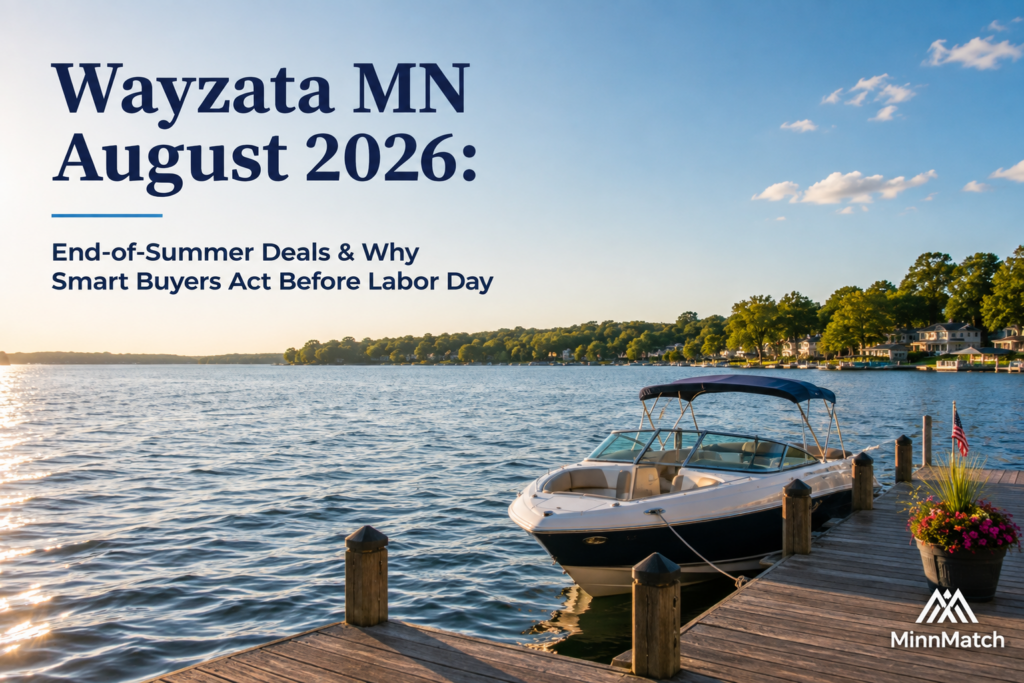
Boat docked on Lake Minnetonka at sunset in Wayzata, MN with text "Wayzata MN August 2026: End-of-Summer Deals & Why Smart Buyers Act Before Labor Day"

There’s a shift that happens in Wayzata every year right around now, and it has nothing to do with interest rates or inventory reports. It’s the calendar. Boats start coming out of Wayzata Bay a little earlier, school supply lists show up in mailboxes, and the buyers who spent June and July touring open houses on their lunch breaks quietly disappear back into their routines. For Wayzata real estate, that shift is exactly why the next few weeks matter so much. The buyers who stay in the game right now, while everyone else is packing up for Labor Day, are the ones who tend to walk away with the better deal.

What’s Actually Happening in Wayzata Real Estate Right Now

Wayzata has never been a market you can sum up with one number, and that’s truer than usual this year. Depending on which data set you’re looking at, typical sale prices in Wayzata have been landing somewhere in the $800,000s for the broader market, while listing prices skew meaningfully higher once you factor in the town’s mix of downtown condos, Wayzata Highlands homes, and true Lake Minnetonka lakefront estates that can run into the seven figures. That spread is normal for a town this small and this specialized — a handful of high-end closings can swing the “median” considerably from month to month, so it’s worth looking at ranges rather than a single headline price when you’re sizing up the market (per Redfin’s Wayzata market data).

Homes here have generally been taking longer to sell than they did a couple of years ago — often into the 50- to 100-day range rather than the frantic multiple-offer timelines of the pandemic years — which tells you Wayzata has settled into a more balanced, less frenzied market. That’s good news if you’re a buyer who’s been priced out of bidding wars, and it’s a big part of why late summer is worth paying attention to.

Why Smart Buyers Move Before Labor Day

Labor Day functions like an unofficial closing bell on the summer buying season across the Minneapolis Area Realtors footprint, and Wayzata feels it more than most communities because so much of its lifestyle appeal — the lake, the boats, the walkable downtown patios along Lake Street — is tied to warm weather. Once school starts and the calendar flips to fall, a big chunk of the casual buyer pool simply stops looking until spring. That’s not because Wayzata becomes less desirable; it’s because families settle into routines and put the search on pause.

For the buyers who keep going, that pullback in competition is the whole opportunity. Sellers who listed back in May or June and are still on the market by late August are often more motivated than they were at the start of summer — especially if they’ve already bought their next home or have a move tied to the school year. A well-prepared offer in the next few weeks can land with less competition and more room to negotiate than the exact same offer would have gotten in June.

Mortgage rates are part of this equation too. The 30-year fixed rate has been hovering in the mid-6% range this summer, and while that’s not the sub-6% environment some buyers are waiting for, it’s also not moved dramatically week to week — which means there’s little upside in waiting on rates alone (per Freddie Mac’s Primary Mortgage Market Survey). If a home works for your budget today, betting on a materially better rate a few months from now is a gamble, not a strategy.

Where the Deals Tend to Hide in Wayzata This Time of Year

Not every corner of the Wayzata real estate market cools off the same way. True lakefront and lake-view properties on Wayzata Bay tend to hold their value and their pace year-round — that’s a scarce category buyers compete for regardless of season. But in neighborhoods like Locust Hills, Wayzata Highlands, and the areas around Gleason Lake, late-summer listings that have sat for a few weeks are exactly where a patient buyer can find room to negotiate on price, closing costs, or timeline.

Downtown Wayzata condos and townhomes are worth a second look right now as well. They tend to draw a different buyer pool than single-family homes on the west end of the lake, and inventory in that segment often lingers a bit longer in late summer since so much of the demand is seasonal — vacation buyers and empty-nesters who were shopping earlier in the year and have since moved on to other priorities.

If You’re Selling in Wayzata, Don’t Assume the Window Closed

It’s tempting for sellers to assume the buyers still shopping in late August are just “kicking tires,” but the opposite is usually true. Anyone touring homes in Wayzata after the lake traffic thins out is typically serious — they’ve often already lost out on a home or two earlier in the summer and are motivated to close before fall. A well-priced, well-presented listing right now can still move quickly, especially against less competition from other new listings hitting the market.

Whether you’re chasing a late-summer deal in the Wayzata real estate market or trying to get a listing sold before the leaves turn, the agent you work with matters more this time of year than almost any other. MinnMatch personally matches Twin Cities buyers and sellers with vetted local agents who know Wayzata street by street — not an algorithm, and not a stranger from out of state. It’s free, it’s fast, and it’s built for exactly this kind of decision. Find your Wayzata agent match or learn more about how MinnMatch works.

Lake Minnetonka Mid-Summer 2026: Why Serious Buyers Are Still Shopping Right Now

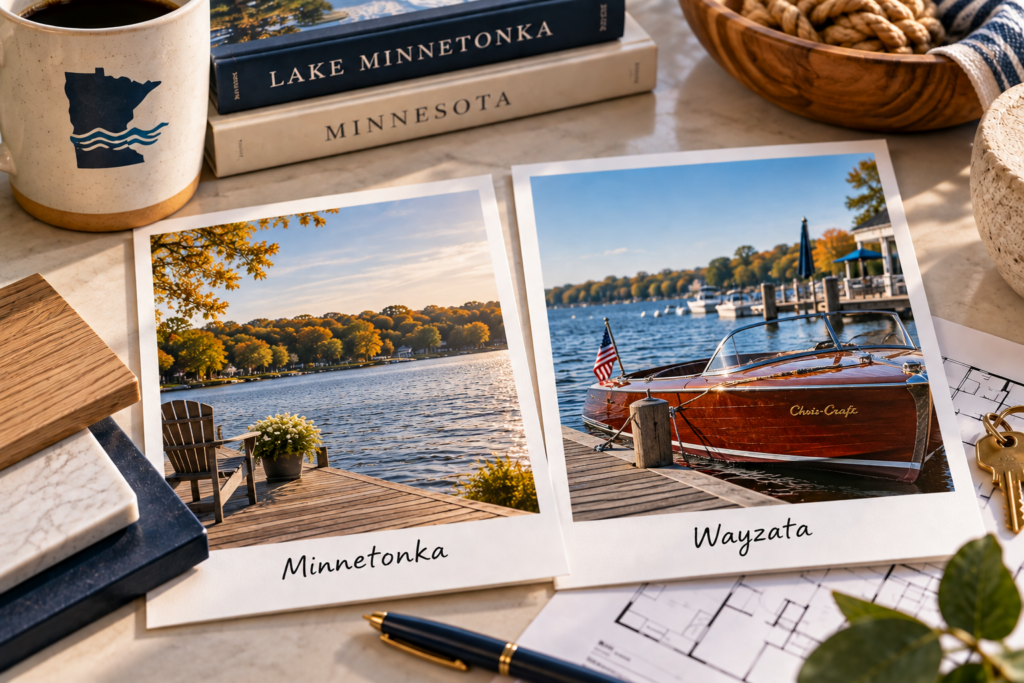
Lakefront patio with docked boats on Lake Minnetonka in mid-summer 2026

It’s the last week of July, the lake is packed with boats, and you’d think buyer interest around Lake Minnetonka would be cooling off along with the crowds after Labor Day. It isn’t. Lake Minnetonka real estate is still moving at a pace that’s catching a lot of house hunters off guard this mid-summer, with tight inventory, rising prices, and sellers still holding the upper hand across most price points. If you’ve been telling yourself you’ll “wait until fall when things calm down,” the numbers suggest that plan needs a second look.

Where Lake Minnetonka Prices Stand This July

Depending on which slice of the market you’re looking at, the numbers vary — which is exactly why it’s worth using ranges instead of a single headline figure. Across the broader Lake Minnetonka region, median sales prices have recently landed in the $790,000 to $835,000 range, up roughly 6% in a single month and closer to 14% over the trailing twelve months, according to Redfin’s market data. That range alone tells you Lake Minnetonka real estate isn’t a single market — it’s several overlapping ones. Move into the true waterfront segment — homes with actual lake frontage or association access — and the range widens dramatically, with average sale prices in 2025 landing around $1.08 million and active luxury listings currently averaging closer to $2.8 million, or roughly $545 per square foot. In plain terms: the “typical” Lake Minnetonka home and the “trophy” Lake Minnetonka home are two very different conversations, and buyers need to know which one they’re shopping in before they start comparing listings.

Why Inventory Still Isn’t Loosening Up

Months of supply around the lake has been sitting in the 3.6 to 3.8 range recently — well under the 5 to 6 months that typically signals a balanced market. That’s a structural issue, not a seasonal blip: shoreline simply doesn’t get created, and the towns that ring Lake Minnetonka (Wayzata, Excelsior, Deephaven, Orono, Tonka Bay, Mound, and the rest) have been supply-constrained for years. New listings have ticked up slightly, and homes are sitting a bit longer than they were a year ago — days on market have stretched into the 60s and 70s in some pockets, up from the high 50s — but longer marketing time hasn’t translated into pricing power for buyers. Sellers are still fielding offers close to asking price, with recent data showing homes selling for roughly 95% of list price on average. Slower doesn’t mean softer — it’s one more sign that Lake Minnetonka real estate is holding its ground even in the slower part of the summer calendar.

What Mortgage Rates Mean for Buyers Right Now

The 30-year fixed rate has been hovering in the mid-6% range through July 2026, landing at 6.58% as of the most recent Freddie Mac Primary Mortgage Market Survey — down noticeably from about 6.74% a year earlier. That’s not a dramatic swing, but for a $1 million-plus lake purchase, even a quarter-point of movement changes the monthly payment by hundreds of dollars. Buyers who locked in financing earlier this summer, or who are working with a lender tracking rates closely, are in a better negotiating position than those still shopping for a mortgage and a house at the same time. This is one more reason serious buyers around Lake Minnetonka aren’t sitting on the sidelines waiting for a “better time” — rate movement this year has rewarded people who stay engaged, not people who pause.

Which Lake Towns Are Seeing the Most Activity

Activity isn’t evenly spread across the lake. Wayzata continues to draw buyers who want walkable downtown access alongside water views, and its bay-facing properties are commanding some of the strongest per-square-foot numbers on the lake. Excelsior is pulling in buyers who want more small-town charm and a shorter commute into the western metro. Deephaven and Tonka Bay are seeing steady interest in their mix of historic cottages and newer builds, while Mound, Spring Park, and Greenwood remain the more accessible entry points for buyers who want lake access without a waterfront price tag. If you’re weighing a couple of these towns against each other, our Lake Minnetonka community page breaks down more of what makes each pocket of the lake different.

Should You Keep Shopping Through August?

If you’re serious about Lake Minnetonka real estate, mid-summer isn’t the lull people assume it is. Inventory is tight, well-priced homes are still fielding competitive offers, and mortgage rates aren’t guaranteed to sit still. The buyers who are winning right now tend to have two things in common: they know exactly which price band and which town they’re targeting, and they’re working with an agent who has real, current knowledge of that specific stretch of shoreline — not just general Twin Cities market experience. Reliable neighborhood-level data is also available through resources like Minnesota Housing if you want to look at financing programs alongside your search.

Lake Minnetonka’s market rewards buyers who move with good information and the right local partner. MinnMatch connects you with a vetted local agent who knows this stretch of shoreline — its towns, its price bands, and its pace — so you’re not guessing your way through a competitive summer market. Curious how the matching process works? See how MinnMatch works.

Wayzata MN in 2026: Schools, Property Values & Why Buyers Keep Coming Back

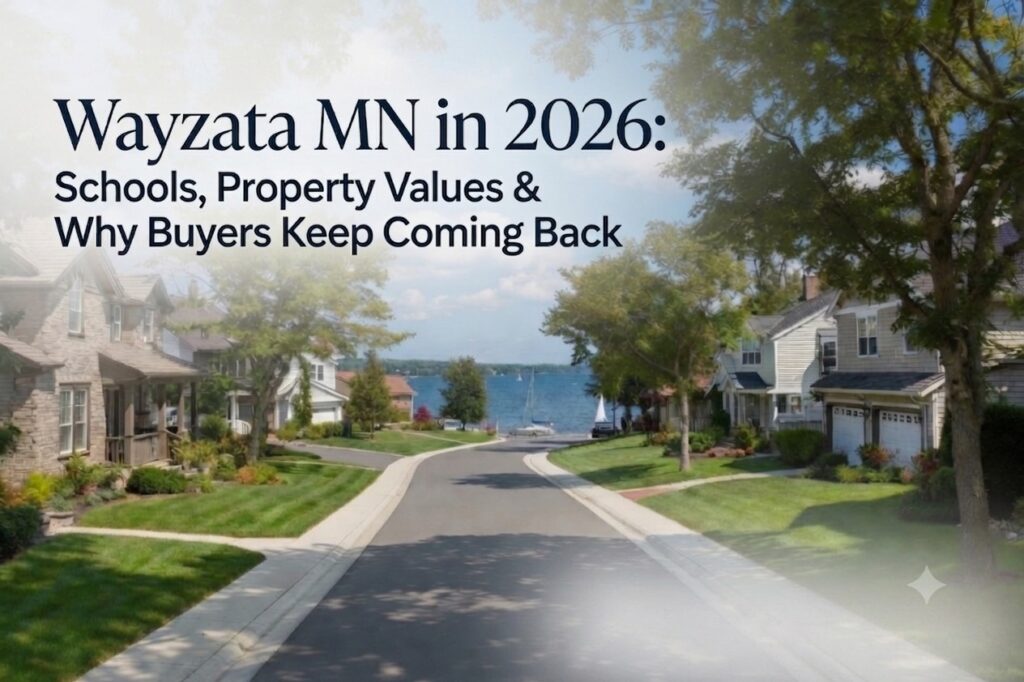
Tree-lined street in Wayzata, MN leading to Lake Minnetonka, homes on both sides

Ask a dozen Twin Cities agents where their clients want to end up, and Wayzata comes up more than almost anywhere else. It’s not just the lake views or the walkable downtown — it’s the combination of top-tier schools, home values that have held up through a cooling statewide market, and a small-town feel that’s rare this close to Minneapolis. If you’ve been eyeing Wayzata, MN real estate in 2026, here’s an honest look at what’s driving demand, what homes actually cost, and why buyers keep coming back year after year.

Wayzata Schools Are the Draw — And the Numbers Back It Up

For the third year running, Niche has ranked Wayzata Public Schools the number one school district in Minnesota, with an A+ overall grade and the state’s top-ranked high school. The district also lands in the top 1% of all public school districts nationwide out of more than 12,000 districts, with elementary schools like Kimberly Lane, Northwoods, Plymouth Creek, and Meadow Ridge regularly landing among the state’s best. For families relocating to the Twin Cities, that ranking alone explains a huge share of the demand we see for Wayzata property values — buyers aren’t just paying for a house, they’re paying for a school assignment they know will hold its value.

It’s worth noting that “Wayzata schools” is really shorthand for Wayzata Public Schools (ISD 284), which serves a footprint stretching well beyond the city itself — into Plymouth, Medina, and parts of Maple Grove and Corcoran. That’s an important nuance for buyers: you can access the district’s boundaries at a range of price points, not just inside Wayzata city limits, which opens up options for buyers who want the schools without the full lakefront premium.

What Wayzata Homes Actually Cost in 2026

Wayzata is a small, lake-driven market, and pricing varies dramatically block by block — which means any single “median price” headline can be misleading. Broadly, buyers should expect typical single-family homes in Wayzata neighborhoods to range from roughly $600,000 to $4 million or more, with true lakefront estates on Lake Minnetonka regularly exceeding $10 million. Listing data through the first half of 2026 has shown days on market stretching into the 55–60 day range, longer than the frenzied pace of a few years ago, which points to a more balanced market where buyers have a bit more room to negotiate than they’ve had in a while.

That’s a notable shift from the ultra-competitive conditions of 2021–2022. Statewide, Minnesota’s overall housing market has been described by Redfin as trending toward equilibrium, with the typical Minnesota home selling in the $360,000–$380,000 range — a useful reminder of just how far above the statewide median Wayzata sits, and why it’s considered one of the metro’s premium markets alongside Edina, Minnetonka, and Eden Prairie.

Financing also plays a bigger role in Wayzata than in more affordable suburbs, simply because loan amounts are larger. As of early July 2026, Freddie Mac’s weekly survey put the average 30-year fixed mortgage rate at 6.43%, down slightly from earlier in the year. For a $1.5 million-plus purchase, even small rate movements can shift a monthly payment by hundreds of dollars, so buyers at this price point are especially well served by locking in rate quotes early and working with a lender experienced in jumbo loans.

Why Buyers Keep Choosing Wayzata Over Comparable Suburbs

Wayzata’s staying power comes down to a combination few other Twin Cities suburbs can match: direct Lake Minnetonka access, a genuinely walkable downtown with restaurants and shops rather than a strip mall, and a top-ranked school district serving the whole area. Neighborhoods like Locust Hills appeal to buyers who want larger lots and mature trees within walking distance of the lake, while areas closer to Gleason Lake offer a lower entry point for move-up buyers who still want the Wayzata address and school assignment.

There’s also a long-term value argument. Buyers who might otherwise consider a comparably priced home in a suburb without Wayzata’s school ranking or lake access tend to see Wayzata as the safer long-term hold — even when it means paying a premium today.

What This Means If You’re Buying or Selling in Wayzata Right Now

For buyers, 2026’s slightly longer days-on-market and modestly improved inventory mean there’s more room to do real due diligence than in past years — get the inspection, negotiate on repairs, and don’t feel forced into a same-day offer. For sellers, it means presentation and pricing accuracy matter more than they did during the frenzy years; homes priced realistically for their specific neighborhood (rather than the headline lakefront numbers) are still moving well.

Either way, a market this nuanced — where price can swing by millions of dollars between two streets — is exactly where local expertise pays for itself.

Thinking about buying or selling in Wayzata? MinnMatch can connect you with a local agent who knows the difference between a Gleason Lake starter home and a Locust Hills estate — no algorithms, just a real match. Find your Wayzata agent or learn more about how MinnMatch works.

Edina vs. Wayzata in 2026: Which Upscale Twin Cities Suburb Is Worth the Price Tag?

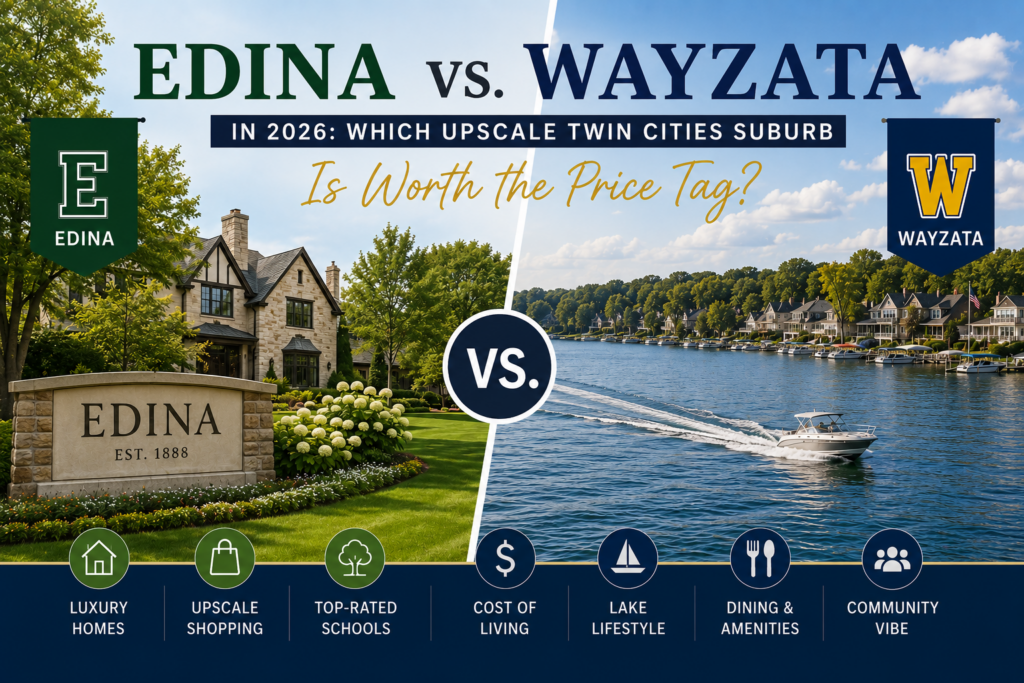
Edina vs. Wayzata in 2026 — comparing luxury homes, lake lifestyle, schools, and cost of living in two upscale Twin Cities suburbs

Two names come up again and again when buyers are shopping the top tier of the Twin Cities market: Edina and Wayzata. Both are prestigious. Both have outstanding schools. Both will cost you. But they’re not the same place, and the right choice depends heavily on how you want to live. If you’re weighing these two upscale Twin Cities suburbs against each other in 2026, here’s what you actually need to know — prices, trade-offs, and all.

The Price Tag: What Homes Actually Cost in Edina vs. Wayzata

Let’s start with the number that matters most. Edina’s median home price is currently around $580,000–$630,000, depending on the month and source — with the most active segment sitting between $400,000 and $600,000. You’ll find entry-level condos near Southdale in the $180,000s and estate properties in Indian Hills pushing well past $3 million. That’s a wide range, which is part of Edina’s appeal: it has more runway for buyers at different budgets.

Wayzata runs considerably higher. Redfin data puts Wayzata’s median sale price at roughly $828,000, and price-per-square-foot figures reflect that premium — Minneapolis Area Realtors data shows Wayzata at approximately $310 per square foot compared to Edina’s $268. When you factor in the lakefront homes and large-lot estates near Lake Minnetonka, the ceiling in Wayzata is essentially unlimited.

Bottom line: if you’re comparing apples to apples in terms of square footage and condition, Wayzata will almost always cost more. The question is whether that premium is worth it to you — and that depends on what you’re buying into beyond the house itself.

Schools: Both Are Elite, but With Different Flavors

School quality is a primary driver for families choosing between these two suburbs, and you genuinely can’t go wrong with either. According to Niche’s 2026 Best School Districts in Minnesota rankings, Wayzata Public Schools ranks #1 in the Twin Cities metro, earning an A+. Edina Public School District follows closely at #3 statewide, also with an A+. Both districts have a strong college-prep culture, dedicated teaching staff, and robust extracurricular programs.

There are some nuanced differences. The Edina district has built a strong reputation around talent development programs, language immersion, and travel-based learning opportunities starting in early childhood. Wayzata schools boast a 96% graduation rate — well above state averages — and a wide range of AP and honors offerings. Wayzata High School itself is physically located in Plymouth, which surprises some buyers; the district boundary doesn’t perfectly match the city limits.

For most families, both districts will deliver an exceptional public school experience. If the small edge in district ranking matters to you, Wayzata has it — but Edina is not far behind by any meaningful measure.

Lifestyle and Location: The Real Differentiator

This is where Edina and Wayzata really diverge. Edina sits right on the border of Minneapolis — about 15 minutes to downtown — and feels like the best of suburban and urban living layered together. You get walkable retail at 50th & France, Centennial Lakes Park, a strong dining and coffee scene, and the kind of neighborhood character that comes from decades of established community. It’s practical, polished, and year-round livable.

Wayzata is a completely different vibe. It’s a small lakefront city on the north shore of Lake Minnetonka, with a compact, walkable downtown built around boutique shops, lakeside dining, and a marina. In summer, it’s magical — boat slips, waterfront promenades, and a community energy that’s hard to replicate. The trade-off is that Wayzata’s downtown appeal is seasonal, and it sits farther west of Minneapolis, adding commute time for those working in the city or eastern suburbs.

Simply put: if you want a suburb that functions efficiently year-round with quick city access, Edina wins. If lake life is central to how you relax and entertain — boating, swimming, watching sunsets over the water — Wayzata’s premium starts to make a lot more sense.

Commute and Convenience: Edina Has the Edge

Edina’s inner-ring location is genuinely one of its most underrated assets. Residents are 15 minutes from downtown Minneapolis, with easy access to major corridors like Highway 100, I-494, and France Avenue. Southdale Center, multiple grocery options, and a dense mix of services make daily errands fast and convenient regardless of the season.

Wayzata is farther west — typically 25 to 35 minutes from downtown Minneapolis depending on traffic — and its smaller size means fewer everyday conveniences within walking or short driving distance. That said, nearby Minnetonka and Plymouth fill in many of those gaps, and buyers who work in the western suburbs or from home often find the commute trade-off entirely acceptable.

If you commute into Minneapolis daily, Edina is the clearer choice. If your work is flexible or based on the west side of the metro, Wayzata becomes much more viable.

So Which One Is Worth It? Here’s How to Decide

There’s no universal right answer here — and anyone who tells you there is probably hasn’t spent much time in both communities. What we can tell you is this: Edina offers more value per dollar for buyers prioritizing proximity to Minneapolis, year-round convenience, and a slightly wider entry point into an upscale market. Its schools are elite, its neighborhoods are established, and its price appreciation has been consistent.

Wayzata commands a premium that’s justified for buyers who want lakefront access, a distinctive small-town atmosphere, and a lifestyle built around Lake Minnetonka. If the lake is a genuine priority — not just a nice-to-have — you’ll feel that difference every weekend from May through October, and the community identity will reward that investment.

According to Minnesota Housing Finance Agency data, both communities have shown long-term price resilience, making either a sound long-term investment for buyers who plan to stay. The real question isn’t which suburb is objectively better — it’s which one fits the way you actually want to live.

That’s where having a local expert in your corner makes all the difference. At MinnMatch, we connect buyers with vetted Twin Cities agents who know both of these markets from the inside — the streets, the neighborhoods, the blocks that hold value, and the ones that don’t. Whether you’re leaning toward Edina or Wayzata, we’ll match you with the right agent to make your move with confidence. Get matched for free →