
Lake Minnetonka vs. Prior Lake: Minnesota’s Two Most Popular Lake Markets Compared

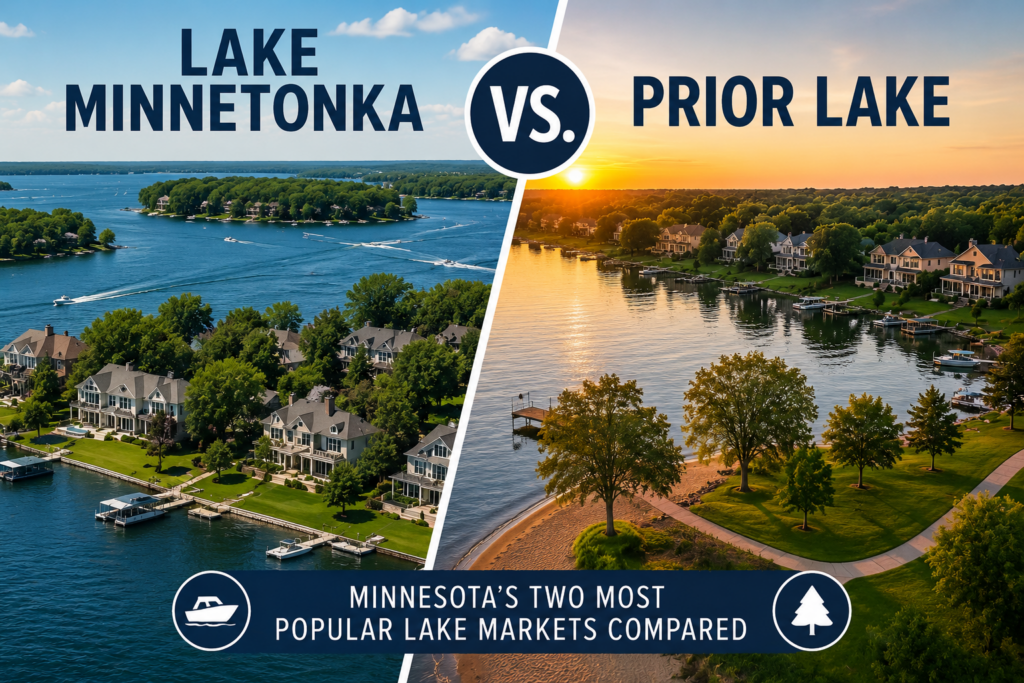
Aerial comparison of Lake Minnetonka and Prior Lake waterfront homes in Minnesota

If you’re searching for a lake home in the Twin Cities metro, two names come up again and again: Lake Minnetonka and Prior Lake. Both offer genuine waterfront living, strong community identities, and real estate markets that consistently outperform their landlocked neighbors. But Lake Minnetonka vs. Prior Lake real estate is not an apples-to-apples comparison — and understanding the differences could save you months of searching in the wrong direction.

This guide breaks down both markets across price, lifestyle, buyer profile, and long-term value so you can make a more informed decision — or hand this article to the agent who’s helping you make it.

Not sure which market is right for you? MinnMatch can match you with a vetted local agent who knows both lakes inside and out.

Lake Minnetonka vs. Prior Lake: The Basics

Before comparing the real estate, it helps to understand what you’re actually buying access to.

Lake Minnetonka is the headline act of Minnesota metro lake living. Spanning roughly 14,000 acres across 14 communities in Hennepin County, it’s the largest and most storied lake in the Twin Cities area — a destination that has defined western-suburb prestige for more than a century. Wayzata, Excelsior, Orono, and Deephaven are among the communities that ring its 125 miles of shoreline. The lake sits approximately 12 miles west of downtown Minneapolis.

Prior Lake — technically two connected lakes, Upper and Lower Prior Lake — covers about 1,340 combined acres in Scott County, roughly 20 miles southwest of downtown Minneapolis. It’s smaller in scale but punches well above its size in desirability. The city of Prior Lake has grown significantly in recent decades and is now home to approximately 27,000 residents who have built their community identity around water access, outdoor recreation, and quality schools.

In short: Lake Minnetonka is the prestige play. Prior Lake is the accessible-but-still-aspirational alternative. Both are legitimate lake markets — but they attract meaningfully different buyers.

Price Comparison: What Does a Lake Home Actually Cost?

Lake Minnetonka

Lake Minnetonka is one of the most expensive residential real estate markets in Minnesota, full stop. As of May 2026, there are roughly 218 active waterfront listings on the lake with an average asking price of approximately $2.8 million — and a price per square foot hovering around $545. Typical lakeshore listings average about 4,500 square feet with nearly four bedrooms and four bathrooms.

The range is wide. Entry-level access to Lake Minnetonka shoreline can start around $1 million for a smaller or dated cottage, while high-end estates in Orono or Wayzata regularly list at $10 million and above. At the extreme end, an extraordinary off-market estate was listed at $55 million — more than 29,000 square feet with a wine cave, movie theater, bowling lanes, and multiple docks.

For buyers who want proximity to the lake but not a direct shoreline price tag, the broader communities surrounding the lake — the city of Minnetonka, Wayzata, Excelsior — offer more accessible entry points. The city of Minnetonka’s overall median home value sits around $521,000 as of 2025, reflecting the mix of lakefront luxury and inland residential neighborhoods.

Prior Lake

Prior Lake offers a more accessible price spectrum while still delivering real waterfront value. The citywide median home value is approximately $526,000 as of early 2026 — remarkably close to broader Minnetonka — but the waterfront premium is more moderate.

As of May 2026, there are 57 active lake property listings in Prior Lake with an average listing price of roughly $1.65 million and a price per square foot of $383 — meaningfully below Lake Minnetonka’s $545. The most expensive waterfront listing sits at $17.9 million, while more modest lake-access properties can be found for as little as $135,000 (typically association-access or smaller lots).

For buyers who want lakefront living in the $600,000–$1.2 million range, Prior Lake offers options that simply don’t exist on Lake Minnetonka. That’s a significant differentiator for move-up buyers, growing families, and buyers relocating from out of state.

Side-by-Side Snapshot

Metric Lake Minnetonka Prior Lake
Lake size ~14,000 acres ~1,340 acres
Avg. waterfront listing price ~$2.8M (May 2026) ~$1.65M (May 2026)
Avg. price per sq ft (waterfront) ~$545 ~$383
Citywide median home value ~$521,000 (Minnetonka city) ~$526,000
Distance to Minneapolis ~12 miles west ~20 miles southwest
School district(s) Minnetonka, Wayzata, Orono, Mound Westonka Prior Lake-Savage Area Schools
Communities on the lake 14 1 (city of Prior Lake)

Lifestyle: Two Very Different Lake Vibes

Lake Minnetonka: Established Elegance, Walkable Villages, Deep Roots

Lake Minnetonka has a character that’s hard to replicate — it has been Minnesota’s most coveted lake address for well over a century. The 14 communities surrounding it each have distinct identities. Wayzata is boutique-chic with a vibrant downtown, waterfront dining, and a Metra train connection to Minneapolis. Excelsior has the feel of a classic Midwestern lake town, with independent shops, a public beach, and summer street festivals. Orono and Greenwood offer wooded privacy and estate-scale properties. Deephaven sits somewhere in between — elegantly residential, less commercial, deeply quiet.

The lake itself supports year-round recreation. In summer it’s a full destination: boating, paddleboarding, sailing regattas, and fishing tournaments. In winter, ice fishing shanties dot the bays and the lake is a fixture of the local snowmobile culture. The social fabric around Lake Minnetonka is dense — yacht clubs, community events in Excelsior, the iconic Lord Fletcher’s on the water — and buyers are often as drawn to that community energy as they are to the shoreline itself.

Proximity to Minneapolis is a genuine selling point, too. Most lake towns are a 20–30 minute drive, making it feasible to live a lake-first life without sacrificing urban access.

Prior Lake: Active, Unpretentious, Growing Fast

Prior Lake has a different energy — less legacy prestige, more lived-in vitality. The city has grown considerably over the past two decades, and that growth has attracted a younger demographic of families who want authentic lake access without the stratospheric price tag of the west metro lakes.

Upper Prior Lake tends to attract buyers who want calmer waters, more privacy, and a settled residential character. Lower Prior Lake, with its more open water, draws the boating and water sports crowd. Both are consistently among the most popular recreational lakes in the south metro. The lake hosts strong fishing — walleye, northern pike, largemouth bass, and crappie — and the broader community includes 51 parks, extensive trail networks, and the prestigious Wilds Golf Club adjacent to the lake’s southern neighborhoods.

The Prior Lake Association has worked since 1946 to preserve and promote the water and shoreline, and the city actively monitors water quality and manages aquatic invasive species — a sign that the community takes its lake asset seriously for the long term.

Scott County’s consistent growth has made Prior Lake one of the fastest-growing communities in Minnesota, and the Prior Lake-Savage Area Schools draw strong reviews from families considering the area. For buyers who are prioritizing school quality alongside lake access, Prior Lake checks both boxes at a more attainable price point.

Which Lake Market Is Right for You? Buyer Profiles

Both Lake Minnetonka and Prior Lake attract lake-lifestyle buyers — but the specific buyer profiles diverge in meaningful ways. Here’s a practical breakdown.

Lake Minnetonka Is Typically the Better Fit If:

  • Your budget for waterfront is $1.5 million or above, and ideally $2–5 million for a move-in-ready lakeshore property.
  • You want walkable access to vibrant communities like Wayzata or Excelsior — coffee shops, restaurants, boutiques, right from the boat or the sidewalk.
  • You’re drawn to the prestige and legacy of the address — Lake Minnetonka is a known quantity nationwide and carries status that Prior Lake simply doesn’t match.
  • You work in Minneapolis and want a west-metro commute or access to Wayzata’s Metra rail stop.
  • You prioritize a robust social lake culture — yacht clubs, regattas, and a dense community of other lake residents who share the lifestyle.
  • You’re looking at this as a long-term luxury investment and want the brand-name lake with historical price resilience.

Prior Lake Is Typically the Better Fit If:

  • You want genuine waterfront access with a budget in the $500,000–$1.5 million range — a segment where Lake Minnetonka options are extremely limited.
  • You have school-age children and want a strong, cohesive school district (Prior Lake-Savage) paired with a family-oriented community culture.
  • You prefer a more intimate lake — fewer commercial operators, calmer on summer weekends, a more neighborhood-oriented feel.
  • You work in the south metro (Shakopee, Eden Prairie, Burnsville) and want to minimize commute time while maximizing lifestyle.
  • You’re a first-time lake-home buyer and want to learn the lifestyle before potentially stepping up to a higher-price lake market later.
  • Outdoor recreation — fishing, boating, golf at The Wilds, trail access — matters more to you than proximity to upscale commercial districts.

Market Dynamics: Competition, Inventory, and Days on Market

Lake Minnetonka waterfront is structurally undersupplied — there’s a fixed amount of shoreline, very few new lots, and demand that remains elevated even when broader markets soften. In July 2025, waterfront homes on Lake Minnetonka averaged about 63 days on market, up from 31 days the prior year as buyers exercised more patience at elevated price points. That’s not a sign of weakness so much as a reflection of how selective the buyer pool is at $2–5 million.

Prior Lake is more active in volume terms. The broader Prior Lake market had 52 homes sold in August 2025, up meaningfully from 38 the prior year — and homes in the city sell in roughly 26–40 days depending on the segment. Waterfront properties move faster and with less negotiating room, similar to any lake-adjacent market in the metro.

Both markets benefit from Minnesota’s broader housing dynamics: statewide, inventory remains limited relative to buyer demand, and lake properties in the Twin Cities continue to be treated as lifestyle assets rather than purely transactional purchases. Buyers who hold well-positioned lake homes on either lake tend to hold them — which keeps turnover low and well-priced listings competitive.

What to Watch For in Either Market

Both lake markets have nuances that make local expertise essential. A few things to keep in mind before you make an offer on either lake:

Shoreline rights and dock permits. Not all “lake access” properties are equal. Direct shoreline ownership, deeded dock rights, water depth at the dock, and HOA rules around boat storage vary significantly — even between adjacent properties. Confirm these entitlements before you close, not after.

Aquatic invasive species. Both lakes have documented AIS concerns. Prior Lake manages zebra mussels and Eurasian watermilfoil actively, and Lake Minnetonka has faced similar challenges. This doesn’t diminish the lakes’ value, but it’s worth understanding what ongoing management looks like and how it affects your recreational experience.

Community fit over shoreline metrics. Buyers often get so focused on feet of frontage and water depth that they underweigh the community question: Will you feel at home here? Lake Minnetonka’s 14 distinct communities each have their own social temperature. Prior Lake’s neighborhoods — Sand Pointe, Watzl’s Beach, The Wilds, Jeffers Pond — also differ meaningfully. Touring the community at lake-season pace, not just viewing the house, matters.

Year-round livability. Both lakes support year-round living, but the off-season character is worth experiencing. Lake Minnetonka’s towns maintain energy through winter. Prior Lake is more residential-quiet off-season. Neither is a negative — just a question of what you’re optimizing for.

How MinnMatch Can Help You Choose

Choosing between Lake Minnetonka and Prior Lake isn’t just a price decision — it’s a lifestyle decision, and getting it right means having an agent who actually knows both markets, not just the MLS data.

At MinnMatch, we match buyers and sellers with vetted local agents based on your specific situation — your budget, your lifestyle priorities, your timeline, and which lake genuinely fits the life you’re trying to build. Our matching is personal, not algorithmic. You don’t get sorted into a pool and called by whoever picks up first. You get connected with an agent who has real, recent experience in the market you’re entering.

If you’re exploring lake home options in the Twin Cities — whether that’s Lake Minnetonka, Prior Lake, or somewhere else entirely — start here. The conversation is free, and the guidance is local.

You can also explore our community guides for Lake Minnetonka and Prior Lake for more neighborhood-level detail, or browse our market insights for the latest Twin Cities real estate trends.

For additional context on Minnesota lake markets and statewide housing data, see the Minneapolis Area Realtors monthly market reports, the Minnesota Housing Finance Agency, and property data from Redfin’s Minnesota market overview.

 

Eden Prairie MN Real Estate 2026: Why This Suburb Keeps Topping the ‘Best Places to Live’ Lists

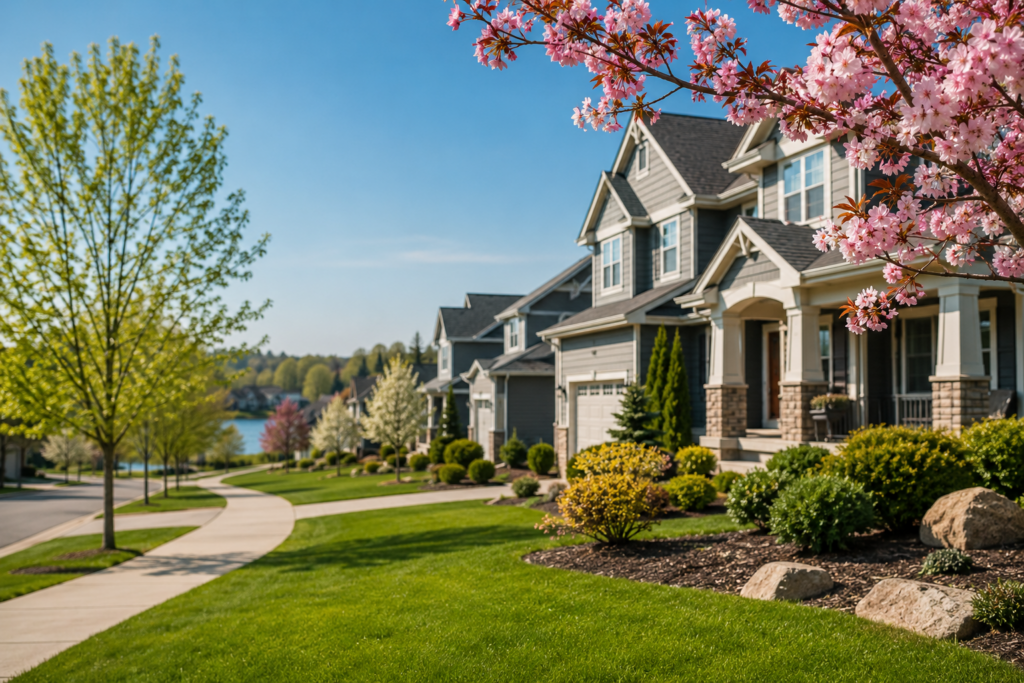
Eden Prairie MN real estate 2026 — lakeside homes and parks in one of Minnesota's best suburbs


If you’re researching Eden Prairie MN real estate in 2026, you’ve likely already noticed this suburb’s name appearing on every “best places to live” list in Minnesota — and with good reason. From top-ranked schools and 120+ miles of trails to a tight seller’s market with persistent demand, Eden Prairie delivers across every dimension that matters to buyers and sellers alike. Here’s a grounded look at what’s driving the city’s enduring appeal right now.

Why Eden Prairie MN Keeps Topping the Rankings

Eden Prairie has earned national recognition as one of the best places to live in the country — not once, but repeatedly over many years. MONEY Magazine has ranked it among its “Best Places to Live” in America, and in 2026, Eden Prairie landed at No. 5 on Niche’s Best Places to Live in Minnesota list — one of only a handful of Twin Cities suburbs to consistently place that high.

What drives those rankings? Platforms like Niche weigh public school quality, crime rates, cost of living relative to income, job access, and community amenities. Eden Prairie scores well across all of them — not just strong in one area while sacrificing another, but balanced in a way that’s genuinely hard to replicate at this price point in the metro.

By the Numbers — Eden Prairie 2026

~$453K

Median home price

28–30

Avg. days on market

~3 mo.

Months of supply (seller’s market)

#5

Best places to live in MN (Niche 2026)

Eden Prairie MN Real Estate Market Conditions in 2026

The Eden Prairie MN real estate market in 2026 continues to favor sellers, driven by constrained inventory and persistent demand. With only around 3 months of supply available — well below the 5–6 months that typically signals a balanced market — buyers are competing for a limited pool of homes, and well-priced listings are moving quickly.

Median home prices are hovering in the low-to-mid $400s depending on the source and timing, with active listings averaging closer to $500K–$509K. Single-family homes are running higher — around $565,000 on average — while condos offer entry points near $165,000. That range makes Eden Prairie functional for a wide spectrum of buyers: first-time buyers, move-up families, and empty nesters all find options here. According to Redfin’s Eden Prairie market data, homes are receiving an average of 7 offers and selling in around 30 days — a clear sign of competitive demand.

The spring and early summer window (February through July) has historically been the strongest selling period for Eden Prairie real estate, and that pattern is expected to hold through 2026.

If you’re a buyer navigating this competitive environment, having a local agent who knows the specific neighborhoods — from the Bearpath enclave to the family-friendly pockets near Eden Prairie High School — makes a real difference. That’s exactly the kind of match MinnMatch helps buyers make.

Top-Rated Schools Drive Long-Term Home Values

For families considering Eden Prairie MN real estate, the school district is often the deciding factor. The Eden Prairie Schools district (ISD 272) serves more than 10,200 students and is consistently among the top performers in Minnesota on statewide assessments and college entrance exams. The district is known for its high expectations, innovative curriculum, and strong teaching staff — traits that show up not just in test scores but in the community’s long-term property values.

The private International School of Minnesota (ISM) — a college preparatory school for preschool through grade 12 on a 55-acre campus — adds another layer of educational choice within city limits. Access to Normandale Community College and Hennepin Technical College rounds out the post-secondary options nearby.

Strong school districts don’t just attract families — they anchor home values over time. It’s one of the key reasons Eden Prairie real estate has held up well through broader market fluctuations that have hit other suburbs harder.

“Eden Prairie is a very welcoming city that truly cares about their people. They take care of their roads… there are really good grocery stores and parks and everything you could want.”

— Current Eden Prairie resident, Niche 2026

Jobs Are Close — and They’re Good Ones

One of Eden Prairie’s less-discussed advantages is its employment landscape. The city is home to over 2,200 businesses, including some significant corporate anchors. Fortune 500 company C.H. Robinson — one of the world’s largest freight brokers — is headquartered here. Starkey Hearing Technologies, a globally recognized hearing aid manufacturer, also calls Eden Prairie home. The city benefits from proximity to UnitedHealth Group and Optum, two of the largest employers in the entire Twin Cities metro.

For residents who commute, Eden Prairie sits just 12 miles southwest of Minneapolis with direct access to I-494, Highway 169, and Highway 212. The Southwest Light Rail extension has improved transit connectivity in recent years, reducing commute times for those heading into the city core.

This combination — strong employers within the city and fast access to the broader metro — is part of why Eden Prairie attracts young professionals and established families alike. Over 72% of the city’s population is under age 45, giving it an energy that’s difficult to quantify but easy to feel when you’re there.

Parks and Trails: Eden Prairie’s Real Differentiator

Ask most Eden Prairie residents what they love most about the city and the answer usually circles back to the parks and trails. According to the City of Eden Prairie, the city maintains over 1,000 acres of developed parkland, more than 120 miles of bike trails, and 13 miles of dedicated nature trails — an extraordinary amount of green infrastructure for a suburb of roughly 64,000 people.

Bryant Lake Regional Park — a 170-acre gem on the shore of Bryant Lake — offers hiking, boating, fishing, a sandy beach, disc golf, and winter cross-country skiing. Staring Lake Park is a family staple with its sledding hill, outdoor skating rink, and walking trails. Purgatory Creek Park draws birdwatchers and those seeking a quiet escape. Then there’s the Minnesota River valley corridor winding through the southwestern edge of the city — a genuine nature retreat that feels miles away from the suburbs.

This kind of walkable, bikeable outdoor access has become a major quality-of-life driver in the post-pandemic era, and Eden Prairie built it long before it was fashionable. It’s a big reason why the city doesn’t just attract people — it keeps them.

What Makes Eden Prairie Stand Out


  • Top-ranked schools in Minnesota (ISD 272) — consistently among the state’s best

  • Over 120 miles of bike trails and 1,000+ acres of parkland

  • Major corporate employers including C.H. Robinson, Starkey, and proximity to UnitedHealth

  • 12 miles from Minneapolis with excellent highway and light rail access

  • Diverse housing stock — condos from ~$165K to single-family homes well above $500K

  • Over 2,200 local businesses and a vibrant dining and retail scene

Is It a Good Time to Buy Eden Prairie MN Real Estate?

That depends on your situation, but the market dynamics favor prepared buyers who move decisively. With inventory constrained at around 3 months of supply, homes are not sitting long. Buyers who are pre-approved and working with a knowledgeable local agent are in a substantially better position than those who aren’t.

Mortgage rates hovering between 6.4% and 6.9% continue to shape affordability for many households — a household income of around $100,000 is generally the benchmark for comfortably carrying a home in the median price range with a 25% down payment. For buyers in that range, Eden Prairie still offers strong value relative to the lifestyle and long-term appreciation it provides compared to similar suburbs in other major metros. The Minnesota Housing Finance Agency also offers down payment assistance programs worth exploring if you’re a first-time buyer.

The price softness seen in some data sources reflects normal market correction after a period of outsized appreciation — not a sign of underlying weakness. The fundamentals (jobs, schools, amenities, demand) remain firmly intact.

What About Selling Eden Prairie Real Estate in 2026?

If you own a home in Eden Prairie, conditions are still favorable. Limited supply means your listing faces less competition than it would in a more balanced market, and correctly priced homes are receiving multiple offers. The peak selling window of February through July is when demand peaks, days on market tighten, and sellers see the strongest results.

Presentation and pricing strategy still matter enormously. An experienced local agent — one who has actually sold in Eden Prairie’s specific neighborhoods, not just in the broader southwest metro — will know the micro-level factors that affect how buyers perceive value. That’s not a small thing in a market where perception shapes offers.

MinnMatch connects Eden Prairie sellers with agents who specialize in exactly these markets — vetted, local, and matched to your specific neighborhood and goals. It’s a free service, and the difference the right agent makes on final sale price and timeline is well documented.

How Eden Prairie Compares to Nearby Suburbs

It’s worth understanding Eden Prairie in context, especially if you’re weighing it against other strong southwest metro suburbs. Here’s how it stacks up at a high level:

Suburb Approx. Median Price School Strength Key Draw
Eden Prairie ~$453K–$509K Excellent (ISD 272) Balance of everything
Edina ~$550K+ Excellent Established prestige, retail
Minnetonka ~$450K–$500K Very strong Nature access, mature trees
Plymouth ~$430K–$480K Very strong Newer builds, lake access
Prior Lake ~$400K–$450K Good Lake lifestyle, more space

Eden Prairie’s sweet spot is breadth — it doesn’t lead on any single category, but it doesn’t concede much ground in any of them either. For buyers who don’t want to sacrifice schools for space, or nature access for a short commute, that breadth is the whole point.

Finding the Right Agent for Eden Prairie Real Estate

A market like Eden Prairie rewards buyers and sellers who are well-represented. The difference between a good agent and a great one often comes down to neighborhood-level knowledge — understanding which streets near Riley Creek have the best trail access, how Bearpath compares to the Settlers Ridge area for long-term value, or which parts of town are seeing new construction activity.

MinnMatch is built for exactly this kind of situation. We handpick and vet local agents based on their actual track record in specific Twin Cities communities — then we match you to the right one for your goals, timeline, and neighborhood. There’s no algorithm, no guesswork, and no cost to buyers or sellers. Think of it as having a recruiter who’s already screened the candidates, so you only meet the ones worth your time.

Ready to buy or sell Eden Prairie MN real estate?

We’ll match you with a vetted, local agent who knows this market — for free.

Find My Agent →

The Bottom Line on Eden Prairie MN Real Estate in 2026

Eden Prairie keeps topping the “best places to live” lists because the things that drive those rankings — schools, jobs, safety, outdoor life, community — don’t change year to year based on interest rates or inventory swings. They’re structural, built into the city over decades of smart planning and sustained investment.

The Eden Prairie MN real estate market in 2026 is competitive but navigable for buyers who are prepared, and favorable for sellers who price and present well. Either way, having someone in your corner who truly knows this community isn’t optional — it’s the edge that makes the difference.

Explore more about the Eden Prairie community on MinnMatch, or learn how our agent matching works. If you’re comparing suburbs, our Twin Cities market insights section covers the full southwest metro picture.

Plymouth MN Real Estate: Hot Neighborhoods, Prices & What’s Selling Fast

Market Report · Spring 2026

Plymouth MN Real Estate Spring 2026:
Hot Neighborhoods, Prices & What’s Selling Fast

A ground-level look at one of Minnesota’s most in-demand suburban markets — and what it means for buyers and sellers this season.

May 2026  ·  MinnMatch Local Intel  ·  Plymouth, MN

$519K
Median List Price
April 2026
$641K
Wayzata Corridor
Feb 2026 · Redfin
23 days
Days on Market
Active listings
~98%
Sale-to-List Ratio
Balanced market
#1
Best Place to Live MN
U.S. News & World Report

The Big Picture

Plymouth MN Real Estate Spring 2026: What You Need to Know

The Plymouth MN real estate market in spring 2026 has reached a rare equilibrium. After years of frenzied bidding wars and suppressed inventory, Plymouth home prices have held firm while the pace of competition has settled into what analysts are calling a “normalization” phase — meaningful stability rather than a downturn. Both buyers and sellers can now come to the table with realistic expectations. For anyone considering buying or selling a home in Plymouth, MN this spring, the timing is worth paying close attention to.

That doesn’t mean every home is the same story. In Plymouth’s most coveted pockets — particularly those zoned for Wayzata Public Schools and near the Medicine Lake trail network — well-priced listings are still attracting multiple offers and going pending in as little as 9 days. The days of panic-buying may be over, but strategic buyers and prepared sellers are still winning big in the Plymouth MN real estate market this spring.

Plymouth has earned the top spot on U.S. News & World Report’s Best Places to Live in Minnesota list. Strong schools, exceptional parks and trails, easy freeway access (Hwy 55, I-494, Hwy 169), and a diverse housing stock from starter townhomes to luxury estates make this the west metro’s most complete community.

“Plymouth blends established executive neighborhoods, strong public schools, trail connectivity, and proximity to Medicine Lake — all without the price premiums of immediate lakefront enclaves.”

— Local Market Analysis, February 2026

— ◆ —

Neighborhood Spotlight

Plymouth MN Spring 2026: Where Buyers Are Competing Right Now

Plymouth spans a large geographic footprint, and not all neighborhoods are created equal. Here are the Plymouth MN neighborhoods drawing the most buyer attention this spring — and why.

🔥 Most In-Demand

Plymouth-Wayzata Corridor

Homes in the Wayzata School District (ISD 284) command consistent premiums and the fastest sales velocity in Plymouth MN real estate this spring. Neighborhoods like Wayzata Woods, Copperwood, Taylor Creek, Parker’s Lake, and Bonaire attract families for whom school quality is non-negotiable. Hot homes here can sell for ~3% above list price and go pending in roughly 9 days.

$641K
Median Sale
~9 days
Hot Homes

⭐ New Construction Hotspot

Hollydale & Northwest Plymouth

The northwest quadrant is Plymouth’s most active new-construction zone. Hollydale — just five minutes from Wayzata High School — features luxury custom homes starting around $1M+, surrounded by mature trees, wetlands, a neighborhood pool, and pickleball courts. Buyers seeking modern layouts and strong resale fundamentals gravitate here.

$1M+
Starting From
New Build
Inventory

💧 Lifestyle Location

Medicine Lake Area

Homes near Medicine Lake carry a lifestyle premium that translates into long-term value. Even without direct lakefront access, proximity to Clifton E. French Regional Park, sandy beach areas, and the trail network adds measurable appeal. Year-round activity — paddleboarding and fishing in summer, skating in winter — makes these Plymouth MN addresses especially sought-after.

High
Demand
Stable
Long-Term Value

🏠 Value Entry Point

Southeast Plymouth (Hwy 55 / 494)

For buyers seeking more square footage for their dollar, southeast Plymouth offers family-friendly subdivisions with strong commuter access. These established neighborhoods — many developed in the 1990s and early 2000s — feature larger lots, three-car garages, and brick façades at price points below the Wayzata corridor premium.

Better
$/Sq Ft Value
Quick
Commute

🏠 Low-Maintenance Living

Parker’s Lake & Townhome Communities

Detached townhomes and villa communities near Parker’s Lake remain a standout option for downsizers and relocating professionals. The Luce Line Trail runs directly through this area. The Villas at Timbers Edge (Bergeron Homes, Wayzata district) offers new construction starting in the $600s–$700s with full HOA snow and lawn care — a rare combination of value and low maintenance in Plymouth MN.

$600s+
New Villas
Trail Access
Luce Line Trail

✨ Boutique Community

The Highlands on Dunkirk

An intimate enclave of just 21 homesites by Charles Cudd Co., designed for main-floor luxury living adjacent to parks and trails. HOA-maintained lawns and snow removal appeal to empty nesters and executives who want a refined, low-effort lifestyle. Limited inventory means when a home is available, it doesn’t last long.

21
Homesites
Rare
Availability

— ◆ —

Price Landscape

Plymouth MN Home Prices Spring 2026: What Your Budget Gets You

Plymouth’s housing stock spans a wide range — from accessible townhomes to multi-million-dollar estates. According to Redfin’s Plymouth market data, here’s how prices stack up by tier this spring:

Entry Level
$350K–$480K

Townhomes, condos, and smaller single-family homes. Strong demand from first-time buyers and downsizers. Wayzata district access possible at the higher end.

Mid-Range
$480K–$650K

Established single-family homes, 3–4 bedrooms. The core of Plymouth’s market. Median sale prices cluster here. Competitive but negotiable.

Move-Up
$650K–$1M

Executive homes, new construction villas, premier school districts. Wayzata corridor, Parker’s Lake detached townhomes, and The Villas at Timbers Edge.

Luxury
$1M+

Custom estates, lakeside retreats, Hollydale builds. Buyers often pay cash. Patience required; inventory is thin but quality is exceptional.

Data aggregated from Houzeo, Redfin, Movoto, and Realtor.com. Individual prices vary. Always get a current CMA from a local agent.

— ◆ —

Sales Velocity

Plymouth MN Real Estate Spring 2026: What’s Selling Fast — and What’s Sitting

Not every Plymouth listing moves at the same speed. Knowing which property types are flying off the market gives buyers and sellers a real edge this spring.

🏫 Wayzata School District homes, priced right

Hot Homes in this Plymouth MN corridor go pending in about 9 days and can sell for ~3% above list price. District boundaries are the single biggest driver of accelerated sales velocity in Plymouth real estate this spring.

🆕 Move-in ready new construction

Buyers are willing to pay a premium to skip renovation headaches. Developments like Hollydale, Weston Woods, and The Villas at Timbers Edge are absorbing qualified buyers quickly, particularly in the $600K–$1M range.

🛤 Trail-adjacent and park-proximity homes

The Luce Line Trail and access to Clifton E. French Regional Park and Medicine Lake are tangible value-adds. Homes within walking distance of these amenities consistently outperform their immediate comparables.

🔑 Turnkey 3- and 4-bedroom homes, $480K–$700K

The core family market is where competition remains sharpest in Plymouth MN spring 2026. Updated kitchens, finished lower levels, and three-car garages are the features buyers are fighting over most.

⌛ Overpriced or dated listings

Sitting. Plymouth buyers are well-informed and increasingly resistant to aspirational pricing. Homes requiring significant updates or priced above justified comps are seeing 60–70+ days on market and price reductions.

— ◆ —

Actionable Guidance

Tips for Plymouth MN Buyers & Sellers This Spring

In a balanced market, execution matters more than ever. Here’s what smart Plymouth buyers and sellers are doing right now:

🏠 For Buyers

Get Pre-Approved Before You Browse

In competitive Plymouth MN pockets, sellers are moving fast. Having a lender letter in hand — and a strong local agent who knows off-market activity — is the difference between winning and losing your ideal home.

🏷 For Sellers

Price to the Comps, Not Your Dreams

Plymouth MN buyers are data-savvy. Homes priced at current comps are moving in under 30 days; overpriced homes are sitting and often selling for less than they would have at a realistic launch price.

📍 For Buyers

Know Your District Before You Fall in Love

Plymouth spans multiple school districts. Confirm Wayzata ISD 284 assignment for any home you’re serious about — boundaries don’t always align with a map, and the premium is real.

📷 For Sellers

Presentation Is Non-Negotiable

Professional photography, thoughtful staging, and a pre-listing inspection can dramatically accelerate your sale. The first weekend of showings is often decisive — make it count.

🤝 For Buyers

Consider New Construction Windows

Some Plymouth MN builders are offering closing cost incentives of $5,000–$10,000 to use preferred lenders. If new construction fits your timeline, the value equation may be better than it appears at first glance.

📊 For Sellers

Spring Is Your Window — Don’t Delay

Buyer demand in Plymouth MN real estate peaks in May and June. The next 6–8 weeks represent peak traffic and competition. Inventory is growing modestly, so early movers have the advantage.

🔗 Related MinnMatch Resources

Exploring the Twin Cities? Check out our guides for nearby communities: Wayzata, Eden Prairie, and Minnetonka. Or browse our full Twin Cities market insights and learn how MinnMatch works to connect you with the right local agent — free.

Find the Right Plymouth Agent — Free

MinnMatch hand-picks and vets local Plymouth agents based on your specific situation. No algorithms. No call centers. Just a real match from someone who knows the Plymouth MN real estate market.

Get Matched Today

Free for buyers and sellers  ·  Exclusively Twin Cities agents  ·  No obligation

Market data sourced from Redfin, Houzeo, Movoto, and Realtor.com. Figures represent aggregated market estimates and may vary. Not intended as financial or legal advice. Consult a licensed real estate professional for property-specific guidance. © 2026 MinnMatch.com